
踝关节骨折术后利用超声图像评估比目鱼肌回声强度与杨氏模量之间的关系
Evaluation of the Relationship Between Echo Intensity and Young's modulus of the Soleus Muscle Using Ultrasound Images After Ankle Fracture Surgery.
作者信息
Miyasaka Hayato, Ebihara Bungo, Fukaya Takashi, Mutsuzaki Hirotaka
机构信息
Department of Rehabilitation, Tsuchiura Kyodo General Hospital, Tsuchiura, JPN.
Graduate School of Health Sciences, Ibaraki Prefectural University of Health Sciences, Ami, JPN.
出版信息
Cureus. 2024 Sep 11;16(9):e69218. doi: 10.7759/cureus.69218. eCollection 2024 Sep.
OBJECTIVE
Although shear-wave elastography (SWE) can be used to assess muscle stiffness, SWE assessments are expensive. Echo intensity (EI) is an indicator of muscle quality and can potentially be used to assess muscle stiffness. This study aimed to determine the relationship between the EI and Young's modulus of the soleus (SOL) muscle after ankle fracture surgery.
METHODS
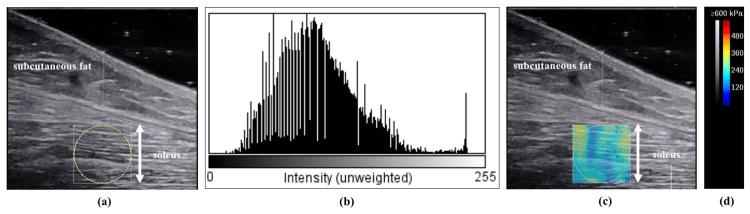
Eighteen participants who had undergone ankle fracture surgery were evaluated (mean age: 48.8 ± 20.6 years). Three months post-surgery, Young's modulus and EI of the SOL muscle were measured using SWE and the combination of B-mode ultrasound and ImageJ software, respectively. EI and Young's modulus measurements were obtained with the participant kneeling with knees bent 90°, upper body supported on a table, and ankles dorsiflexed 10°. The regions of interest used to measure EI and Young's modulus were identical. The EI value corrected for the subcutaneous fat thickness was also calculated. Pearson's correlation coefficients were calculated to examine the relationship of Young's modulus with the uncorrected and corrected EI.
RESULTS
Although the uncorrected EI was correlated with Young's modulus of the SOL muscle (r = 0.567; p = 0.014), the corrected EI showed a stronger correlation (r = 0.637; p = 0.005). High intra-rater was also found reliability for the EI and Young's modulus measurements of the SOL muscle in participants after ankle fracture surgery.
CONCLUSIONS
The EI and Young's modulus of the SOL muscle were positively correlated. In particular, the corrected EI showed a stronger correlation with Young's modulus than the uncorrected EI. Clinically, EI measurements may facilitate objective evaluation of muscle stiffness.
目的
虽然剪切波弹性成像(SWE)可用于评估肌肉硬度,但SWE评估成本高昂。回声强度(EI)是肌肉质量的一个指标,有可能用于评估肌肉硬度。本研究旨在确定踝关节骨折手术后比目鱼肌(SOL)的EI与杨氏模量之间的关系。
方法
对18名接受过踝关节骨折手术的参与者进行评估(平均年龄:48.8±20.6岁)。术后三个月,分别使用SWE以及B型超声和ImageJ软件组合测量SOL肌肉的杨氏模量和EI。EI和杨氏模量测量是在参与者双膝弯曲90°跪地、上半身支撑在桌子上且踝关节背屈10°的情况下进行的。用于测量EI和杨氏模量的感兴趣区域相同。还计算了校正皮下脂肪厚度后的EI值。计算Pearson相关系数以检验杨氏模量与未校正和校正后的EI之间的关系。
结果
虽然未校正的EI与SOL肌肉的杨氏模量相关(r = 0.567;p = 0.014),但校正后的EI显示出更强的相关性(r = 0.637;p = 0.005)。还发现踝关节骨折手术后参与者中SOL肌肉的EI和杨氏模量测量具有较高的评分者内信度。
结论
SOL肌肉的EI与杨氏模量呈正相关。特别是,校正后的EI与杨氏模量的相关性比未校正的EI更强。在临床上,EI测量可能有助于对肌肉硬度进行客观评估。


 Zotero 插件