
帕金森病的特征是维生素B6依赖的炎症性犬尿氨酸途径功能障碍。
Parkinson's disease is characterized by vitamin B6-dependent inflammatory kynurenine pathway dysfunction.
作者信息
Wilson Edward, Umans Jacob, Swarovski Michelle, Minhas Paras, Midttun Øivind, Ulvik Arve Arve, Shahid-Besanti Marian, Linortner Patricia, Mhatre Siddhita, Wang Qian, Channappa Divya, Corso Nicole, Tian Lu, Fredericks Carolyn, Kerchner Geoffrey, Plowey Edward, Cholerton Brenna, Ueland Per, Zabetian Cyrus, Gray Nora, Quinn Joseph, Montine Thomas, Sha Sharon, Longo Frank, Wolk David, Chen-Plotkin Alice, Henderson Victor, Wyss-Coray Tony, Wagner Anthony, Mormino Elizabeth, Aghaeepour Nima, Poston Kathleen, Andreasson Katrin
机构信息
Stanford University.
Bevital.
出版信息
Res Sq. 2024 Sep 26:rs.3.rs-4980210. doi: 10.21203/rs.3.rs-4980210/v1.
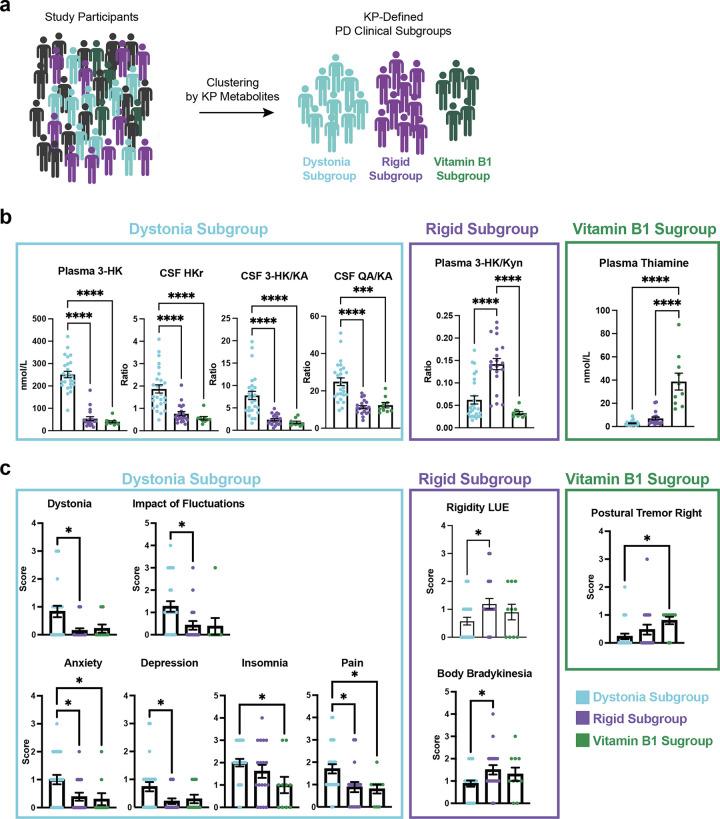
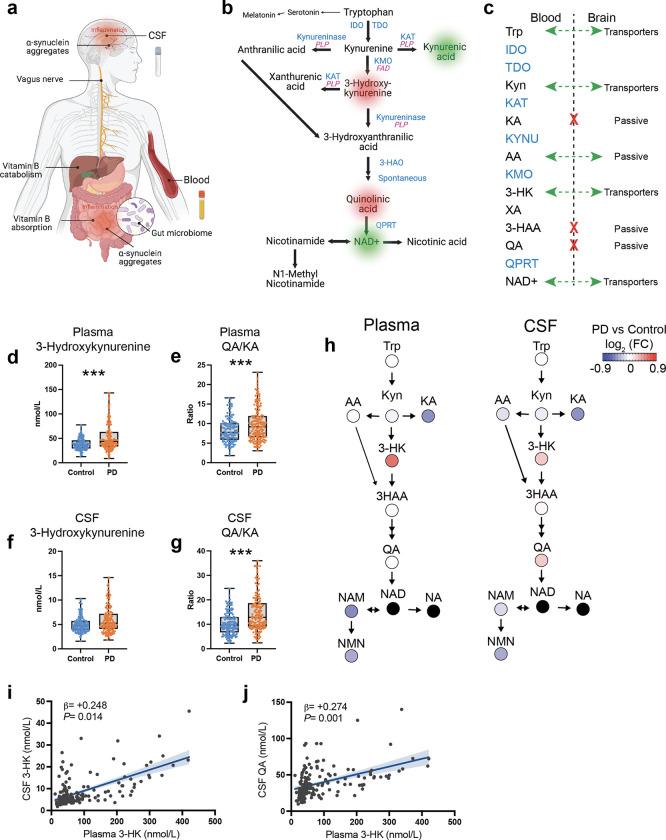
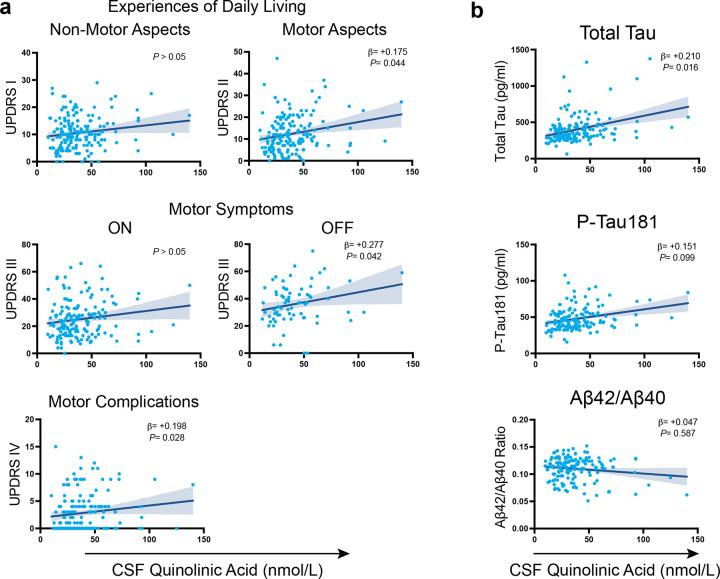
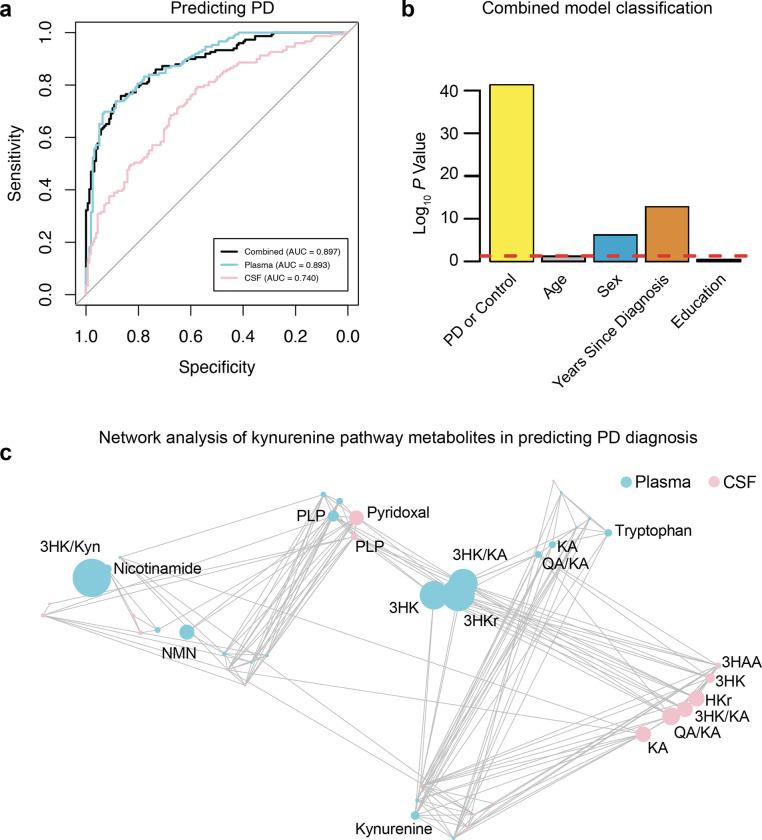
Parkinson's disease (PD) is a complex multisystem disorder clinically characterized by motor, non-motor, and premotor manifestations. Pathologically, PD involves neuronal loss in the substantia nigra, striatal dopamine deficiency, and accumulation of intracellular inclusions containing aggregates of α-synuclein. Recent studies demonstrate that PD is associated with dysregulated metabolic flux through the kynurenine pathway (KP), in which tryptophan is converted to kynurenine (KYN), and KYN is subsequently metabolized to neuroactive compounds quinolinic acid (QA) and kynurenic acid (KA). This multicenter study used highly sensitive liquid chromatography-tandem mass-spectrometry to compare blood and cerebral spinal fluid (CSF) KP metabolites between 158 unimpaired older adults and 177 participants with PD. Results indicate that increased neuroexcitatory QA/KA ratio in both plasma and CSF of PD participants associated with peripheral and cerebral inflammation and vitamin B6 deficiency. Furthermore, increased QA tracked with CSF tau and severity of both motor and non-motor PD clinical dysfunction. Importantly, plasma and CSF kynurenine metabolites classified PD participants with a high degree of accuracy (AUC = 0.897). Finally, analysis of metabolite data revealed subgroups with distinct KP profiles, and these were subsequently found to display distinct PD clinical features. Together, these data further support the hypothesis that the KP serves as a site of brain and periphery crosstalk, integrating B-vitamin status, inflammation and metabolism to ultimately influence PD clinical manifestation.
帕金森病(PD)是一种复杂的多系统疾病,临床特征为运动、非运动和运动前表现。病理上,PD涉及黑质神经元丢失、纹状体多巴胺缺乏以及含有α-突触核蛋白聚集体的细胞内包涵体积累。最近的研究表明,PD与通过犬尿氨酸途径(KP)的代谢通量失调有关,在该途径中,色氨酸转化为犬尿氨酸(KYN),随后KYN代谢为神经活性化合物喹啉酸(QA)和犬尿喹啉酸(KA)。这项多中心研究使用高灵敏度液相色谱-串联质谱法比较了158名未受损的老年人和177名PD参与者的血液和脑脊液(CSF)中的KP代谢物。结果表明,PD参与者血浆和CSF中神经兴奋性QA/KA比值升高与外周和脑部炎症以及维生素B6缺乏有关。此外,QA升高与CSF tau以及运动和非运动PD临床功能障碍的严重程度相关。重要的是,血浆和CSF中的犬尿氨酸代谢物对PD参与者进行分类的准确性很高(AUC = 0.897)。最后,对代谢物数据的分析揭示了具有不同KP谱的亚组,随后发现这些亚组具有不同的PD临床特征。总之,这些数据进一步支持了以下假设:KP作为大脑和外周相互作用的位点,整合了B族维生素状态、炎症和代谢,最终影响PD的临床表现。

 Zotero 插件