
肝脏的十字路口:揭示肥胖、慢性肝病与神秘的肥胖悖论之间的联系。
Liver at crossroads: unraveling the links between obesity, chronic liver diseases, and the mysterious obesity paradox.
机构信息
Department of Hepatology and Gastroenterology, National Liver Institute, Menoufia University, Shebeen El-Kom, Egypt.
出版信息
Clin Exp Med. 2024 Oct 14;24(1):240. doi: 10.1007/s10238-024-01493-y.
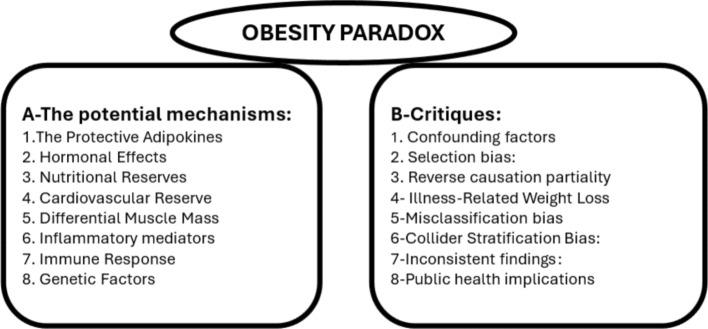
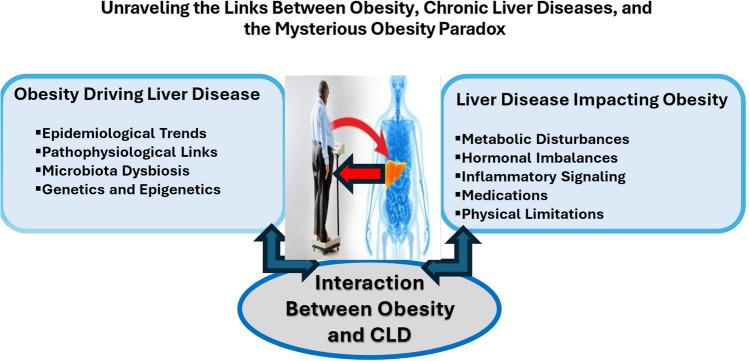
Obesity is a global health issue that is intricately linked to the development and progression of chronic liver disease (CLD). This bidirectional connection, coupled with the obesity paradox (OP), presents a management dilemma. The established influence of obesity on the development and progression of chronic liver disease (CLD) is surpassed by the liver's impact on the onset and advancement of obesity. Patients with CLD always experience increased energy expenditure, reduced appetite, and low protein synthesis, all of which might lead to weight loss. However, metabolic disturbances, hormonal imbalances, inflammatory signaling, immobility, drugs, and alterations in nutrient metabolism can contribute to the development and exacerbation of obesity. Despite the propagation of the OP concept, none of the guidelines has changed, recommending being overweight. Research bias and confounders might be the lifebuoy explanation. Additionally, overlooking the lethal morbidities of obesity for survival benefits full of suffering seems to be an illogical idea. Therefore, rather than endorsing an overweight status, emphasis should be placed on improving cardiorespiratory fitness and preventing sarcopenia to achieve better outcomes in patients with CLD. Accordingly, the complex interplay between obesity, CLD, and the concept of OP requires a sophisticated individualized management approach. Maximizing cardiorespiratory fitness and mitigating sarcopenia should be considered essential strategies for attaining the most favourable outcomes in patients with chronic liver disease (CLD).
肥胖是一个全球性的健康问题,与慢性肝病(CLD)的发生和发展密切相关。这种双向联系,加上肥胖悖论(OP),带来了管理上的困境。肥胖对慢性肝病(CLD)的发展和进展的既定影响被肝脏对肥胖的发生和发展的影响所超越。CLD 患者总是经历能量消耗增加、食欲减退和蛋白质合成减少,所有这些都可能导致体重减轻。然而,代谢紊乱、激素失衡、炎症信号、运动减少、药物和营养代谢改变可能导致肥胖的发生和加重。尽管肥胖悖论概念的传播,没有任何指南发生改变,仍推荐超重。研究偏倚和混杂因素可能是救生圈的解释。此外,忽视肥胖的致命病态以换取充满痛苦的生存获益似乎是一个不合逻辑的想法。因此,我们不应支持超重状态,而应强调改善心肺适能和预防肌肉减少症,以实现 CLD 患者更好的预后。因此,肥胖、CLD 和 OP 概念之间的复杂相互作用需要一种复杂的个体化管理方法。最大限度地提高心肺适能和减轻肌肉减少症应被视为实现慢性肝病(CLD)患者最佳预后的重要策略。
 Zotero 插件