
血小板与淋巴细胞比值在接受手术切除的直肠癌患者中的预后作用:一项系统评价和荟萃分析
Prognostic role of platelet-to-lymphocyte ratio in patients with rectal cancer undergoing resection: a systematic review and meta-analysis.
作者信息
Ma Lijuan, Yang Fei, Guo Wentao, Tang Shufang, Ling Yarui
机构信息
Shenzhen Traditional Chinese Medicine Anorectal Hospital (Futian), Shenzhen, China.
出版信息
Front Oncol. 2024 Sep 30;14:1415443. doi: 10.3389/fonc.2024.1415443. eCollection 2024.
BACKGROUND
Inflammation plays a pivotal role in tumor growth, with the platelet-to-lymphocyte ratio (PLR) emerging as a promising serum biomarker for prognostic assessment in patients with cancer. However, its specific role in rectal cancer remains controversial.
METHODS
A comprehensive literature review encompassing PubMed, EMBASE, and the Cochrane Library, spanning from their inception to March 2024, was conducted. The systematic review and meta-analysis strictly adhered to the Preferred Reporting Items for Systematic Reviews and Meta-Analysis guidelines (PRISMA). Quality assessment was conducted using the Newcastle-Ottawa scale (NOS). This study aimed to assess the available literature on the association of PLR with both overall survival (OS) and disease-free survival (DFS) in patients with rectal cancer undergoing resection.
RESULTS
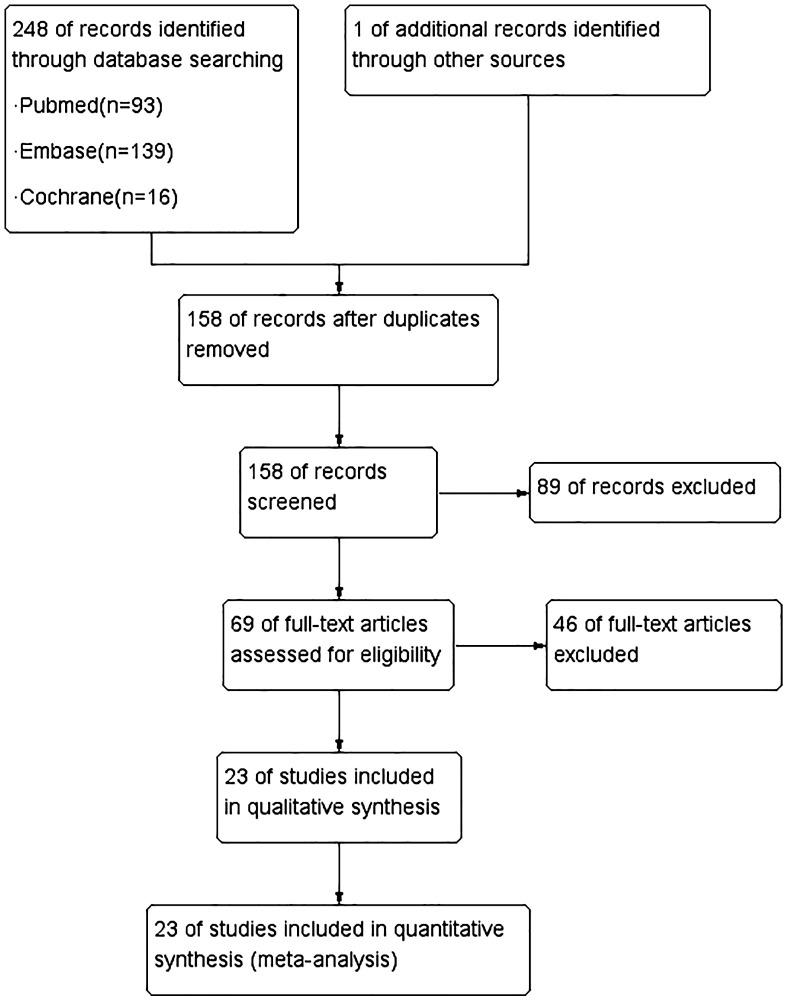
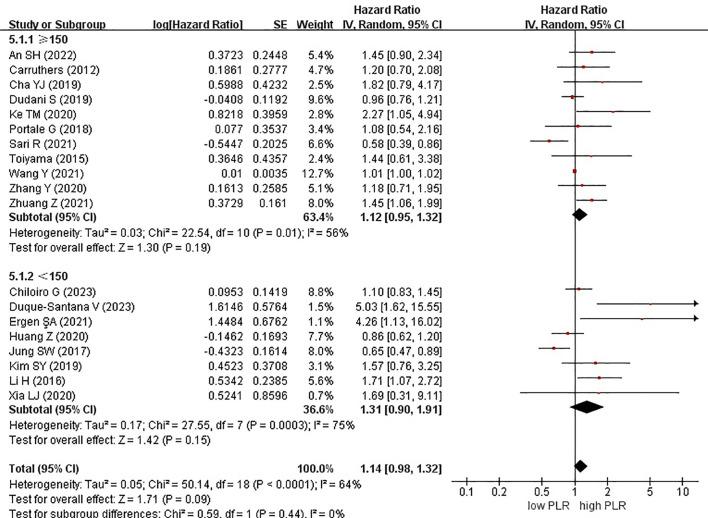
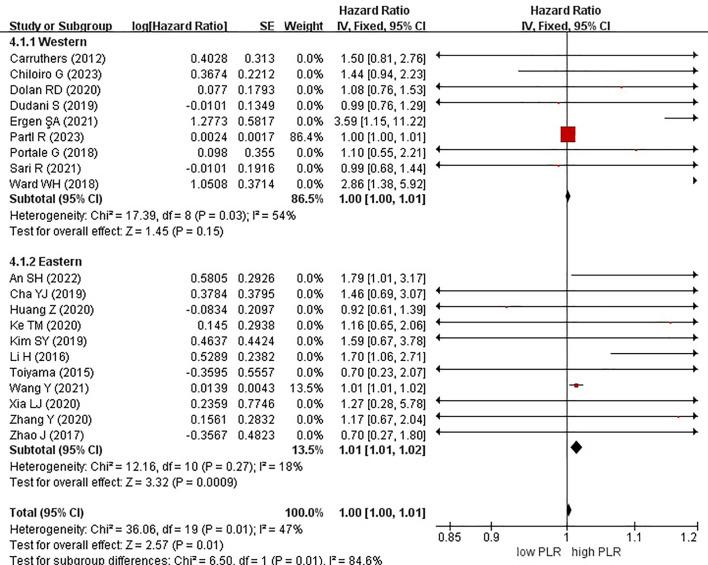
Twenty-three observational studies, encompassing 7577 patients, were included in the analysis. These comprised 20 retrospective and 3 prospective cohort studies, with NOS scores ranging from 5 to 8. A significant association was found between high PLR and worse OS (hazard ratio [HR] 1.00; 95% confidence interval [CI] 1.00-1.01; P = 0.01). Conversely, no significant association was observed between PLR and DFS (HR 1.14; 95% CI 0.98-1.32; P = 0.09).
CONCLUSIONS
PLR serves as an independent clinical predictor of OS in patients with rectal cancer treated with curative surgery, but not of DFS. This easily accessible biomarker appears to be an optimal prognostic index and may aid clinicians in predicting the prognosis of rectal cancer, facilitating the development of individualized treatment strategies.
背景
炎症在肿瘤生长中起关键作用,血小板与淋巴细胞比值(PLR)已成为一种有前景的血清生物标志物,用于癌症患者的预后评估。然而,其在直肠癌中的具体作用仍存在争议。
方法
对PubMed、EMBASE和Cochrane图书馆进行了全面的文献综述,涵盖从创建到2024年3月的文献。系统评价和荟萃分析严格遵循系统评价和荟萃分析的首选报告项目(PRISMA)指南。使用纽卡斯尔-渥太华量表(NOS)进行质量评估。本研究旨在评估关于PLR与接受手术切除的直肠癌患者总生存期(OS)和无病生存期(DFS)之间关联的现有文献。
结果
分析纳入了23项观察性研究,共7577例患者。这些研究包括20项回顾性和3项前瞻性队列研究,NOS评分范围为5至8。发现高PLR与较差的OS之间存在显著关联(风险比[HR]1.00;95%置信区间[CI]1.00 - 1.01;P = 0.01)。相反,未观察到PLR与DFS之间存在显著关联(HR 1.14;95% CI 0.98 - 1.32;P = 0.09)。
结论
PLR是接受根治性手术治疗的直肠癌患者OS的独立临床预测指标,但不是DFS的预测指标。这种易于获取的生物标志物似乎是一个最佳的预后指标,可能有助于临床医生预测直肠癌的预后,促进个体化治疗策略的制定。





 Zotero 插件