
被子植物光系统中广泛的适应性进化为光系统II修复的进化提供了见解。
Widespread adaptive evolution in angiosperm photosystems provides insight into the evolution of photosystem II repair.
作者信息
Robbins Elizabeth H J, Kelly Steven
机构信息
Department of Biology, University of Oxford, South Parks Road, Oxford OX1 3RB, UK.
出版信息
Plant Cell. 2024 Dec 23;37(1). doi: 10.1093/plcell/koae281.
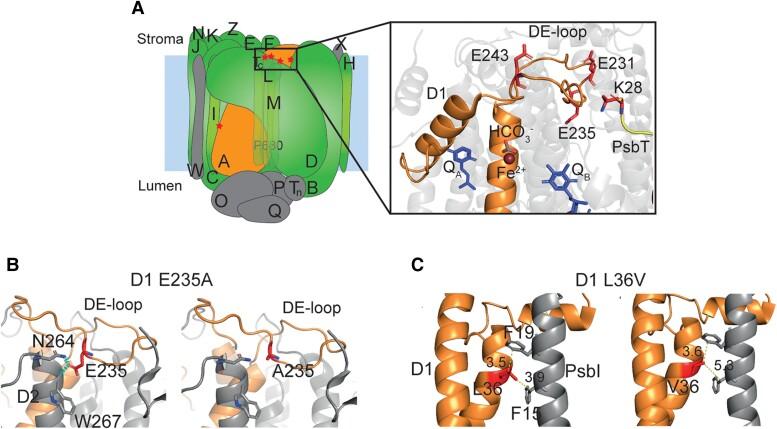
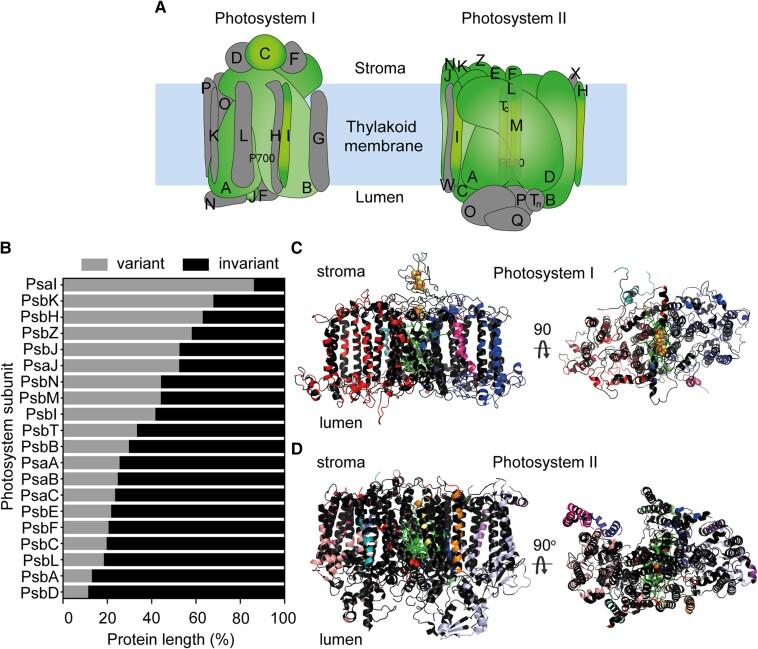
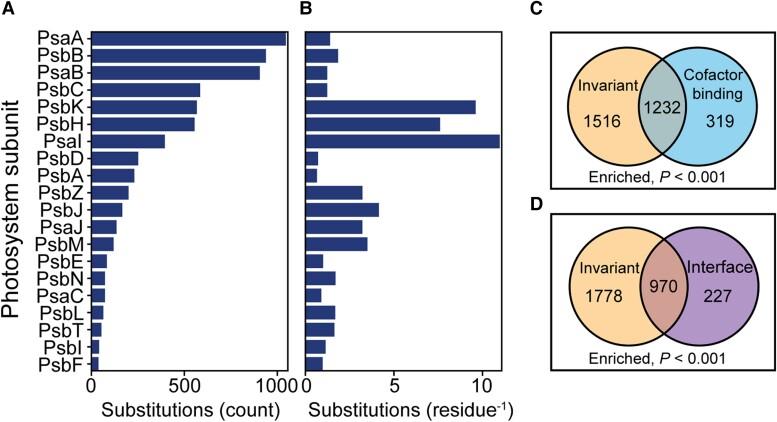
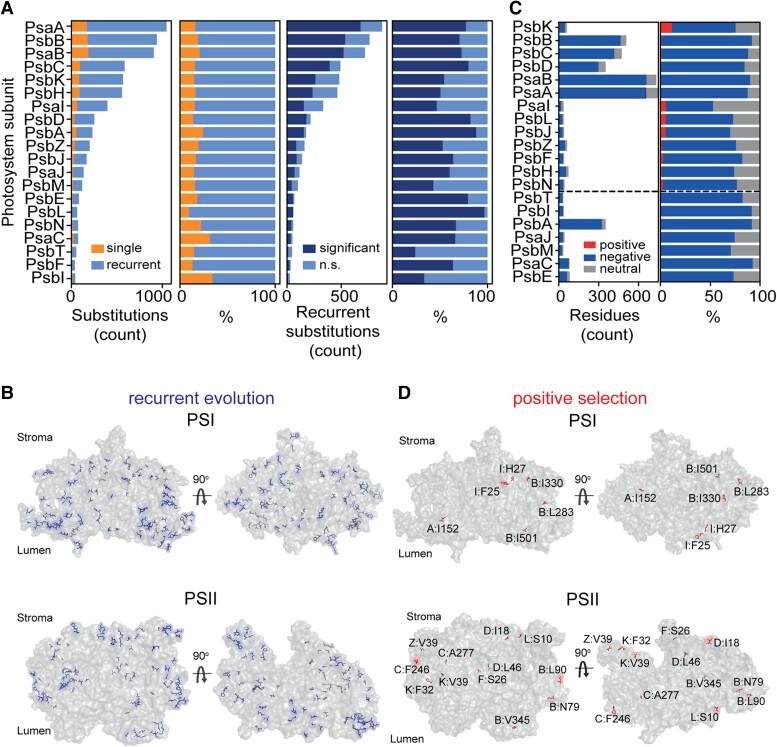
Oxygenic photosynthesis generates the initial energy source that fuels nearly all life on Earth. At the heart of the process are the photosystems, which are pigment binding multiprotein complexes that catalyze the first step of photochemical conversion of light energy into chemical energy. Here, we investigate the molecular evolution of the plastid-encoded photosystem subunits at single-residue resolution across 773 angiosperm species. We show that despite an extremely high level of conservation, 7% of residues in the photosystems, spanning all photosystem subunits, exhibit hallmarks of adaptive evolution. Through in silico modeling of these adaptive substitutions, we uncover the impact of these changes on the predicted properties of the photosystems, focusing on their effects on cofactor binding and intersubunit interface formation. By analyzing these cohorts of changes, we reveal that evolution has repeatedly altered the interaction between Photosystem II and its D1 subunit in a manner that is predicted to reduce the energetic barrier for D1 turnover and photosystem repair. Together, these results provide insight into the trajectory of photosystem adaptation during angiosperm evolution.
氧光合作用产生了为地球上几乎所有生命提供能量的初始能源。该过程的核心是光系统,它是色素结合多蛋白复合物,催化光能光化学转化为化学能的第一步。在这里,我们以单残基分辨率研究了773种被子植物中质体编码的光系统亚基的分子进化。我们发现,尽管光系统具有极高的保守性,但跨越所有光系统亚基的7%的残基表现出适应性进化的特征。通过对这些适应性替代进行计算机模拟,我们揭示了这些变化对光系统预测特性的影响,重点关注它们对辅因子结合和亚基间界面形成的影响。通过分析这些变化群体,我们发现进化反复改变了光系统II与其D1亚基之间的相互作用,预计这种方式会降低D1周转和光系统修复的能量障碍。这些结果共同为被子植物进化过程中光系统适应的轨迹提供了见解。

 Zotero 插件