
YKL40/整合素 β4 轴由癌细胞与肿瘤相关巨噬细胞相互作用诱导,参与高级别浆液性卵巢癌的进展。
YKL40/Integrin β4 Axis Induced by the Interaction between Cancer Cells and Tumor-Associated Macrophages Is Involved in the Progression of High-Grade Serous Ovarian Carcinoma.
机构信息
Division of Pathology, Department of Pathology, Kobe University Graduate School of Medicine, Kobe 650-0017, Japan.
Division of Obstetrics and Gynecology, Department of Surgery Related, Kobe University Graduate School of Medicine, Kobe 650-0017, Japan.
出版信息
Int J Mol Sci. 2024 Oct 1;25(19):10598. doi: 10.3390/ijms251910598.
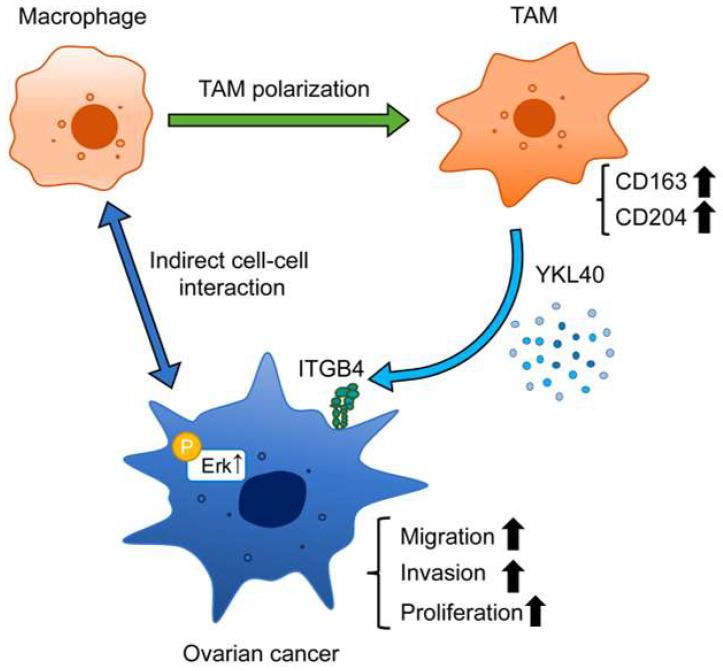
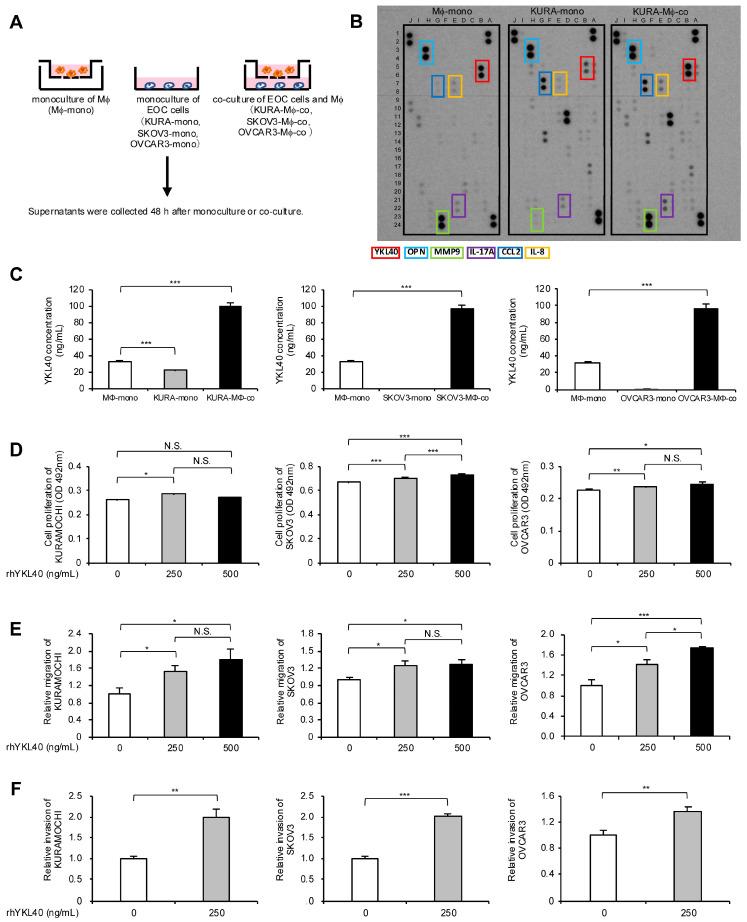
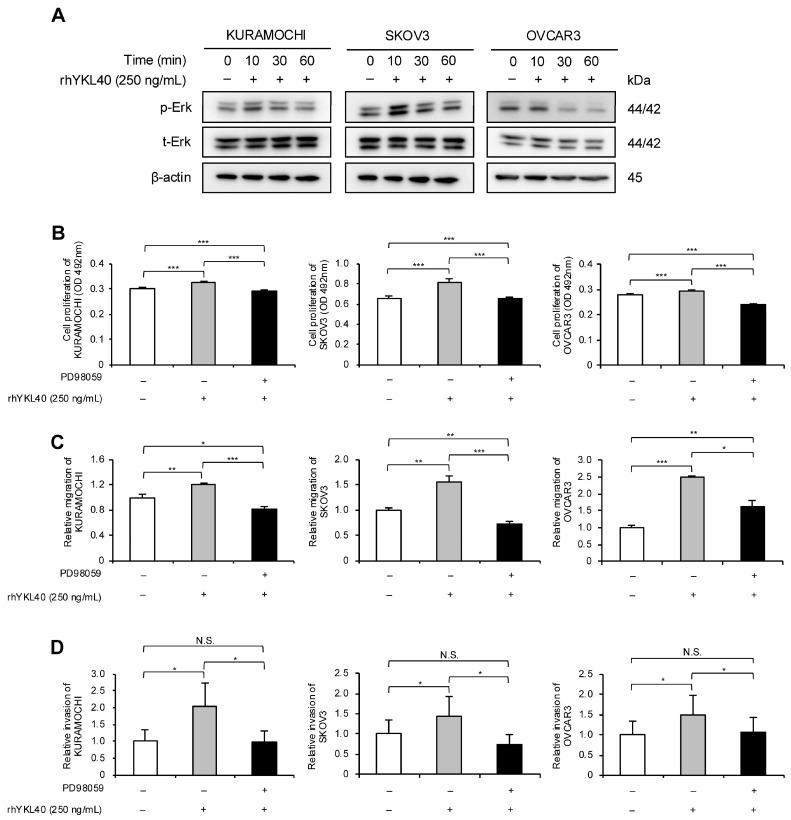
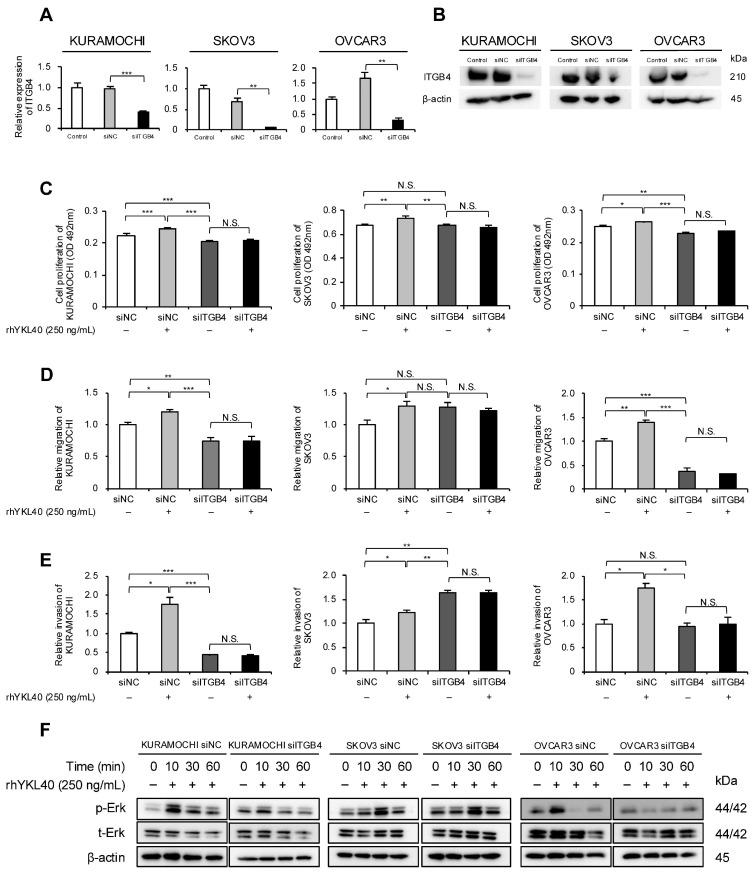
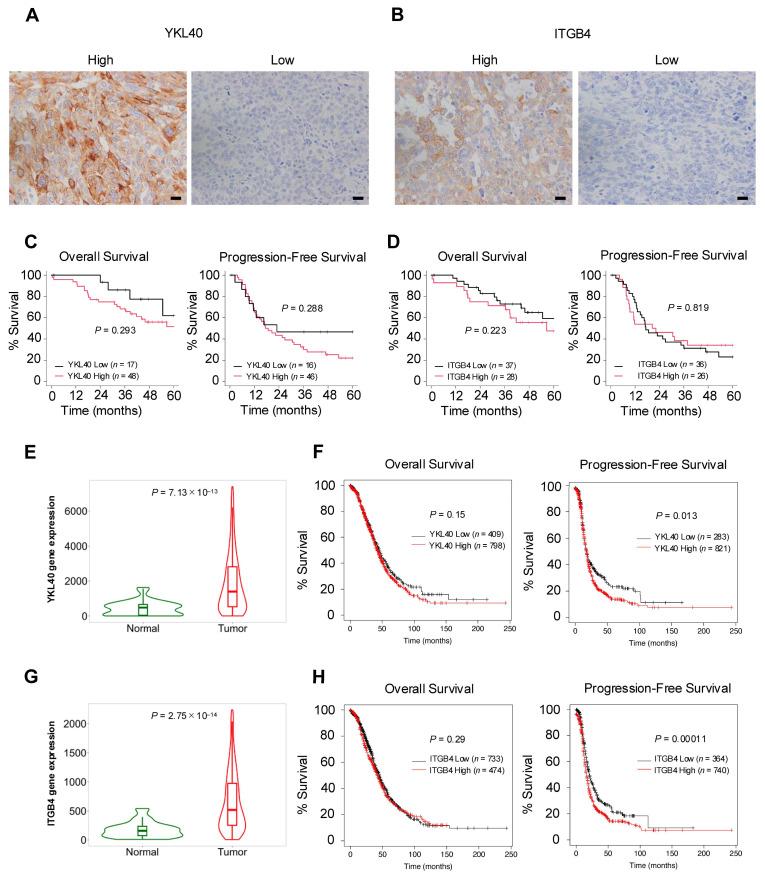
Macrophages in the tumor microenvironment, termed tumor-associated macrophages (TAMs), promote the progression of various cancer types. However, many mechanisms related to tumor-stromal interactions in epithelial ovarian cancer (EOC) progression remain unclear. High-grade serous ovarian carcinoma (HGSOC) is the most malignant EOC subtype. Herein, immunohistochemistry was performed on 65 HGSOC tissue samples, revealing that patients with a higher infiltration of CD68, CD163, and CD204 macrophages had a poorer prognosis. We subsequently established an indirect co-culture system between macrophages and EOC cells, including HGSOC cells. The co-cultured macrophages showed increased expression of the TAM markers CD163 and CD204, and the co-cultured EOC cells exhibited enhanced proliferation, migration, and invasion. Cytokine array analysis revealed higher YKL40 secretion in the indirect co-culture system. The addition of YKL40 increased proliferation, migration, and invasion via extracellular signal-regulated kinase (Erk) signaling in EOC cells. The knockdown of integrin β4, one of the YKL40 receptors, suppressed YKL40-induced proliferation, migration, and invasion, as well as Erk phosphorylation in some EOC cells. Database analysis showed that high-level expression of YKL40 and integrin β4 correlated with a poor prognosis in patients with serous ovarian carcinoma. Therefore, the YKL40/integrin β4 axis may play a role in ovarian cancer progression.
肿瘤微环境中的巨噬细胞,称为肿瘤相关巨噬细胞(TAMs),促进了各种癌症类型的进展。然而,上皮性卵巢癌(EOC)进展中与肿瘤-基质相互作用相关的许多机制仍不清楚。高级别浆液性卵巢癌(HGSOC)是最恶性的 EOC 亚型。在此,对 65 例 HGSOC 组织样本进行了免疫组织化学分析,结果表明 CD68、CD163 和 CD204 巨噬细胞浸润较高的患者预后较差。随后,我们建立了巨噬细胞和 EOC 细胞(包括 HGSOC 细胞)之间的间接共培养系统。共培养的巨噬细胞表现出 TAM 标志物 CD163 和 CD204 的表达增加,而共培养的 EOC 细胞表现出增强的增殖、迁移和侵袭。细胞因子阵列分析显示间接共培养系统中 YKL40 分泌增加。在 EOC 细胞中,YKL40 通过细胞外信号调节激酶(Erk)信号通路增加增殖、迁移和侵袭。YKL40 受体之一整合素β4 的敲低抑制了一些 EOC 细胞中 YKL40 诱导的增殖、迁移和侵袭以及 Erk 磷酸化。数据库分析表明,YKL40 和整合素β4 的高水平表达与浆液性卵巢癌患者的预后不良相关。因此,YKL40/整合素β4 轴可能在卵巢癌进展中发挥作用。


 Zotero 插件