
增强抗菌效果:香精油混合物对食品保鲜的协同作用。
Enhancing Antibacterial Efficacy: Synergistic Effects of Essential Oil Mixtures against for Food Preservation.
作者信息
Ellouze Ines, Ben Akacha Boutheina, Mekinić Ivana Generalić, Ben Saad Rania, Kačániová Miroslava, Kluz Maciej Ireneusz, Mnif Wissem, Garzoli Stefania, Ben Hsouna Anis
机构信息
Department of Vegetal Biotechnology, Higher Institute of Biotechnology of Beja, Jendouba University, Beja 9000, Tunisia.
Functional and Bio-Resources Valorization Laboratory, Higher Institute of Biotechnology of Beja, Jendouba University, Beja 9000, Tunisia.
出版信息
Foods. 2024 Sep 27;13(19):3093. doi: 10.3390/foods13193093.
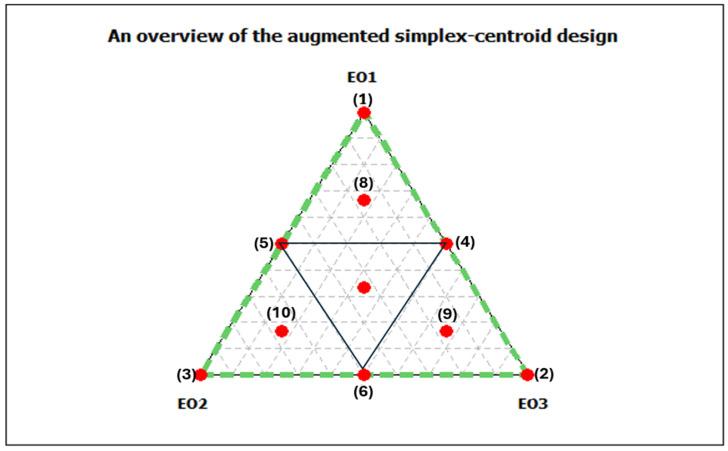
Essential oils (EOs) from various medicinal and aromatic plants are known for their diverse biological activities, including their antimicrobial effects. EO is traditionally used for therapeutic benefits due to its high content of bioactive compounds. Therefore, this study focuses on its potential use as a food preservative by investigating the combined antibacterial properties of EOs from leaves (EO1), flowers (EO2), and small branches (EO3) of against six bacterial strains by the agar disk diffusion, minimum inhibitory concentration (MIC), and minimum bactericidal concentration (MBC) methods. The chemical compositions of the EOs were analysed by gas chromatography-mass spectrometry (GC-MS) and revealed the presence of numerous compounds responsible for their antimicrobial properties. The MIC values for the EOs were 3.12 mg/mL, 4.23 mg/mL, and 1.89 mg/mL, for EO1, EO2 and EO3, respectively, while the MBC values were 12.5 mg/mL, 6.25 mg/mL, and 6.25 mg/mL, respectively. A simplex centroid design was created to analyse the effect of the individual and combined EOs against . The combined EOs showed enhanced antibacterial activity compared to the individual oils, suggesting a synergistic effect (e.g., trial 9 with an MIC of 0.21 mg/mL), allowing the use of lower EO concentrations and reducing potential negative effects on food flavour and aroma. Additionally, the practical application of investigated EOs (at concentrations twice the MIC) was investigated in raw chicken meat stored at 4 °C for 21 days. The EOs, individually and in combination, effectively extended the shelf life of the meat by inhibiting bacterial growth (total bacterial count of less than 1 × 10 CFU/g in the treated samples compared to 7 × 10 CFU/g in the control on day 21 of storage). The study underlines the potential of EOs as natural preservatives that represent a sustainable and effective alternative to synthetic chemicals in food preservation.
各种药用和芳香植物的精油(EOs)以其多样的生物活性而闻名,包括抗菌作用。由于其生物活性化合物含量高,传统上精油用于治疗。因此,本研究通过琼脂平板扩散法、最低抑菌浓度(MIC)和最低杀菌浓度(MBC)法,研究了[植物名称]叶(EO1)、花(EO2)和小枝(EO3)精油对六种细菌菌株的联合抗菌特性,以探讨其作为食品防腐剂的潜在用途。通过气相色谱-质谱联用(GC-MS)分析了精油的化学成分,结果显示存在许多具有抗菌特性的化合物。EO1、EO2和EO3的MIC值分别为3.12 mg/mL、4.23 mg/mL和1.89 mg/mL,而MBC值分别为12.5 mg/mL、6.25 mg/mL和6.25 mg/mL。创建了一个单纯形重心设计来分析单一精油和混合精油对[细菌名称]的影响。与单一精油相比,混合精油显示出增强的抗菌活性,表明存在协同效应(例如,试验9的MIC为0.21 mg/mL),这使得可以使用较低的精油浓度,并减少对食品风味和香气的潜在负面影响。此外,研究了所研究的精油(浓度为MIC的两倍)在4℃下储存21天的生鸡肉中的实际应用。单独使用和混合使用精油均通过抑制细菌生长有效延长了肉的保质期(在储存第21天,处理过的样品中总细菌数小于1×10CFU/g,而对照组为7×10CFU/g)。该研究强调了[植物名称]精油作为天然防腐剂的潜力,它是食品保鲜中合成化学品的可持续且有效替代品。



 Zotero 插件