
含[具体成分]的高粱饮料对超重和肥胖成年人身体成分、血脂水平及肠道健康的影响:一项随机单盲试验研究
Effects of a Sorghum Beverage with on Body Composition, Lipid Profiles, and Intestinal Health in Overweight and Obese Adults: A Randomized Single-Blind Pilot Study.
作者信息
da Silva Lucimar Aguiar, de São José Vinícius Parzanini Brilhante, Rodrigues Larissa Arruda, do Prado Pietra Vidal Cardoso, Toledo Renata Celi Lopes, de Barros Frederico Augusto Ribeiro, de Souza Andressa Moreira, Antoniassi Rosemar, de Carvalho Carlos Wanderlei Piler, Queiroz Valéria Aparecida Vieira, Dos Santos Karina Maria Olbrich, Pierre Joseph Francis, da Silva Bárbara Pereira, Martino Hércia Stampini Duarte
机构信息
Department of Nutrition and Health, Federal University of Viçosa, Purdue Avenue, s/n, University Campus, Viçosa 36570-900, MG, Brazil.
Department of Food Technology, Federal University of Viçosa, Purdue Avenue, s/n, University Campus, Viçosa 36570-900, MG, Brazil.
出版信息
Foods. 2024 Sep 30;13(19):3128. doi: 10.3390/foods13193128.
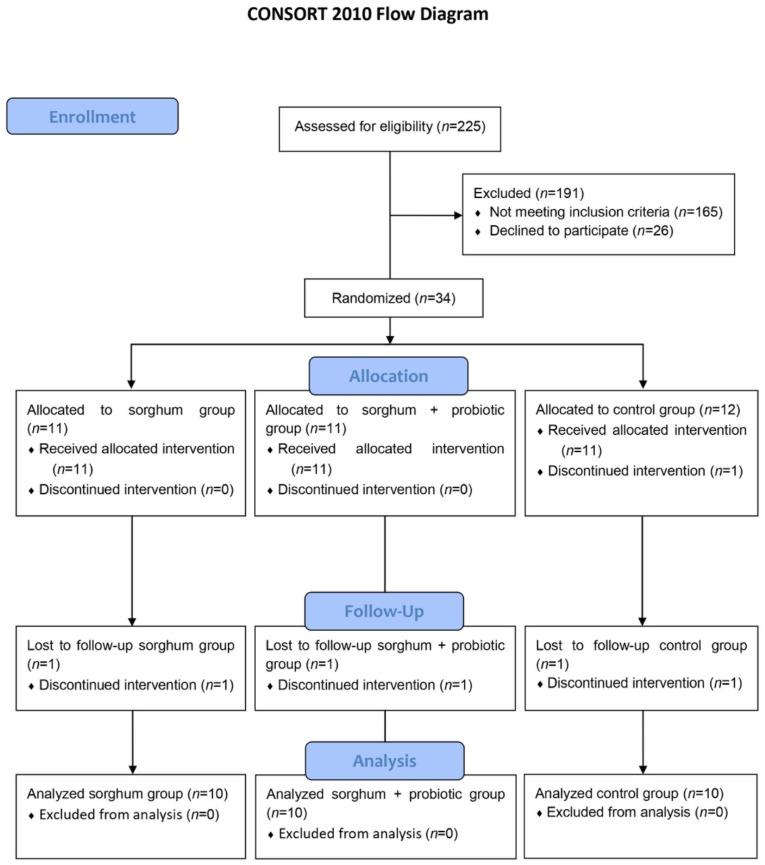
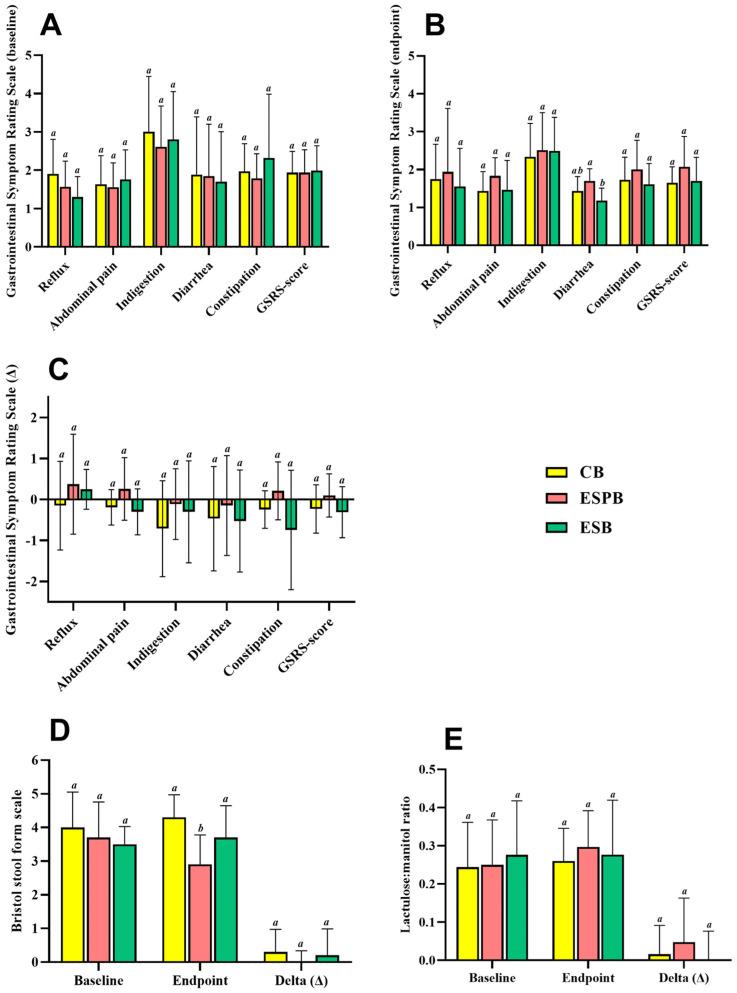
(1) Background: This study aimed to evaluate the effect of an extruded whole-grain sorghum beverage containing on body composition, lipid profiles, and intestinal health in overweight and obese adults. (2) Methods: A chronic, single-blind randomized controlled pilot study was conducted with 30 volunteers allocated to three groups ( = 10/group): extruded sorghum beverage (ESB), extruded sorghum beverage with (ESPB), and control beverage (CB) (waxy maize starch). The chemical composition of the beverages was analyzed. Volunteers consumed the beverages for ten weeks at breakfast, along with individual dietary prescriptions. Body composition, biochemical markers, gastrointestinal symptoms, stool consistency, intestinal permeability, short-chain fatty acids, fecal pH, and stool DNA concentration were analyzed at the beginning and end of the intervention period. (3) Results: The ESB showed better composition than the CB, particularly in terms of resistant starch content, total phenolic compounds, condensed tannins, and antioxidant capacity. Both the ESB and the ESPB had an effect on body composition (estimated total visceral fat and waist volume), biochemical markers (Castelli index I), and intestinal health (Bristol scale, diarrhea score, valeric acid, and DNA concentration). No changes were observed in the CB group after the intervention. (4) Conclusions: Whole-grain sorghum beverages demonstrated good nutritional value, and consumption of these beverages, with or without , provided health benefits, including improvements in body composition, Castelli index I scores, and intestinal health, in overweight and obese adults.
(1) 背景:本研究旨在评估一种含有[具体成分]的挤压全谷物高粱饮料对超重和肥胖成年人身体成分、血脂谱及肠道健康的影响。(2) 方法:进行了一项慢性、单盲随机对照试验研究,30名志愿者被分为三组(每组n = 10):挤压高粱饮料(ESB)、含[具体成分]的挤压高粱饮料(ESPB)和对照饮料(CB)(糯玉米淀粉)。分析了饮料的化学成分。志愿者在早餐时饮用饮料,为期十周,并遵循个性化饮食处方。在干预期开始和结束时分析身体成分、生化指标、胃肠道症状、粪便稠度、肠道通透性、短链脂肪酸、粪便pH值及粪便[具体名称]DNA浓度。(3) 结果:ESB的成分比CB更好,尤其是在抗性淀粉含量、总酚类化合物、缩合单宁及抗氧化能力方面。ESB和ESPB均对身体成分(估计的总内脏脂肪和腰围)、生化指标(卡斯泰利指数I)及肠道健康(布里斯托量表、腹泻评分、戊酸及[具体名称]DNA浓度)有影响。干预后CB组未观察到变化。(4) 结论:全谷物高粱饮料具有良好的营养价值,饮用这些饮料,无论是否含有[具体成分],都对超重和肥胖成年人有益健康,包括改善身体成分、卡斯泰利指数I评分及肠道健康。

 Zotero 插件