
用于异质结的同核杂原子共轭网状低聚物:一种用于平板光电催化的新型“电子介质”。
Homo-Nuclear Hetero-Atomic Conjugated Reticular Oligomers for Heterojunction: A Novel "Electron Medium" for Panel Photoelectrocatalysis.
作者信息
Zhang Ruijuan, Zhang Boying, Liu Haining, Jewell Linda, Liu Xinying, Qiao Shanlin
机构信息
College of Chemistry and Pharmaceutical Engineering, Hebei University of Science and Technology, Shijiazhuang, 050018, China.
Institute for Catalysis and Energy Solutions, University of South Africa, Private Bag X6, Florida, 1710, South Africa.
出版信息
Adv Sci (Weinh). 2024 Dec;11(46):e2407834. doi: 10.1002/advs.202407834. Epub 2024 Oct 21.
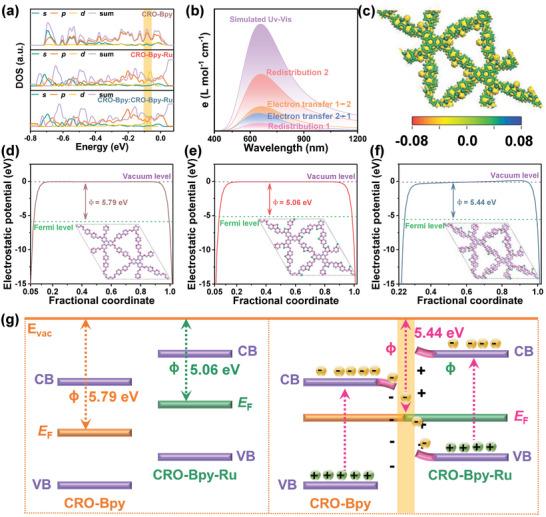
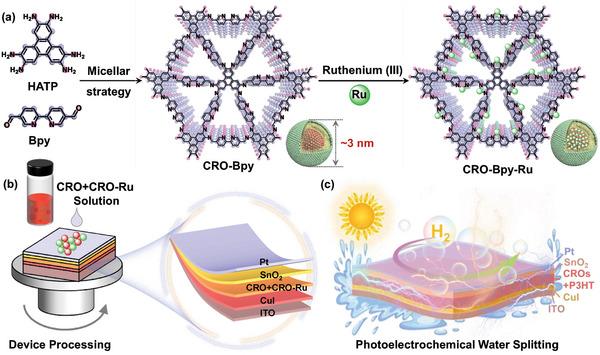
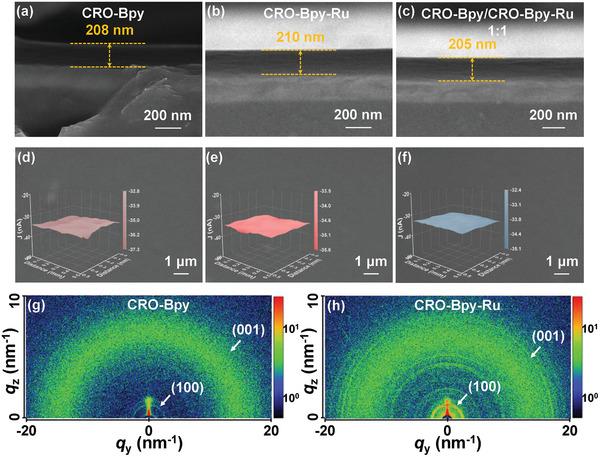
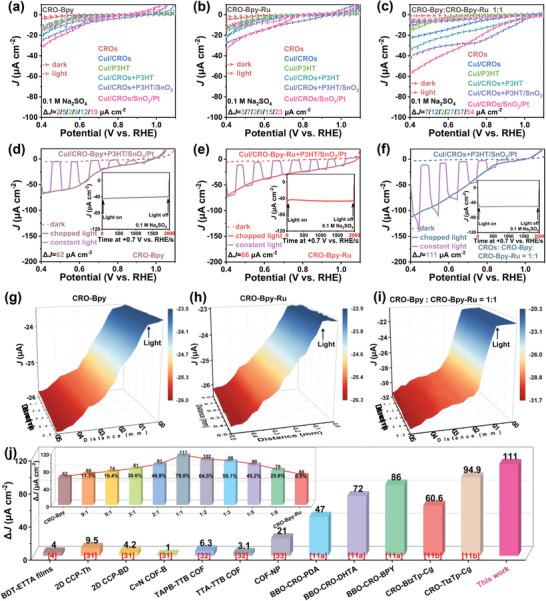
A substantial challenge in employing covalent organic frameworks (COFs) for photoelectrochemical (PEC) water splitting lies in improving their solution-processability while concurrently facilitating the transfer of charges and mass to the catalytic sites. Herein, we synthesize a solution-processable conjugated reticular oligomers (CROs), and further embed ruthenium (Ru) into the CRO, forming a CRO-Ru with homo-nuclear hetero-atomic. Thereafter, CRO and CRO-Ru construct an organic-organic heterojunction membrane at the nanoscale. This design achieves perfect lattice matching, significantly reducing the energy barrier of mass transfer, and effectively lowering the recombination rate of charge carriers. The optimized photocathode, CuI/CRO-Bpy:CRO-Bpy-Ru-1:1+P3HT/SnO/Pt, exhibits an efficiency of 111.0 µA cm at 0.4 V versus a reversible hydrogen electrode (RHE). Compared with the original bulk COFs and CROs, the efficiency is significantly improved. The apparent improvements in charge carrier separation and transfer are responsible for the high PEC activity. In the heterojunction, the incorporation of CRO-Bpy-Ru with a longer excited-state lifetime and a substantial built-in electric field has effectively accelerated the photo-induced electron transfer from the conduction band (CB) of CRO-Bpy to the valence band (VB) of CRO-Bpy-Ru, effectively suppressing the recombination of charges. These findings offer significant guidance for the design and optimization of high-performance photoelectrochemical catalysts.
将共价有机框架(COF)用于光电化学(PEC)水分解面临的一个重大挑战在于提高其溶液可加工性,同时促进电荷和质量向催化位点的转移。在此,我们合成了一种可溶液加工的共轭网状低聚物(CRO),并进一步将钌(Ru)嵌入CRO中,形成具有同核杂原子的CRO-Ru。此后,CRO和CRO-Ru在纳米尺度上构建了一个有机-有机异质结膜。这种设计实现了完美的晶格匹配,显著降低了传质的能量势垒,并有效降低了电荷载流子的复合率。优化后的光阴极CuI/CRO-Bpy:CRO-Bpy-Ru-1:1+P3HT/SnO/Pt在相对于可逆氢电极(RHE)为0.4 V时的效率为111.0 μA cm。与原始的块状COF和CRO相比,效率显著提高。电荷载流子分离和转移的明显改善是PEC高活性的原因。在异质结中,具有较长激发态寿命和大量内建电场的CRO-Bpy-Ru的掺入有效地加速了光生电子从CRO-Bpy的导带(CB)向CRO-Bpy-Ru的价带(VB)的转移,有效抑制了电荷复合。这些发现为高性能光电化学催化剂的设计和优化提供了重要指导。

 Zotero 插件