
全面分析人乳腺癌中铜死亡相关基因的表达水平、预后价值和免疫浸润情况。
Comprehensive analysis of the expression level, prognostic value, and immune infiltration of cuproptosis-related genes in human breast cancer.
机构信息
Breast Disease Center, The First Affiliated Hospital, Jiangxi Medical College, Nanchang University, Nanchang, China.
Department of Emergency Medicine, The First Affiliated Hospital of USTC, Division of Life Sciences and Medicine, University of Science and Technology of China, Hefei, China.
出版信息
Medicine (Baltimore). 2024 Oct 18;103(42):e40132. doi: 10.1097/MD.0000000000040132.
BACKGROUND
As a novel cell death form, cuproptosis results from copper combining with lipidated proteins in the tricarboxylic acid cycle. To the best of our knowledge no study has yet comprehensively analyzed the relationship between cuproptosis-related genes and breast cancer.
METHODS
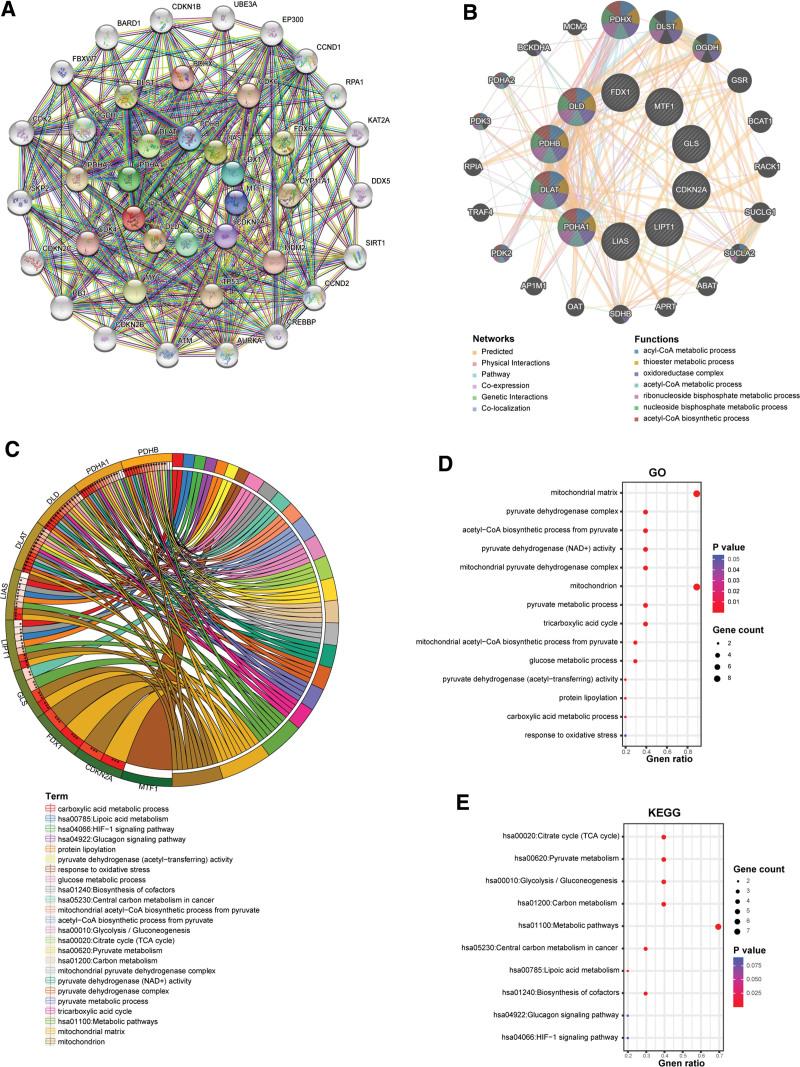
The expression, prognostic value, mutations, chemosensitivity, and immune infiltration of cuproptosis-related genes in breast carcinoma patients were analyzed, PPI networks were constructed, and enrichment analyses were performed based on these genes. TIMER, UALCAN, Kaplan-Meier plotter, Human Protein Atlas, cBioPortal, STRING, GeneMANIA, DAVID, and R program v4.0.3 were used to accomplish the analyses above.
RESULTS
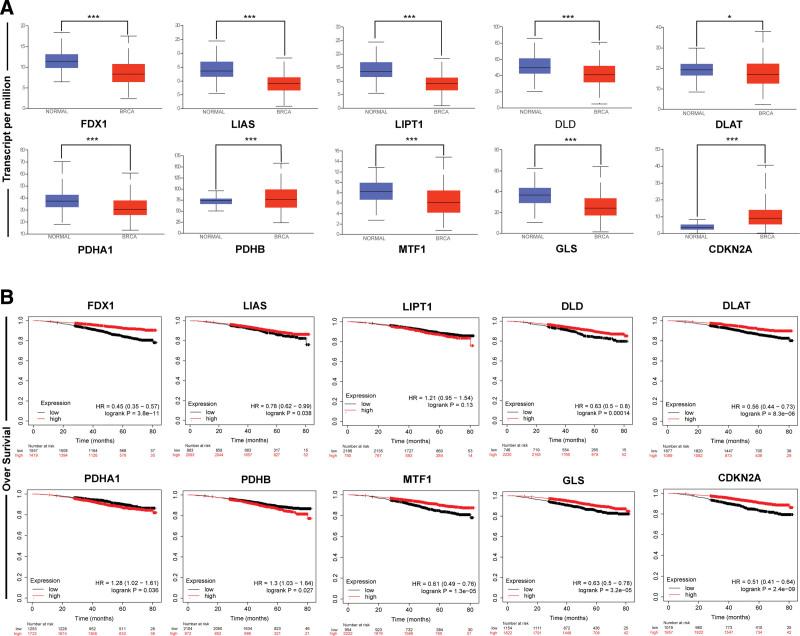
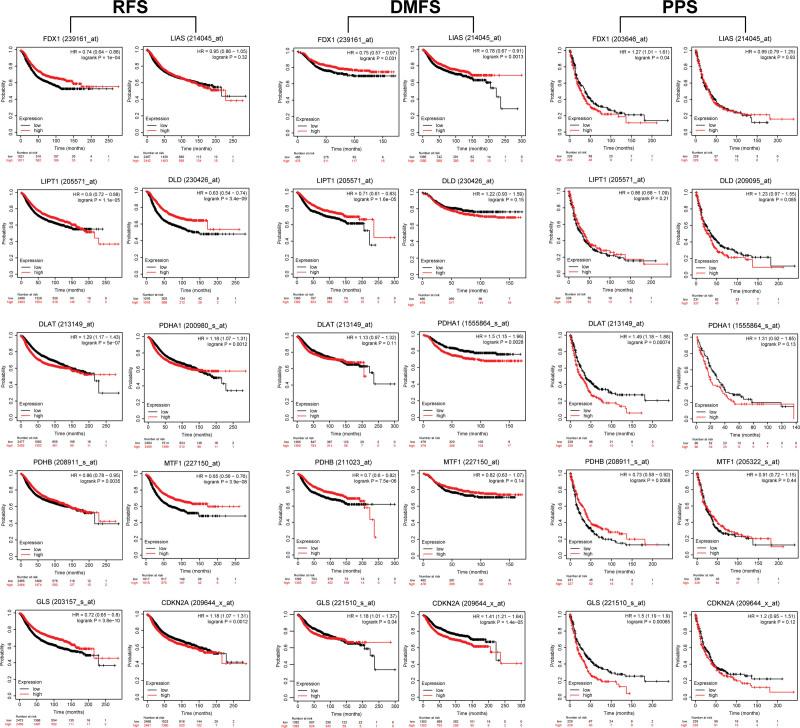
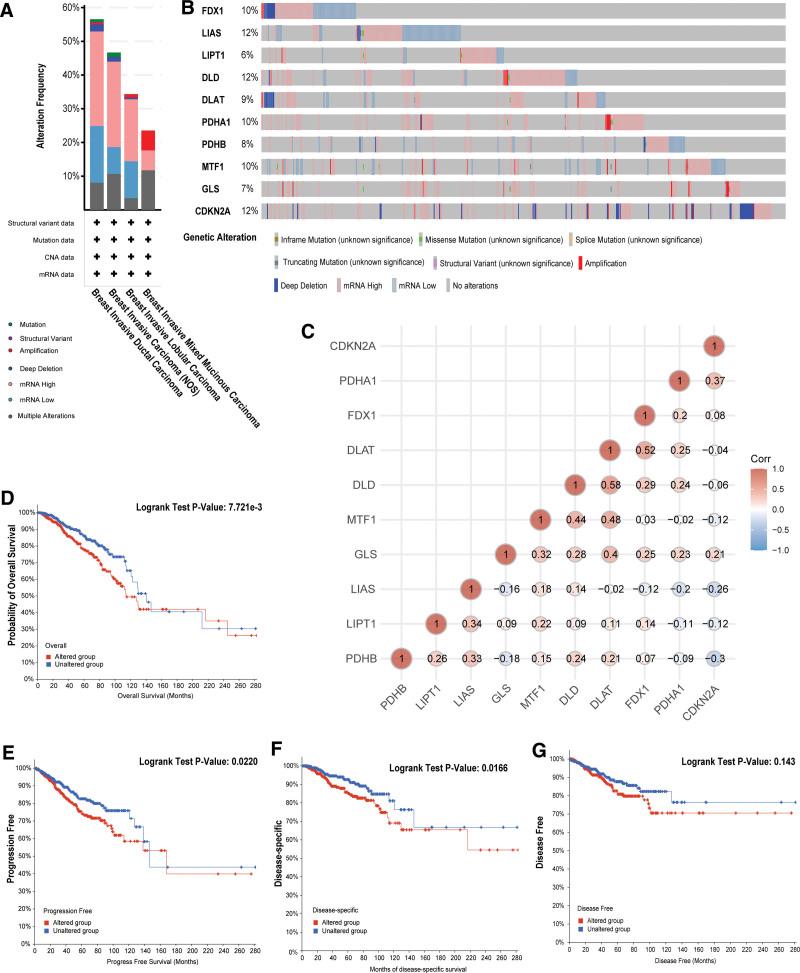
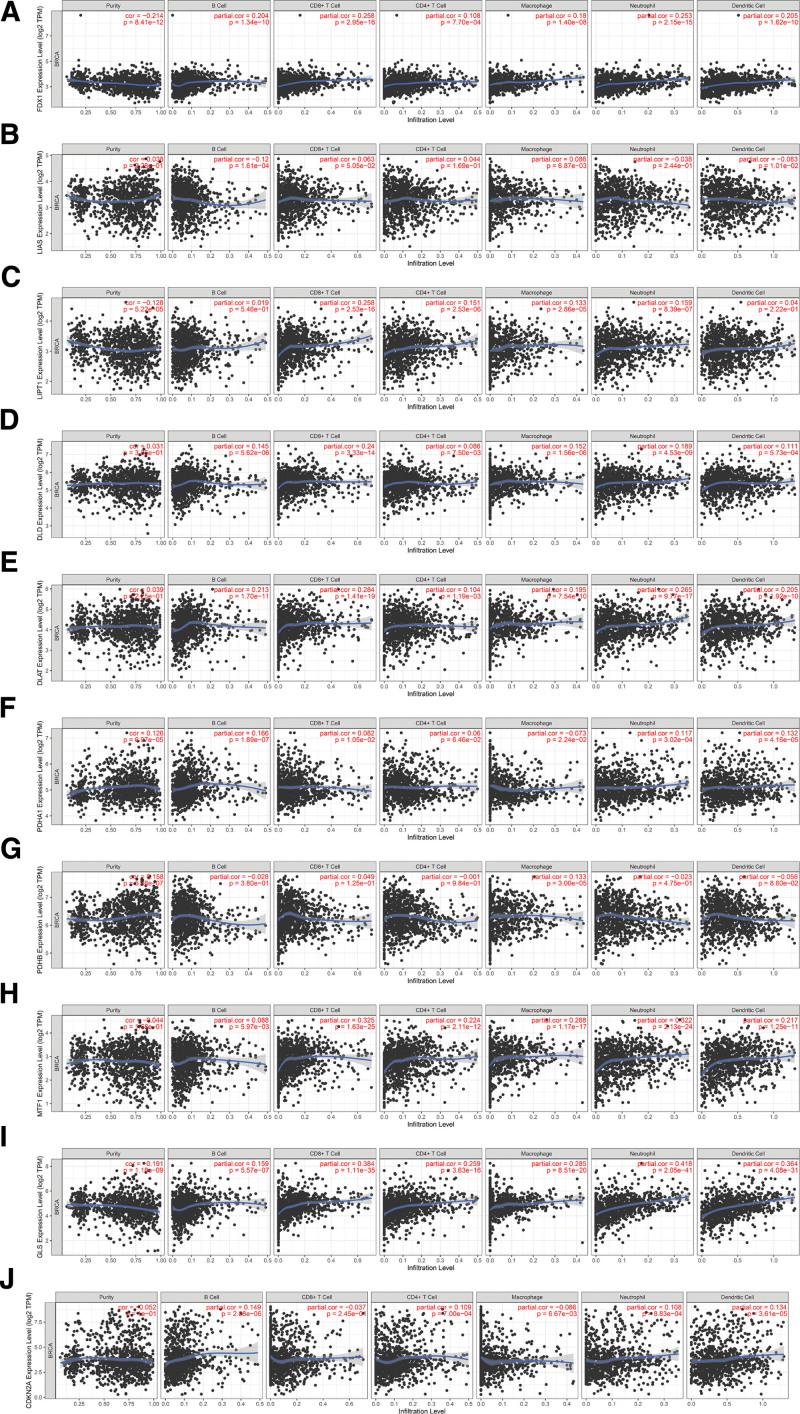
Compared to normal breast tissues, FDX1, LIAS, LIPT1, DLD, DLAT, PDHA1, MTF1, and GLS were down-regulated in breast cancer tissues, while CDKN2A was up-regulated. High expression of FDX1, LIAS, DLD, DLAT, MTF1, GLS, and CDKN2A were associated with favorable overall survival. Cuproptosis-related genes showed a high alteration rate (51.3%) in breast cancer, contributing to worse clinical outcomes. The expression levels of FDX1, LIPT1, DLD, DLAT, PDHA1, PDHB, MTF1, GLS, and CDKN2A were associated positively with 1 or more immune cell infiltrations in breast cancer. Patients with high levels of B cell, CD4+ T cell, CD8+ T cell, and dendritic cell infiltration had a higher survival rate at 10 years.
CONCLUSION
This study comprehensively investigated relationships between cuproptosis and breast cancer by bioinformatic analyses. We found that cuproptosis-related genes were generally lowly expressed in breast carcinoma tissue. As the critical gene of cuproptosis, high expression of FDX1 was related to favorable prognoses in breast cancer patients; thus, it might be a potential prognostic marker. Moreover, genes associated with cuproptosis were linked to immune infiltration in breast cancer and this relationship affected the prognosis of breast cancer.
背景
铜死亡作为一种新型的细胞死亡形式,是由铜与三羧酸循环中的脂化蛋白结合而引起的。据我们所知,目前尚无研究全面分析铜死亡相关基因与乳腺癌之间的关系。
方法
分析乳腺癌患者中铜死亡相关基因的表达、预后价值、突变、化疗敏感性和免疫浸润情况,构建 PPI 网络,并基于这些基因进行富集分析。使用 TIMER、UALCAN、Kaplan-Meier plotter、Human Protein Atlas、cBioPortal、STRING、GeneMANIA、DAVID 和 R 程序 v4.0.3 完成上述分析。
结果
与正常乳腺组织相比,FDX1、LIAS、LIPT1、DLD、DLAT、PDHA1、MTF1 和 GLS 在乳腺癌组织中表达下调,而 CDKN2A 表达上调。FDX1、LIAS、DLD、DLAT、MTF1、GLS 和 CDKN2A 高表达与总生存良好相关。铜死亡相关基因在乳腺癌中具有较高的改变率(51.3%),导致临床结局较差。FDX1、LIPT1、DLD、DLAT、PDHA1、PDHB、MTF1、GLS 和 CDKN2A 的表达水平与乳腺癌中 1 种或多种免疫细胞浸润呈正相关。B 细胞、CD4+T 细胞、CD8+T 细胞和树突状细胞浸润水平较高的患者,10 年生存率较高。
结论
本研究通过生物信息学分析全面研究了铜死亡与乳腺癌之间的关系。我们发现铜死亡相关基因在乳腺癌组织中普遍低表达。作为铜死亡的关键基因,FDX1 高表达与乳腺癌患者的良好预后相关;因此,它可能是一个潜在的预后标志物。此外,与铜死亡相关的基因与乳腺癌中的免疫浸润有关,这种关系影响了乳腺癌的预后。





 Zotero 插件