
肯尼亚内罗毕穆库里非正规住区 5 岁以下无症状恢复期儿童中非伤寒沙门氏菌的传播是侵袭性疾病的危险因素。
Shedding of nontyphoidal by asymptomatic convalescing children under 5 years as a risk factor for invasive disease in Mukuru informal settlement in Nairobi, Kenya.
机构信息
Centre for Microbiology Research, Kenya Medical Research Institute, Nairobi, Kenya.
Department of Medical Microbiology and Immunology, University of Nairobi, Nairobi, Kenya.
出版信息
J Clin Microbiol. 2024 Nov 13;62(11):e0075024. doi: 10.1128/jcm.00750-24. Epub 2024 Oct 24.
UNLABELLED
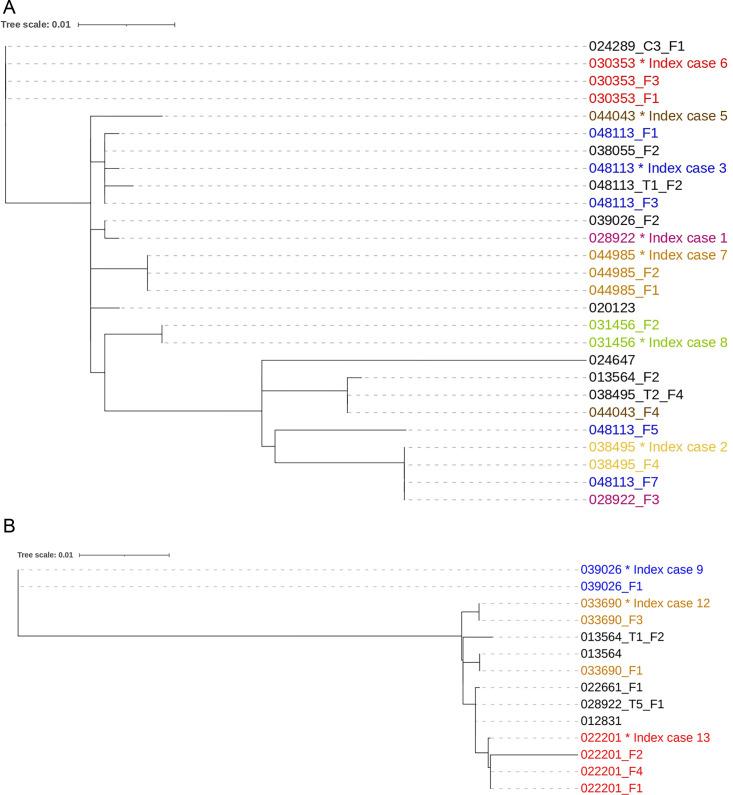
Nontyphoidal (NTS) is a predominant cause of invasive disease in sub-Saharan Africa especially among children under 5 years. Asymptomatic fecal shedding of NTS is hypothesized to contribute to the human-to-human transmission of NTS especially in low-resource settings. However, the role of pathogen shedding in invasive disease is unknown. This study aimed to investigate the prevalence and duration of fecal shedding of NTS among children under 5 years convalescing from invasive NTS disease and among healthy individuals in the community. Children presenting with fever of ≥38°C with or without diarrhea were recruited at four health facilities in Nairobi, between June 2021 and August 2023. Blood and stool samples collected were subjected to culture for the isolation of NTS (. Enteritidis and . Typhimurium). Children with NTS culture-positive samples (index cases) were followed up post-acute disease where household contacts and controls provided stool samples for isolation of NTS. NTS prevalence among the 3,293 individuals recruited was 1.52%. Asymptomatic shedding post-treatment was observed in almost one-third (31%) of the 42 index cases followed up. Of the 13 with intestinal shedding, 7 were shedding NTS of the same sequence type (ST) as the one recovered during acute disease. The longest duration of intestinal shedding was 3 months post-treatment. Of the 241 healthy individuals recruited, 8 had asymptomatic shedding of NTS, and 2 of these were closely related to those recovered from index cases. These findings support the hypothesis of human-to-human transmission of NTS in sub-Saharan Africa highlighting the possible benefit of vaccine introduction.
IMPORTANCE
Asymptomatic fecal shedding of nontyphoidal (NTS) is hypothesized to contribute to the human-to-human transmission of NTS especially in low-resource settings which could lead to invasive disease among high-risk populations, especially children. Our findings reiterate the hypothesis that human reservoirs could be important in the transmission of nontyphoidal in sub-Saharan Africa. This underscores the importance of developing infection prevention measures which could include vaccine deployment and improving water, sanitation and hygiene infrastructure.
目的
非伤寒型(NTS)是撒哈拉以南非洲侵袭性疾病的主要原因,特别是在 5 岁以下儿童中。无症状粪便 NTS 排出被假设为 NTS 人与人之间传播的原因,特别是在资源匮乏的环境中。然而,病原体排出在侵袭性疾病中的作用尚不清楚。本研究旨在调查在从侵袭性 NTS 疾病中康复的 5 岁以下儿童和社区中的健康个体中,NTS 的粪便排出的流行率和持续时间。在 2021 年 6 月至 2023 年 8 月期间,在内罗毕的四个卫生设施中招募了发热≥38°C 伴有或不伴有腹泻的儿童。采集血液和粪便样本进行培养,以分离 NTS(肠炎沙门氏菌和鼠伤寒沙门氏菌)。NTS 培养阳性样本(索引病例)的儿童在急性疾病后进行随访,家庭接触者和对照者提供粪便样本以分离 NTS。在招募的 3293 人中,NTS 的患病率为 1.52%。在随访的 42 例索引病例中,近三分之一(31%)出现无症状治疗后排出。在 13 例肠道排出的病例中,有 7 例排出的 NTS 与急性疾病期间恢复的 NTS 具有相同的序列类型(ST)。肠道排出的最长持续时间为治疗后 3 个月。在招募的 241 名健康个体中,有 8 人无症状排出 NTS,其中 2 人与从索引病例中恢复的 NTS 密切相关。这些发现支持 NTS 在撒哈拉以南非洲人与人之间传播的假设,突出了疫苗接种的可能益处。
重要性
非伤寒型(NTS)的无症状粪便排出被假设为 NTS 人与人之间传播的原因,特别是在资源匮乏的环境中,这可能导致高危人群,特别是儿童中出现侵袭性疾病。我们的研究结果再次证实了人类储库在撒哈拉以南非洲 NTS 传播中可能很重要的假设。这凸显了制定感染预防措施的重要性,其中可能包括疫苗接种的部署以及改善水、环境卫生和个人卫生基础设施。


 Zotero 插件