
解析高活动型埃勒斯-当洛综合征中肥大细胞超敏反应和感染风险的遗传基础。
Decoding the Genetic Basis of Mast Cell Hypersensitivity and Infection Risk in Hypermobile Ehlers-Danlos Syndrome.
作者信息
Shirvani Purusha, Shirvani Arash, Holick Michael F
机构信息
Section of Endocrinology, Diabetes, Nutrition and Weight Management, Department of Medicine, Boston University School of Medicine, Boston, MA 02118, USA.
出版信息
Curr Issues Mol Biol. 2024 Oct 17;46(10):11613-11629. doi: 10.3390/cimb46100689.
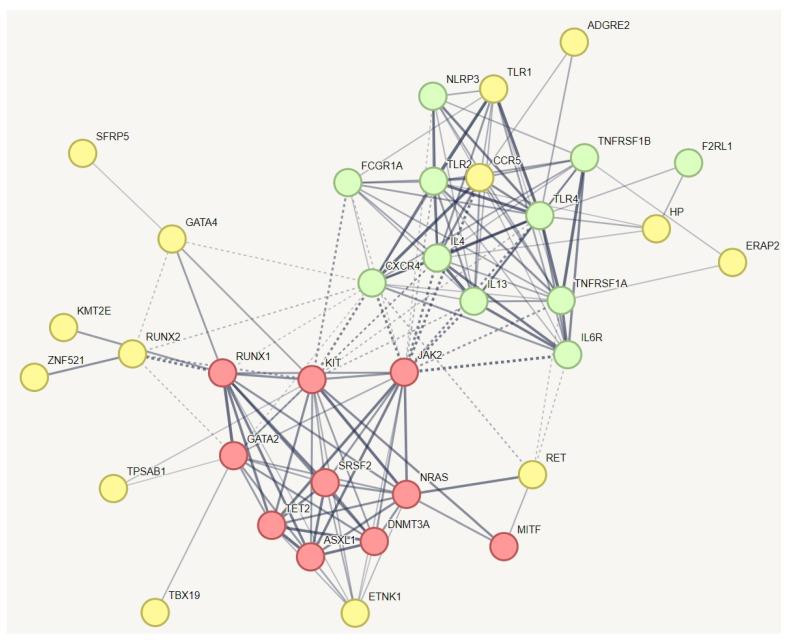
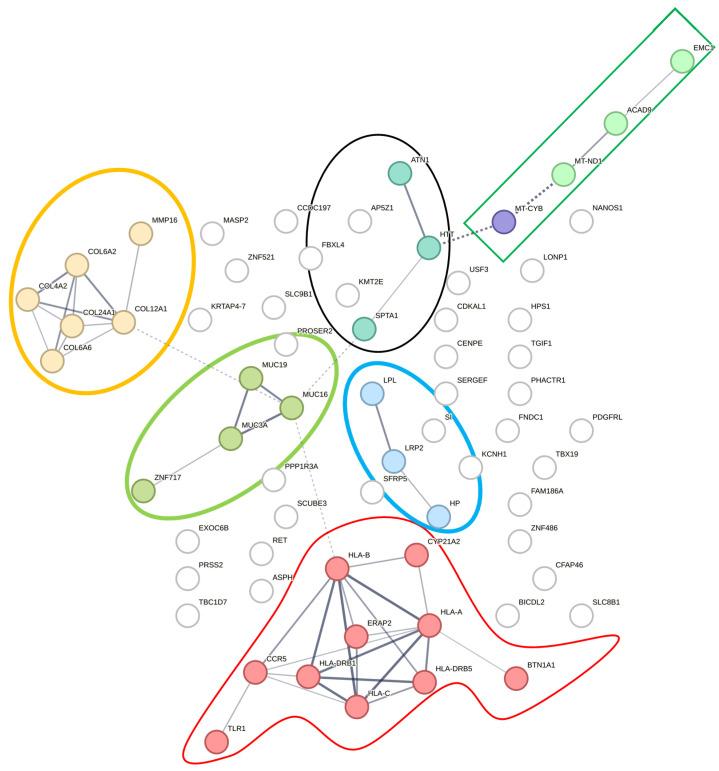
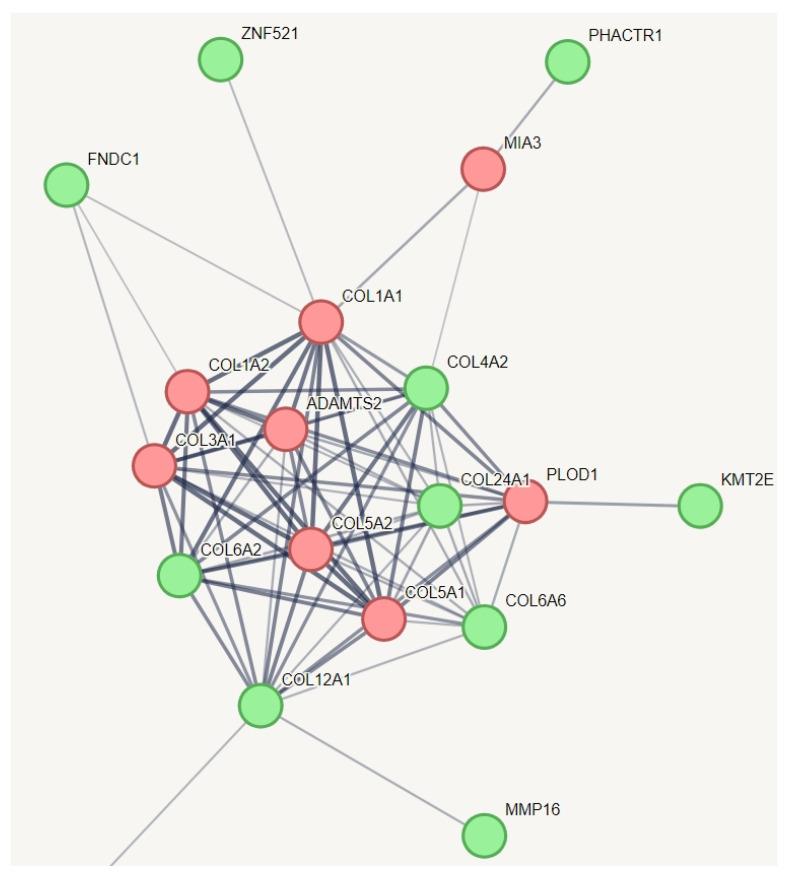
Hypermobile Ehlers-Danlos syndrome (hEDS) is a connective tissue disorder marked by joint hypermobility, skin hyperextensibility, and tissue fragility. Recent studies have linked hEDS with mast cell activation syndrome (MCAS), suggesting a genetic interplay affecting immune regulation and infection susceptibility. This study aims to decode the genetic basis of mast cell hypersensitivity and increased infection risk in hEDS by identifying specific genetic variants associated with these conditions. We conducted whole-genome sequencing (WGS) on 18 hEDS participants and 7 first-degree relatives as controls, focusing on identifying genetic variants associated with mast cell dysregulation. Participants underwent clinical assessments to document hEDS symptoms and mast cell hypersensitivity, with particular attention to past infections and antihistamine response. Our analysis identified specific genetic variants in MT-CYB, HTT, MUC3A, HLA-B and HLA-DRB1, which are implicated in hEDS and MCAS. Protein-protein interaction (PPI) network analysis revealed significant interactions among identified variants, highlighting their involvement in pathways related to antigen processing, mucosal protection, and collagen synthesis. Notably, 61.1% of the hEDS cohort reported recurrent infections compared to 28.5% in controls, and 72.2% had documented mast cell hypersensitivity versus 14.2% in controls. These findings provide a plausible explanation for the complex interplay between connective tissue abnormalities and immune dysregulation in hEDS. The identified genetic variants offer insights into potential therapeutic targets for modulating mast cell activity and improving patient outcomes. Future research should validate these findings in larger cohorts and explore the functional implications of these variants to develop effective treatment strategies for hEDS and related mast cell disorders.
过度活动型埃勒斯-当洛综合征(hEDS)是一种结缔组织疾病,其特征为关节过度活动、皮肤过度伸展和组织脆弱。最近的研究将hEDS与肥大细胞活化综合征(MCAS)联系起来,表明存在影响免疫调节和感染易感性的基因相互作用。本研究旨在通过识别与这些病症相关的特定基因变异,解码hEDS中肥大细胞超敏反应和感染风险增加的遗传基础。我们对18名hEDS参与者和7名作为对照的一级亲属进行了全基因组测序(WGS),重点是识别与肥大细胞失调相关的基因变异。参与者接受了临床评估,以记录hEDS症状和肥大细胞超敏反应,特别关注既往感染和抗组胺药反应。我们的分析在MT-CYB、HTT、MUC3A、HLA-B和HLA-DRB1中识别出特定的基因变异,这些变异与hEDS和MCAS有关。蛋白质-蛋白质相互作用(PPI)网络分析揭示了所识别变异之间的显著相互作用,突出了它们参与与抗原加工黏膜保护和胶原蛋白合成相关的途径。值得注意的是,hEDS队列中有61.1%报告有反复感染,而对照组为28.5%;有72.2%记录有肥大细胞超敏反应,而对照组为14.2%。这些发现为hEDS中结缔组织异常与免疫失调之间的复杂相互作用提供了一个合理的解释。所识别的基因变异为调节肥大细胞活性和改善患者预后的潜在治疗靶点提供了见解。未来的研究应在更大的队列中验证这些发现,并探索这些变异的功能意义,以制定针对hEDS和相关肥大细胞疾病的有效治疗策略。
 Zotero 插件