
非靶向代谢物谱分析揭示了戊糖苷对大鼠脂肪组织的急性毒性。
Untargeted Metabolite Profiling Reveals Acute Toxicity of Pentosidine on Adipose Tissue of Rats.
作者信息
Hu Chuanqin, Shao Zhenzhen, Wu Wei, Wang Jing
机构信息
School of Light Industry Science and Engineering, Beijing Technology and Business University (BTBU), 11 Fucheng Road, Beijing 100048, China.
Key Laboratory of Geriatric Nutrition and Health, Beijing Technology and Business University, Ministry of Education, Beijing 100048, China.
出版信息
Metabolites. 2024 Oct 9;14(10):539. doi: 10.3390/metabo14100539.
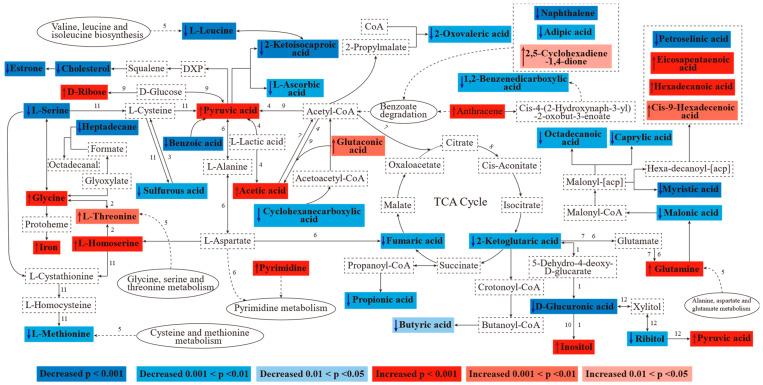
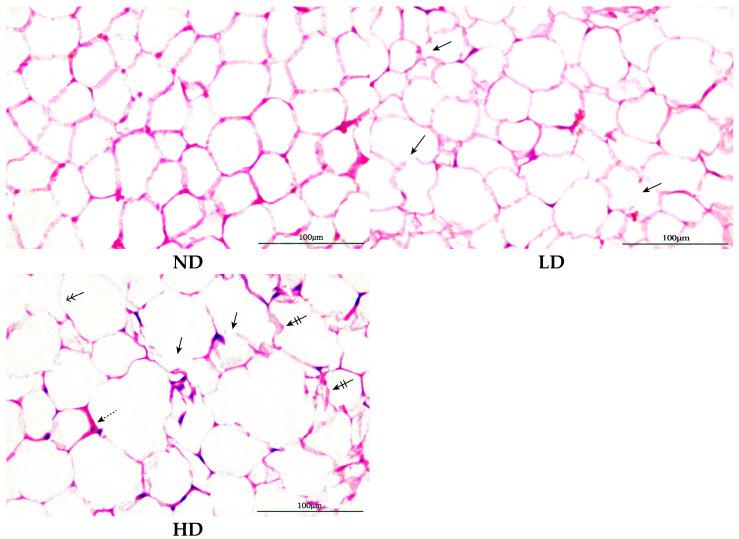
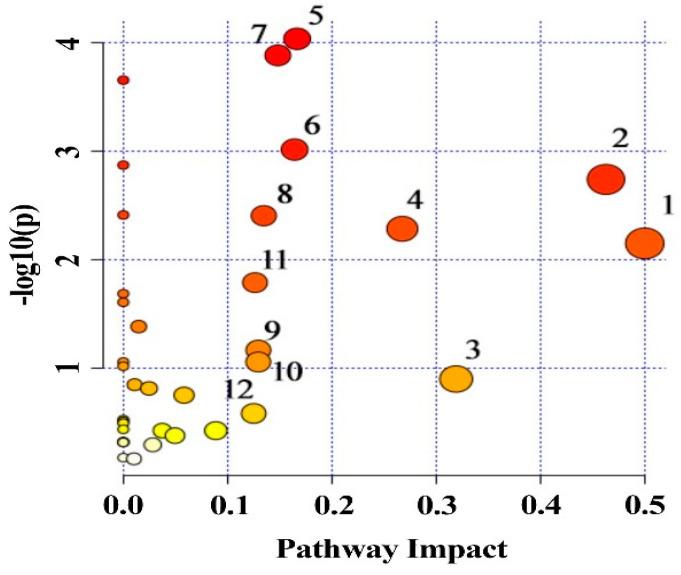
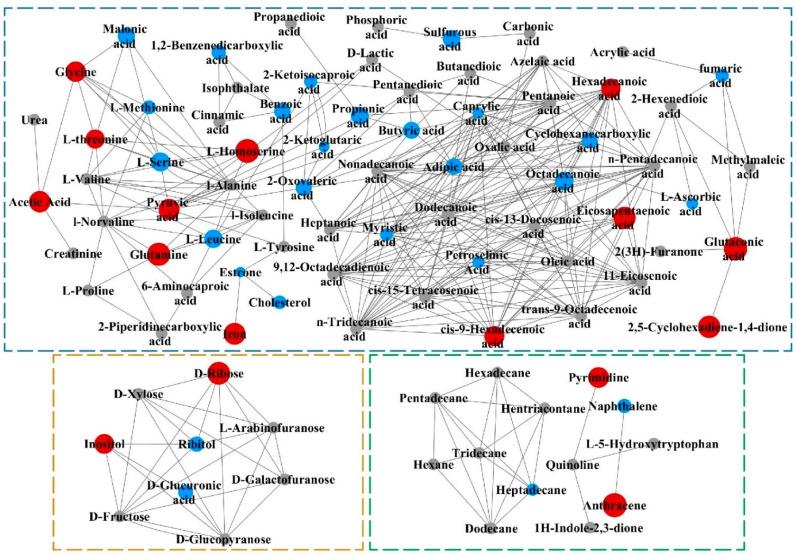
: Pentosidine is an advanced glycation end product that is commonly found in heat-processed foods. Pentosidine has been involved in the occurrence and development of some chronic diseases. It was reported that pentosidine exposure can impair the function of the liver and kidneys. Adipose tissue, as an active endocrine organ, plays an important role in maintaining the normal physiological function of cells. However, the metabolic mechanism that causes pentosidine to induce toxicity in adipose tissue remains unclear. : In the study, thirty male Sprague-Dawley rats were divided into a normal diet group, low dose group, and high dose group. A non-targeted metabolomics approach was used to compare the metabolic profiles of adipose tissue between the pentosidine and normal diet groups. Furthermore, histopathological observation and body weight change analysis were performed to test the results of the metabolomics analysis. : A total of forty-two differential metabolites were identified. Pentosidine mainly disturbed twelve metabolic pathways, such as ascorbate and aldarate metabolism, glycine, serine, and threonine metabolism, sulfur metabolism, pyruvate metabolism, etc. Additionally, pyruvic acid was identified as a possible key upregulated metabolite involved in thirty-four metabolic pathways. α-Ketoglutaric acid was named as a probable key downregulated metabolite involved in nineteen metabolic pathways based on enrichment network analysis. In addition, histopathological analysis and body weight changes confirmed the results of the metabolomics analysis. : These results provided a new perspective for the molecular mechanisms of adipose tissue toxicity induced by pentosidine.
戊糖苷是一种晚期糖基化终产物,常见于热处理食品中。戊糖苷参与了一些慢性疾病的发生和发展。据报道,接触戊糖苷会损害肝脏和肾脏的功能。脂肪组织作为一个活跃的内分泌器官,在维持细胞正常生理功能方面发挥着重要作用。然而,导致戊糖苷在脂肪组织中诱导毒性的代谢机制仍不清楚。
在该研究中,将30只雄性Sprague-Dawley大鼠分为正常饮食组、低剂量组和高剂量组。采用非靶向代谢组学方法比较戊糖苷组和正常饮食组脂肪组织的代谢谱。此外,进行了组织病理学观察和体重变化分析以验证代谢组学分析的结果。
共鉴定出42种差异代谢物。戊糖苷主要扰乱了12条代谢途径,如抗坏血酸和醛糖代谢、甘氨酸、丝氨酸和苏氨酸代谢、硫代谢、丙酮酸代谢等。此外,丙酮酸被确定为可能参与34条代谢途径的关键上调代谢物。基于富集网络分析,α-酮戊二酸被命名为可能参与19条代谢途径的关键下调代谢物。此外,组织病理学分析和体重变化证实了代谢组学分析的结果。
这些结果为戊糖苷诱导脂肪组织毒性的分子机制提供了新的视角。




 Zotero 插件