
RNA-seq 验证用于精准黑色素瘤诊断和预后分层的 microRNA 表达谱。
RNA-seq validation of microRNA expression signatures for precision melanoma diagnosis and prognostic stratification.
机构信息
Geneseq Biosciences, Melbourne, VIC, Australia.
Australian Clinical Laboratories, Clayton, VIC, Australia.
出版信息
BMC Med Genomics. 2024 Oct 25;17(1):256. doi: 10.1186/s12920-024-02028-w.
BACKGROUND
New diagnostic tools are needed to improve the diagnosis and risk stratification of cutaneous melanoma. Disease-specific microRNA signatures have been previously described via NanoString profiling of solid biopsy tissue and plasma. This study validated these signatures via next-generation sequencing technology and compared their performance against clinical metrics and other published melanoma signatures.
METHODS
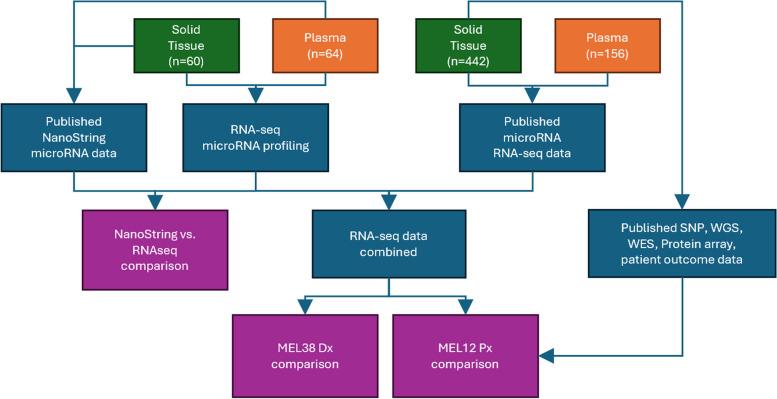
RNA from 64 plasma and 60 FFPE biopsy samples from individuals with invasive melanoma or related benign/control phenotypes was extracted and enriched for microRNA. RNA sequencing was performed to compute MEL38/MEL12 signature scores. The results were evaluated with published NanoString and RNA sequencing datasets, comprising 548 solid tissue samples and 217 plasma samples, to predict disease status and patient outcome.
RESULTS
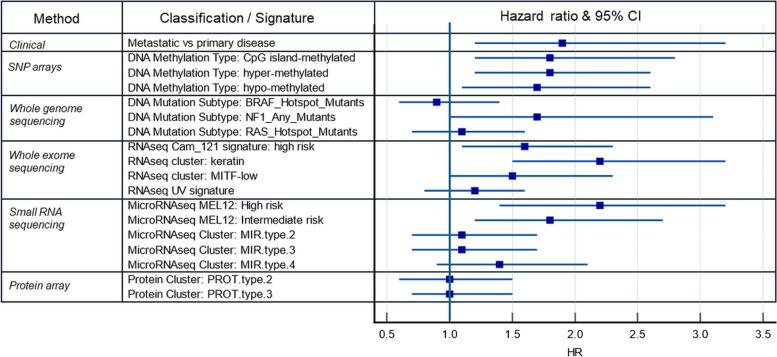
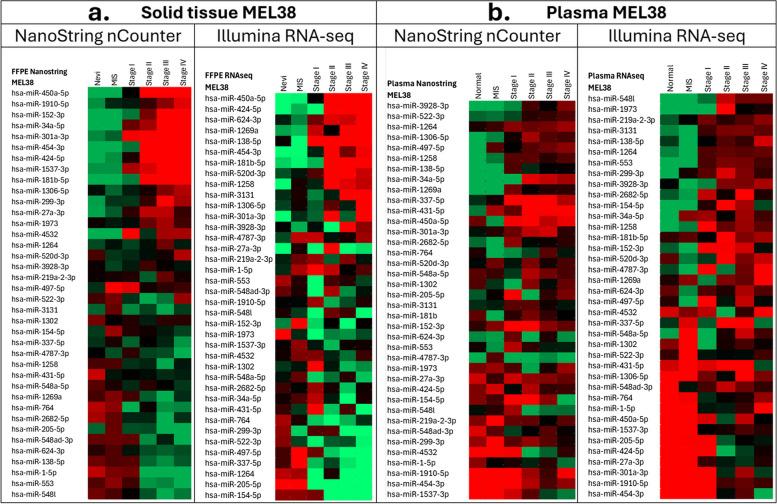
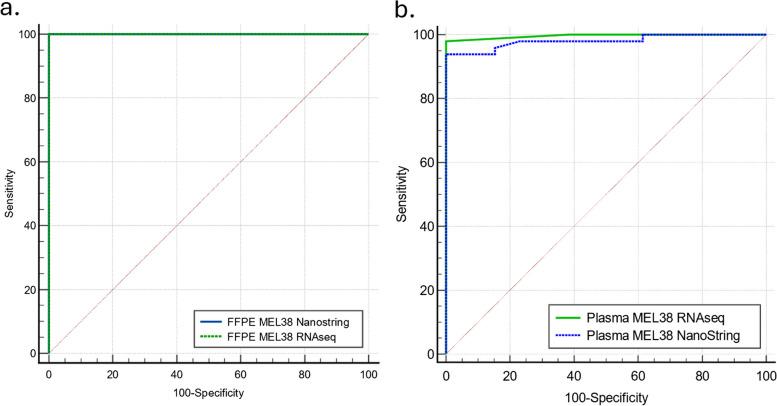
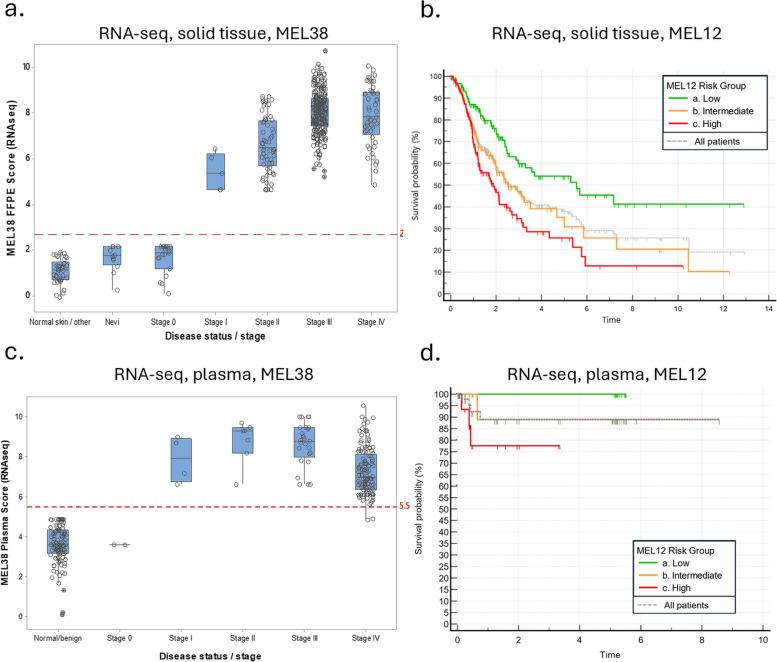
The MEL38 diagnostic signature classifies patients into discrete diagnostic groups via RNA sequencing in either solid tissue or plasma (P < 0.001). In solid tissue, the prognostic MEL12 signature stratifies patients into low-, intermediate- and high-risk groups, independent of clinical covariates. The hazard ratios for 10-year overall survival, based on observed survival intervals, were 2.2 (MEL12 high-risk vs low-risk, P < 0.001) and 1.8 (intermediate-risk vs low-risk, P < 0.001), outperforming other published prognostic models. MEL12 also exhibited prognostic significance in the plasma of 42 patients with invasive disease.
CONCLUSIONS
The MEL38 and MEL12 signatures can be assessed in either solid tissue or plasma using RNA-seq and are strong predictors of disease state and patient outcome. Compared with other genomic methods, MEL12 was shown to be the strongest predictor of poor prognosis. MicroRNA expression profiling offers objective, accurate genomic information about a patient's likelihood of invasive melanoma and prognosis.
背景
需要新的诊断工具来提高皮肤黑色素瘤的诊断和风险分层。先前已经通过对实体活检组织和血浆进行 NanoString 分析描述了疾病特异性 microRNA 特征。本研究通过下一代测序技术验证了这些特征,并将其与临床指标和其他已发表的黑色素瘤特征进行了比较。
方法
从 64 例有侵袭性黑色素瘤或相关良性/对照表型的个体的血浆和 60 例 FFPE 活检样本中提取并富集 microRNA 的 RNA。进行 RNA 测序以计算 MEL38/MEL12 特征评分。使用已发表的 NanoString 和 RNA 测序数据集(包括 548 例实体组织样本和 217 例血浆样本)评估结果,以预测疾病状态和患者结局。
结果
MEL38 诊断特征通过 RNA 测序可将患者分为不同的诊断组,无论是在实体组织还是在血浆中(P < 0.001)。在实体组织中,MEL12 预后特征将患者分为低、中、高危组,与临床协变量无关。基于观察到的生存间隔,10 年总生存率的风险比分别为 2.2(MEL12 高危与低危,P < 0.001)和 1.8(中危与低危,P < 0.001),优于其他已发表的预后模型。MEL12 在 42 例侵袭性疾病患者的血浆中也具有预后意义。
结论
可以使用 RNA-seq 在实体组织或血浆中评估 MEL38 和 MEL12 特征,并且是疾病状态和患者结局的有力预测指标。与其他基因组方法相比,MEL12 是预测预后不良的最强指标。microRNA 表达谱为患者罹患侵袭性黑色素瘤和预后的可能性提供了客观、准确的基因组信息。

 Zotero 插件