
揭示植物大麻素的潜力:探索大麻中鲜为人知的成分对神经紊乱的作用。
Unveiling the Potential of Phytocannabinoids: Exploring Marijuana's Lesser-Known Constituents for Neurological Disorders.
机构信息
Center for Dementia Research, Nathan Kline Institute for Psychiatric Research, Orangeburg, NY 10962, USA.
Department of Psychiatry, New York University Grossman School of Medicine, New York, NY 10016, USA.
出版信息
Biomolecules. 2024 Oct 13;14(10):1296. doi: 10.3390/biom14101296.
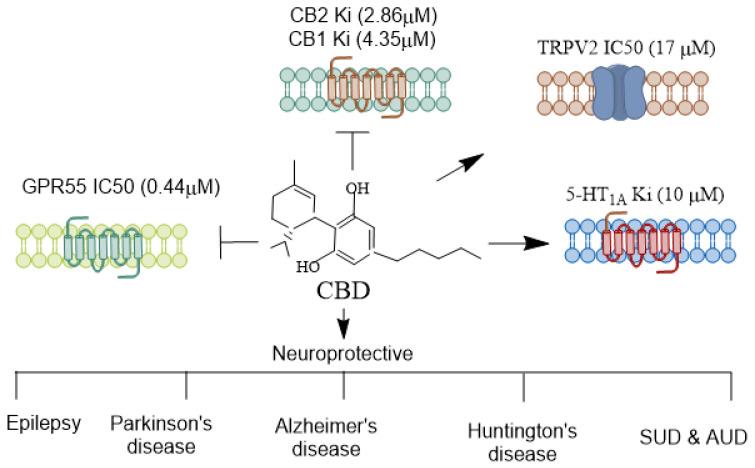
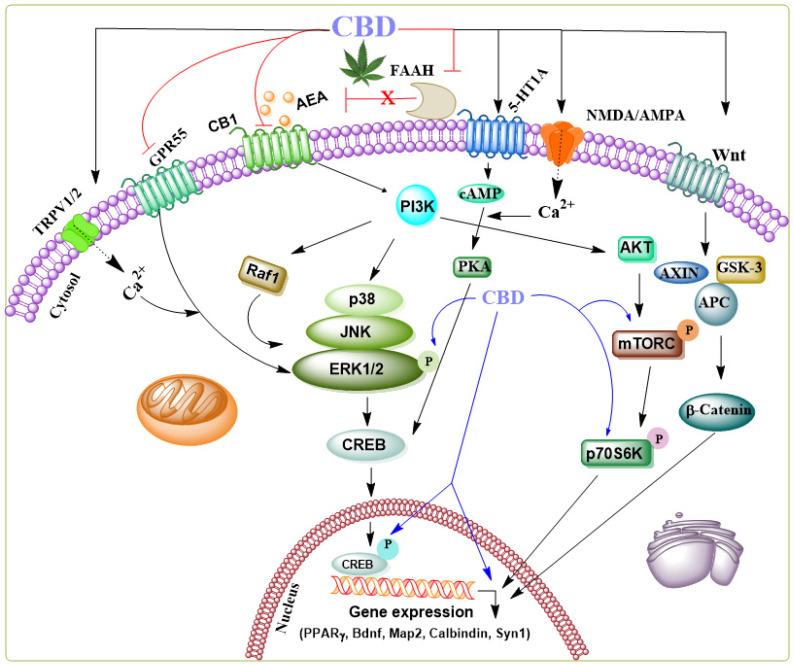
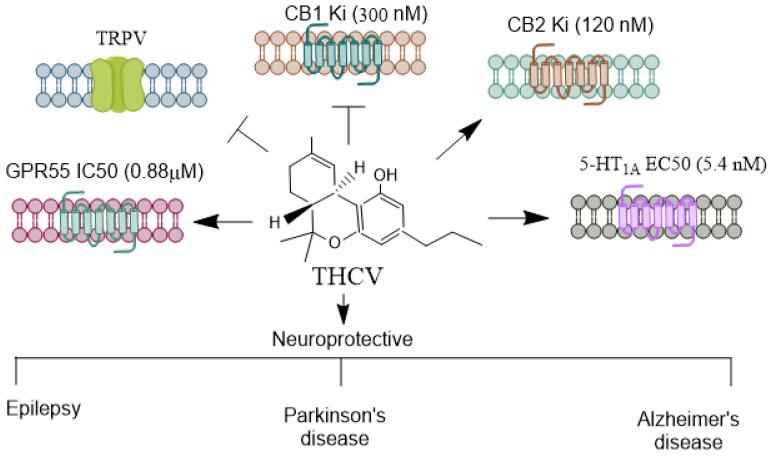
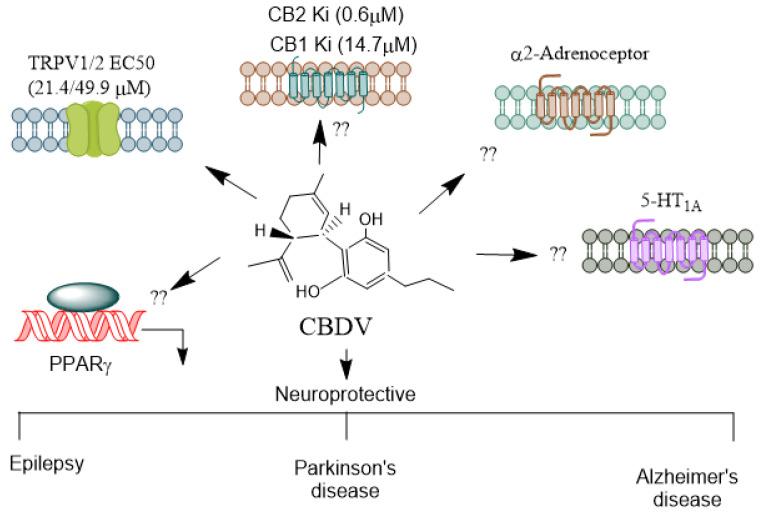
Cannabis sativa is known for producing over 120 distinct phytocannabinoids, with Δ-tetrahydrocannabinol (Δ-THC) and cannabidiol (CBD) being the most prominent, primarily in their acidic forms. Beyond Δ-THC and CBD, a wide array of lesser-known phytocannabinoids, along with terpenes, flavonoids, and alkaloids, demonstrate diverse pharmacological activities, interacting with the endocannabinoid system (eCB) and other biological pathways. These compounds, characterized by phenolic structures and hydroxyl groups, possess lipophilic properties, allowing them to cross the blood-brain barrier (BBB) effectively. Notably, their antioxidant, anti-inflammatory, and neuro-modulatory effects position them as promising agents in treating neurodegenerative disorders. While research has extensively examined the neuropsychiatric and neuroprotective effects of Δ-THC, other minor phytocannabinoids remain underexplored. Due to the well-established neuroprotective potential of CBD, there is growing interest in the therapeutic benefits of non-psychotropic minor phytocannabinoids (NMPs) in brain disorders. This review highlights the emerging research on these lesser-known compounds and their neuroprotective potential. It offers insights into their therapeutic applications across various major neurological conditions.
大麻植物以产生超过 120 种不同的植物大麻素而闻名,其中 Δ-四氢大麻酚(Δ-THC)和大麻二酚(CBD)最为突出,主要以其酸性形式存在。除了 Δ-THC 和 CBD 之外,还有大量鲜为人知的植物大麻素,以及萜烯、类黄酮和生物碱,它们具有多种药理学活性,与内源性大麻素系统(eCB)和其他生物途径相互作用。这些化合物具有酚类结构和羟基,表现出亲脂性,能够有效地穿过血脑屏障(BBB)。值得注意的是,它们的抗氧化、抗炎和神经调节作用使它们成为治疗神经退行性疾病的有前途的药物。尽管研究已经广泛研究了 Δ-THC 的神经精神和神经保护作用,但其他次要的植物大麻素仍未得到充分探索。由于 CBD 具有明确的神经保护潜力,因此人们对非精神活性的次要植物大麻素(NMPs)在大脑疾病中的治疗益处越来越感兴趣。这篇综述强调了这些鲜为人知的化合物及其神经保护潜力的新兴研究。它提供了对这些化合物在各种主要神经疾病中的治疗应用的深入了解。

 Zotero 插件