
一种用于拔除下颌阻生第三磨牙的三维规划向内分割技术:病例系列
A 3D-Planned Inward Fragmentation Technique for the Removal of Impacted Mandibular Third Molars: A Case Series.
作者信息
Engelke Wilfried, Streit David, Acuña-Mardones Pablo, von Marttens Randal, Beltrán Víctor
机构信息
Faculty of Medicine, Georg-August-University of Göttingen, 37075 Göttingen, Germany.
Private Practice in dentaMEDIC, 97638 Mellrichstadt, Germany.
出版信息
J Clin Med. 2024 Oct 13;13(20):6098. doi: 10.3390/jcm13206098.
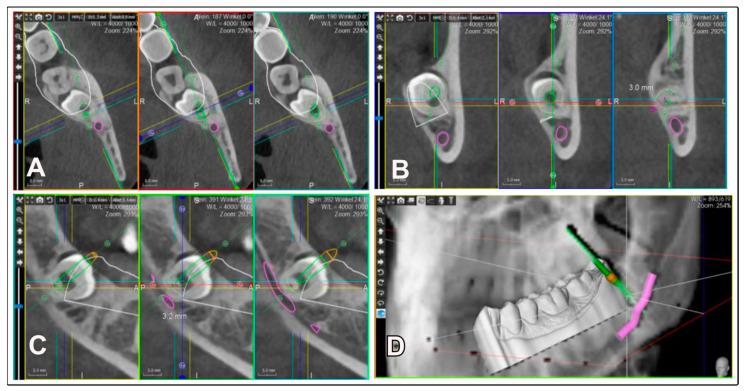
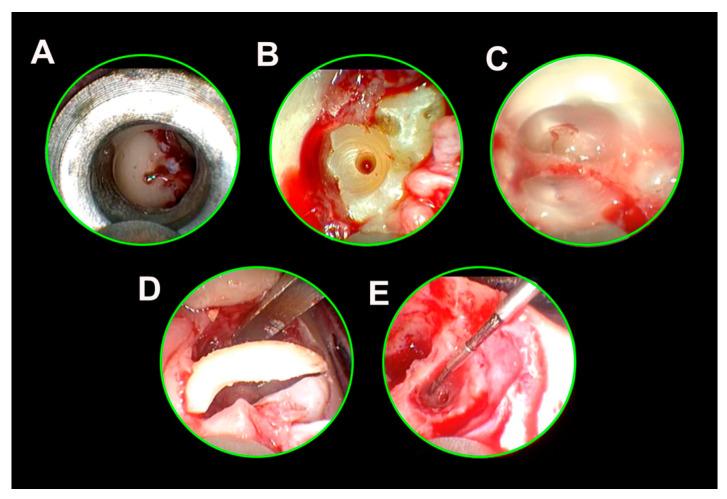
: The extraction of impacted mandibular third molars (M3Ms) carries significant risks, especially regarding the inferior alveolar nerve (IAN). This study aimed to evaluate the effectiveness of a 3D-planned inward fragmentation technique (3Dp-IFT) to improve surgical outcomes, reduce complications, and preserve bone structure in cases involving complex M3M impactions. : Twenty-three patients aged between 18 and 36 years requiring M3M removal were included. Preoperative planning involved the use of cone-beam computed tomography (CBCT) for precise localization of the furcation area, followed by the creation of a 3D navigation template using PlastyCAD software version 1.7. The surgical procedure was performed under local anesthesia, with meticulous endoscopic assistance to ensure accurate access and minimize trauma. Postoperative outcomes, such as bone loss, pain, swelling, and mouth opening range, were carefully measured. The data were systematically organized and analyzed descriptively using Microsoft Excel. : No disturbances to the IAN or lingual nerve were observed. The mean buccal bone loss was 2.2 mm, with a standard deviation of 1.2 mm. Postoperative pain and swelling were generally low, with significant reductions within the first week. The use of the 3D navigation template significantly improved surgical access, enhancing safety and minimizing complications. : The 3Dp-IFT technique represents a significant advancement in the minimally invasive removal of M3M by allowing precise access to critical anatomical areas while minimizing bone loss and postoperative complications. This approach is particularly beneficial for complex cases involving M3M near the IAN, thereby improving surgical safety and patient outcomes.
下颌阻生第三磨牙(M3M)的拔除存在重大风险,尤其是涉及下牙槽神经(IAN)时。本研究旨在评估三维规划向内劈开技术(3Dp-IFT)在改善手术效果、减少并发症以及在复杂M3M阻生病例中保留骨结构方面的有效性。23名年龄在18至36岁之间需要拔除M3M的患者被纳入研究。术前规划包括使用锥形束计算机断层扫描(CBCT)精确定位分叉区,随后使用PlastyCAD软件1.7版本创建三维导航模板。手术在局部麻醉下进行,在内镜的细致辅助下确保准确入路并将创伤降至最低。仔细测量术后结果,如骨丢失、疼痛、肿胀和开口度。使用Microsoft Excel对数据进行系统整理和描述性分析。未观察到IAN或舌神经受到干扰。颊侧骨丢失的平均值为2.2毫米,标准差为1.2毫米。术后疼痛和肿胀总体较轻,在第一周内有显著减轻。三维导航模板的使用显著改善了手术入路,提高了安全性并减少了并发症。3Dp-IFT技术通过允许精确进入关键解剖区域,同时将骨丢失和术后并发症降至最低,代表了M3M微创拔除的重大进展。这种方法对于IAN附近复杂M3M的病例特别有益,从而提高了手术安全性和患者预后。




 Zotero 插件