
红葡萄酒及其成分对神经认知障碍的潜在影响:一项叙述性综述。
The Potential Effects of Red Wine and Its Components on Neurocognitive Disorders: A Narrative Review.
机构信息
Division of Gerontology and Geriatrics, Department of Medicine and Surgery, University of Perugia, 06123 Perugia, Italy.
Department of Internal Medicine and Medical Specialties, University of Genoa, 16132 Genoa, Italy.
出版信息
Nutrients. 2024 Oct 10;16(20):3431. doi: 10.3390/nu16203431.
BACKGROUND
The aging population is associated with a net increase in the incidence and prevalence of chronic-degenerative diseases, particularly neurocognitive disorders. Therefore, the identification of preventative strategies to restrain the burden of such chronic conditions is of key relevance. Red wine and its components have accumulated evidence regarding their positive effects in terms of neurological pathologies associated with neurocognitive symptoms.
METHODS
Based on this background, the present narrative review aims to summarize the state-of-the-art evidence on the effects of red wine and its components on neurocognitive disorders in both preclinical and clinical settings.
RESULTS
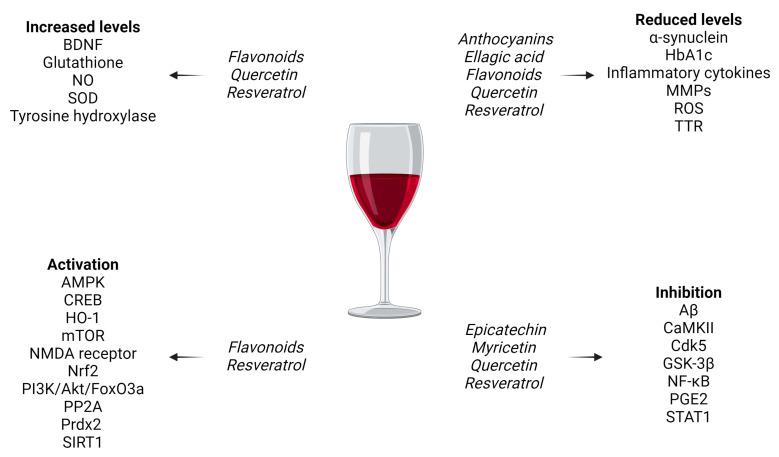
The main findings highlight a protective effect of wine polyphenols present in red wine on dementia in different preclinical models of cognitive decline. The current translational clinical evidence remains uncertain, especially considering the risk-to-benefit ratio of alcohol consumption on brain health.
CONCLUSIONS
Given the overall health risks associated with red wine consumption and consistent with the prevailing guidelines in the literature, there is insufficient evidence to support light-to-moderate red wine consumption as an effective strategy for preventing these diseases. However, the largely preclinical findings on polyphenols derived from red wine remain of significant interest in this context.
背景
人口老龄化与慢性退行性疾病(尤其是神经认知障碍)的发病率和患病率净增相关。因此,寻找预防策略以减轻此类慢性疾病的负担至关重要。红葡萄酒及其成分在神经认知症状相关的神经病理学方面具有积极作用,相关证据不断积累。
方法
基于这一背景,本综述性叙述旨在总结红葡萄酒及其成分在临床前和临床环境中对神经认知障碍影响的最新证据。
结果
主要发现强调了红葡萄酒中所含的葡萄酒多酚对不同认知能力下降的临床前痴呆模型具有保护作用。目前的转化临床证据仍不确定,尤其是考虑到饮酒对大脑健康的风险-效益比。
结论
鉴于与红葡萄酒消费相关的整体健康风险,并与文献中的主流指南一致,没有足够的证据支持轻至中度红葡萄酒消费是预防这些疾病的有效策略。然而,在这方面,源自红葡萄酒的多酚的大量临床前发现仍然具有重要意义。
 Zotero 插件