
基于小鼠面部亚微观特征的阿尔茨海默病检测的改进深度学习方法。
A modified deep learning method for Alzheimer's disease detection based on the facial submicroscopic features in mice.
机构信息
Institute of Modern Physics, Chinese Academy of Sciences, 509 Nanchang Road, Lanzhou, 730000, Gansu Province, China.
Key Laboratory of Basic Research On Heavy Ion Radiation Application in Medicine, Lanzhou, 730000, Gansu Province, China.
出版信息
Biomed Eng Online. 2024 Oct 31;23(1):109. doi: 10.1186/s12938-024-01305-0.
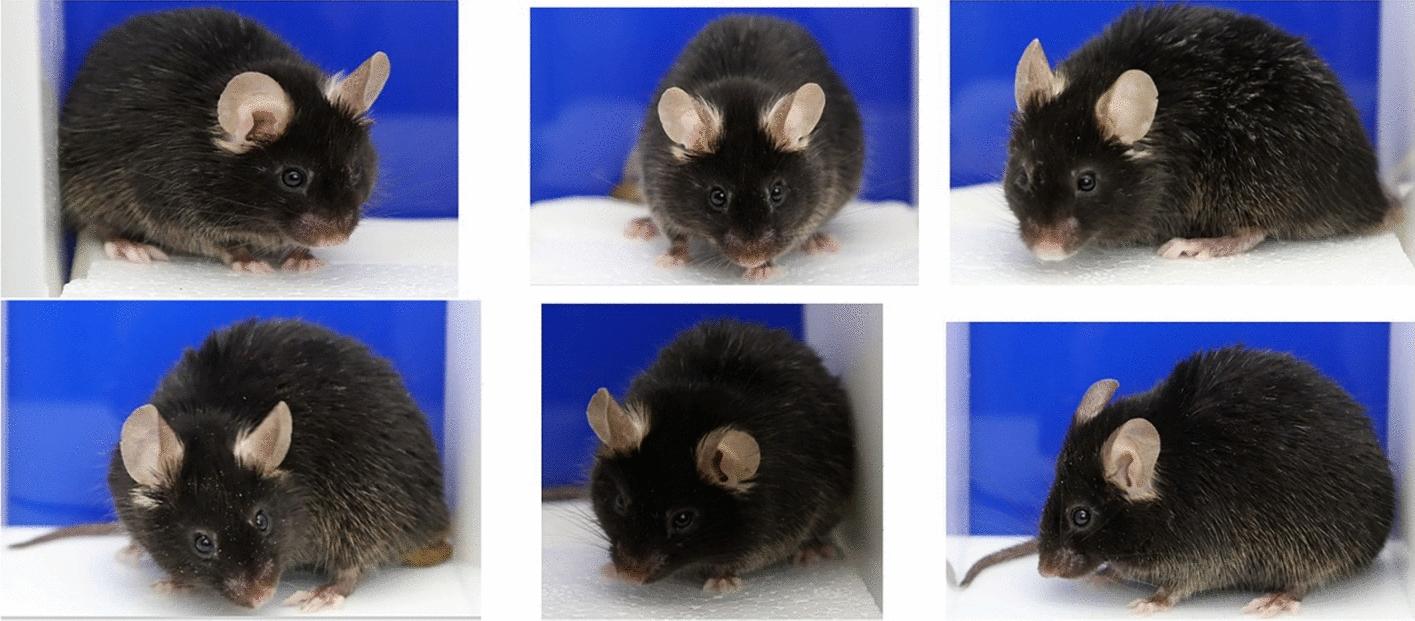
Alzheimer's disease (AD) is a chronic disease among people aged 65 and older. As the aging population continues to grow at a rapid pace, AD has emerged as a pressing public health issue globally. Early detection of the disease is important, because increasing evidence has illustrated that early diagnosis holds the key to effective treatment of AD. In this work, we developed and refined a multi-layer cyclic Residual convolutional neural network model, specifically tailored to identify AD-related submicroscopic characteristics in the facial images of mice. Our experiments involved classifying the mice into two distinct groups: a normal control group and an AD group. Compared with the other deep learning models, the proposed model achieved a better detection performance in the dataset of the mouse experiment. The accuracy, sensitivity, specificity and precision for AD identification with our proposed model were as high as 99.78%, 100%, 99.65% and 99.44%, respectively. Moreover, the heat maps of AD correlation in the facial images of the mice were acquired with the class activation mapping algorithm. It was proven that the facial images contained AD-related submicroscopic features. Consequently, through our mouse experiments, we validated the feasibility and accuracy of utilizing a facial image-based deep learning model for AD identification. Therefore, the present study suggests the potential of using facial images for AD detection in humans through deep learning-based methods.
阿尔茨海默病(AD)是一种在 65 岁及以上人群中常见的慢性疾病。随着人口老龄化的快速增长,AD 已成为全球一个紧迫的公共卫生问题。早期发现这种疾病很重要,因为越来越多的证据表明,早期诊断是治疗 AD 的关键。在这项工作中,我们开发并改进了一种多层循环残差卷积神经网络模型,专门用于识别小鼠面部图像中的 AD 相关亚微观特征。我们的实验涉及将小鼠分为两组:正常对照组和 AD 组。与其他深度学习模型相比,所提出的模型在小鼠实验数据集上具有更好的检测性能。我们提出的模型对 AD 的识别准确率、灵敏度、特异性和精度分别高达 99.78%、100%、99.65%和 99.44%。此外,我们还使用类激活映射算法获取了小鼠面部图像中 AD 相关的热图。结果证明,这些面部图像包含 AD 相关的亚微观特征。因此,通过我们的小鼠实验,我们验证了基于面部图像的深度学习模型用于 AD 识别的可行性和准确性。因此,本研究表明,通过深度学习方法,使用面部图像进行 AD 检测具有一定的潜力。




 Zotero 插件