
难治性睾丸生殖细胞肿瘤对多梳抑制途径去甲基酶 KDM6A 和 KDM6B 的靶向治疗高度敏感。
Refractory testicular germ cell tumors are highly sensitive to the targeting of polycomb pathway demethylases KDM6A and KDM6B.
机构信息
Department of Comparative Biosciences, University of Illinois Urbana-Champaign, 2001 South Lincoln Avenue, Urbana, IL, 61802, USA.
Department of Anatomy and Embryology, Alexandria University, Alexandria, Egypt.
出版信息
Cell Commun Signal. 2024 Oct 31;22(1):528. doi: 10.1186/s12964-024-01912-3.
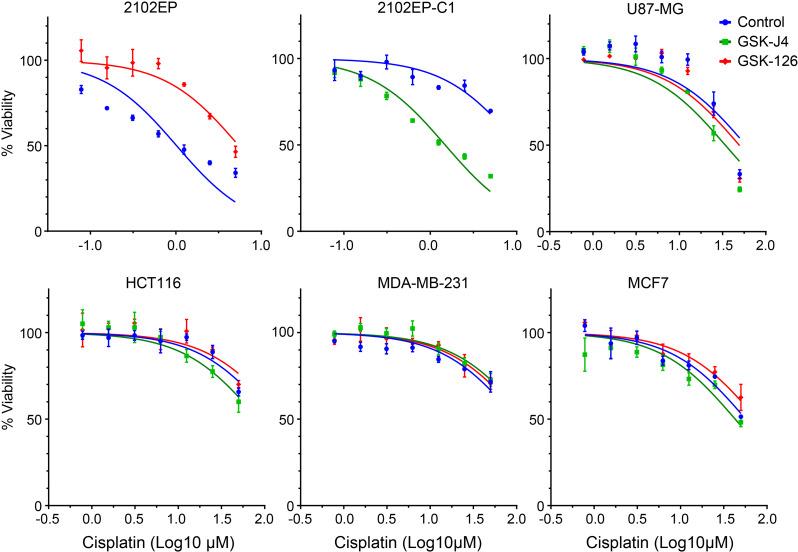
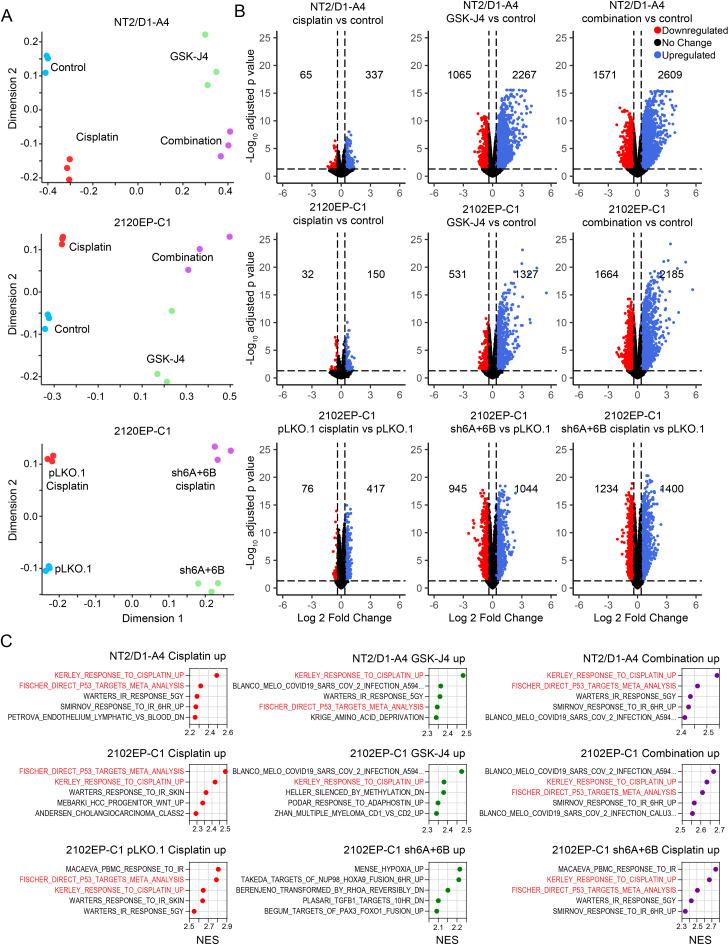
Testicular germ cell tumors (TGCTs) can be treated with cisplatin-based therapy. However, a clinically significant number of cisplatin-resistant patients die from progressive disease as no effective alternatives exist. Curative cisplatin therapy results in acute and life-long toxicities in the young TGCT patient population providing a rationale to decrease cisplatin exposure. In contrast to genetic alterations, recent evidence suggests that epigenetics is a major driving factor for TGCT formation, progression, and response to chemotherapy. Hence, targeting epigenetic pathways with "epidrugs" is one potential relatively unexplored strategy to advance TGCT treatment beyond cisplatin. In this report, we demonstrate for the first time that targeting polycomb demethylases KDM6A and KDM6B with epidrug GSK-J4 can treat both cisplatin-sensitive and -resistant TGCTs. While GSK-J4 had minimal effects alone on TGCT tumor growth in vivo, it dramatically sensitized cisplatin-sensitive and -resistant TGCTs to cisplatin. We validated KDM6A/KDM6B as the target of GSK-J4 since KDM6A/KDM6B genetic depletion had a similar effect to GSK-J4 on cisplatin-mediated anti-tumor activity and transcriptome alterations. Pharmacologic and genetic targeting of KDM6A/KDM6B potentiated or primed the p53-dominant transcriptional response to cisplatin, with also evidence for basal activation of p53. Further, several chromatin modifier genes, including BRD4, lysine demethylases, chromodomain helicase DNA binding proteins, and lysine methyltransferases, were repressed with cisplatin only in KDM6A/KDM6B-targeted cells, implying that KDM6A/KDM6B inhibition sets the stage for extensive chromatin remodeling of TGCT cells upon cisplatin treatment. Our findings demonstrate that targeting polycomb demethylases is a new potent pharmacologic strategy for treating cisplatin resistant TGCTs that warrants clinical development.
睾丸生殖细胞肿瘤(TGCTs)可以用顺铂为基础的治疗方法进行治疗。然而,由于没有有效的替代方法,相当数量的顺铂耐药患者死于进行性疾病。在 TGCT 年轻患者群体中,有效的顺铂治疗会导致急性和终身毒性,这为减少顺铂暴露提供了合理依据。与遗传改变相反,最近的证据表明,表观遗传学是 TGCT 形成、进展和对化疗反应的主要驱动因素。因此,用“表遗传学药物”靶向表观遗传途径是一种潜在的、相对未被探索的策略,可以使 TGCT 的治疗超越顺铂。在本报告中,我们首次证明,用表遗传学药物 GSK-J4 靶向多梳抑制酶 KDM6A 和 KDM6B 可以治疗顺铂敏感和耐药的 TGCT。虽然 GSK-J4 单独作用于 TGCT 肿瘤生长的效果很小,但它显著增强了顺铂敏感和耐药的 TGCT 对顺铂的敏感性。我们验证了 KDM6A/KDM6B 是 GSK-J4 的靶点,因为 KDM6A/KDM6B 基因缺失对顺铂介导的抗肿瘤活性和转录组改变具有与 GSK-J4 相似的作用。KDM6A/KDM6B 的药理学和遗传学靶向作用增强或启动了 p53 主导的对顺铂的转录反应,也有证据表明 p53 处于基础激活状态。此外,包括 BRD4、赖氨酸去甲基酶、染色质螺旋酶 DNA 结合蛋白和赖氨酸甲基转移酶在内的几种染色质修饰基因,仅在用 KDM6A/KDM6B 靶向细胞的顺铂处理时被抑制,这意味着 KDM6A/KDM6B 抑制为 TGCT 细胞在顺铂处理时进行广泛的染色质重塑奠定了基础。我们的研究结果表明,靶向多梳抑制酶是治疗顺铂耐药 TGCT 的一种新的有效药物治疗策略,值得进一步临床开发。




 Zotero 插件