
热裤:运动仿生学这一新兴领域,从医院病床到国际空间站。
Hot pants: The emerging field of exercise mimetics, from hospital beds to the international space station.
机构信息
University of Canberra, Research Institute for Sport and Exercise, Bruce, Australian Capital Territory, Australia.
出版信息
Physiol Rep. 2024 Nov;12(21):e70108. doi: 10.14814/phy2.70108.
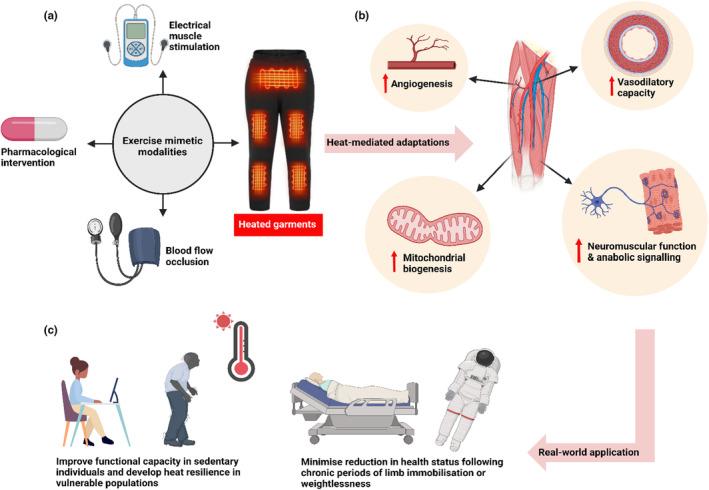
Partaking in regular exercise has vast psychological and physiological benefits. However, factors that promote sedentary lifestyle such as occupational obligations (desk-based work) or underlying health comorbidities can limit adherence to exercise regimes. Considering the current trends in physical inactivity, development of alternate strategies to replicate or mimic the beneficial adaptations associated with regular exercise may become a highly sought after commodity. A relevant and current example of this is the enormous market demand for glucagon-like peptide-1 drugs for the management of obesity and type-2 diabetes. The goal of this short review is to direct attention toward non-pharmaceutical strategies and specifically focuses on the topical application of heat stress to passively improve health. The review highlights important heat-induced adaptations and identifies scope for technological innovations that will allow delivery of heating interventions outside the confinement of laboratory settings.
定期运动对身心健康有巨大益处。然而,一些因素会导致人们久坐不动,例如职业需求(伏案工作)或潜在的健康合并症,这会限制他们对运动方案的坚持。考虑到目前身体活动不足的趋势,开发替代策略来复制或模拟与定期运动相关的有益适应性可能会成为一种非常需要的商品。当前一个相关的例子是,人们对胰高血糖素样肽-1 类药物的巨大市场需求,这些药物用于治疗肥胖症和 2 型糖尿病。本综述的目的是将注意力转向非药物策略,并特别关注将热应激应用于体表以被动改善健康的方法。该综述强调了重要的热诱导适应,并确定了技术创新的范围,这将使加热干预能够在实验室环境之外进行。
 Zotero 插件