
硼基自由基介导的卤原子转移(XAT)能够实现卤代烃的类似Sonogashira反应的炔基化反应。
Boryl radical-mediated halogen-atom transfer (XAT) enables the Sonogashira-like alkynylation of alkyl halides.
作者信息
Corpas Javier, Alonso Maialen, Leonori Daniele
机构信息
Institute of Organic Chemistry, RWTH Aachen University Landoltweg 1 Aachen 52056 Germany
出版信息
Chem Sci. 2024 Oct 24;15(45):19113-8. doi: 10.1039/d4sc06516f.
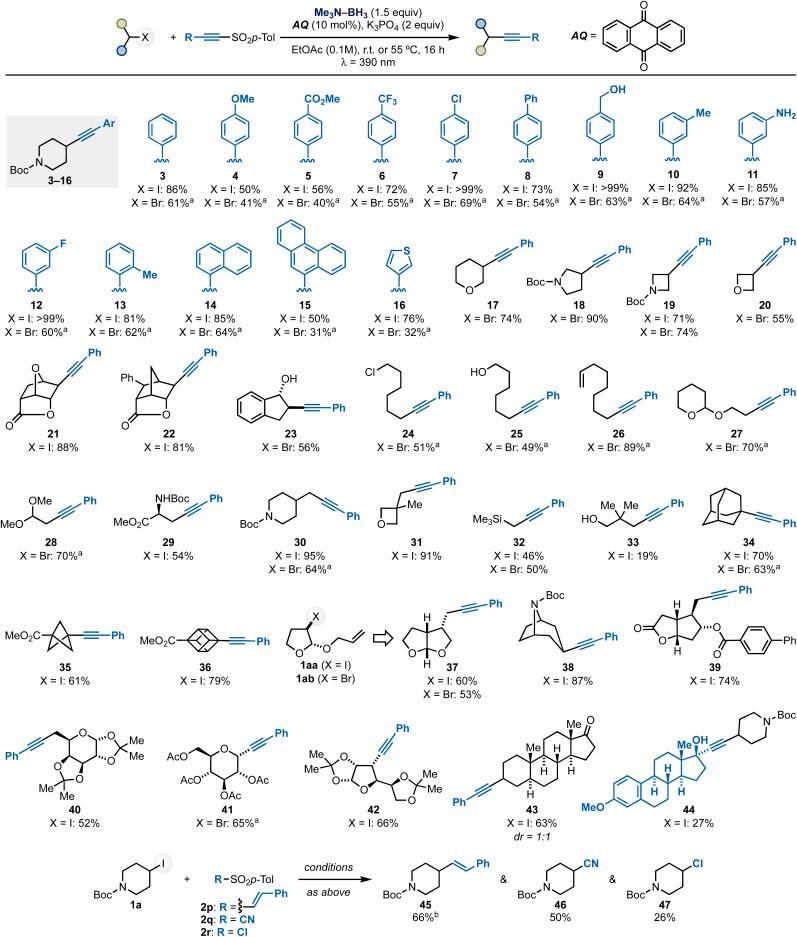
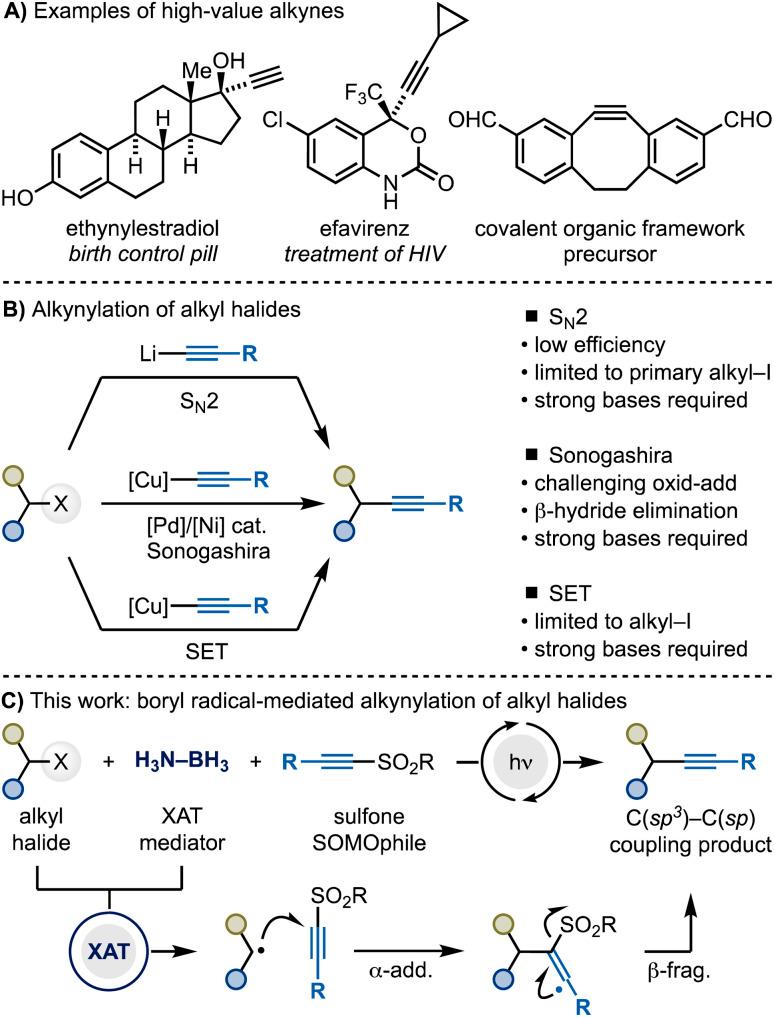
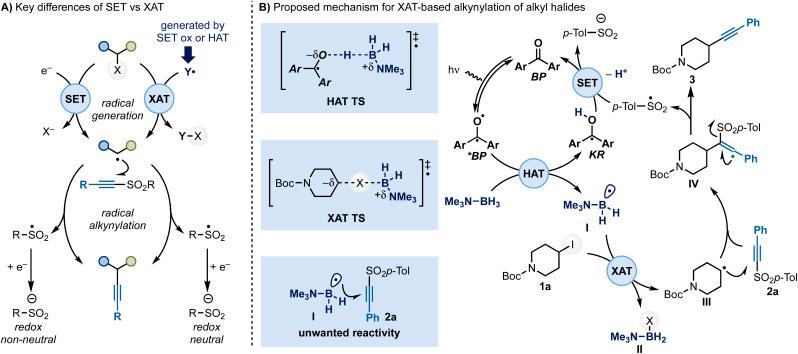
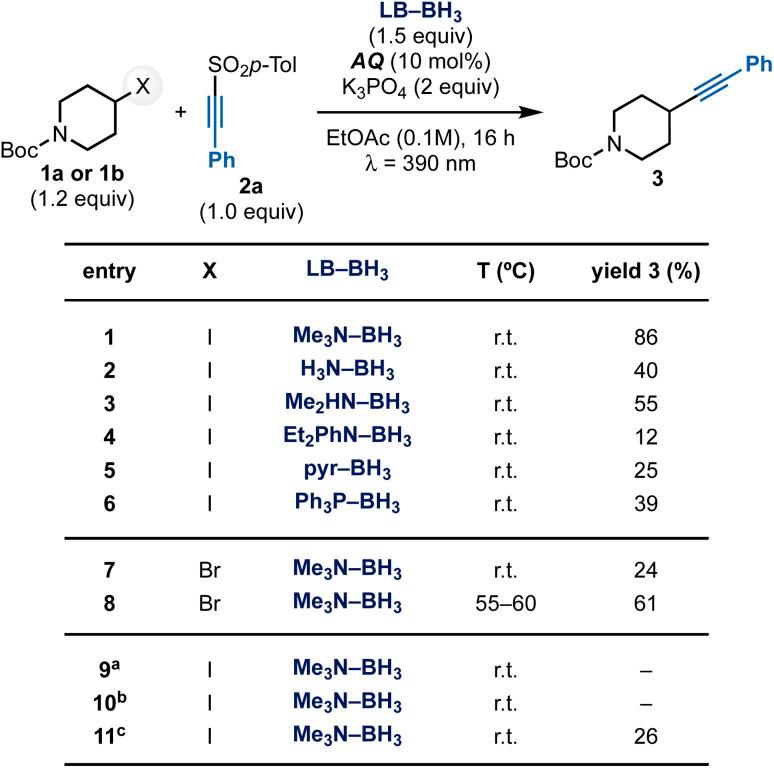
Alkynes are a crucial class of materials with application across the wide range of chemical disciplines. The alkynylation of alkyl halides presents an ideal strategy for assembling these materials. Current methods rely on the intrinsic electrophilic nature of alkyl halides to couple with nucleophilic acetylenic systems, but these methods faces limitations in terms of applicability and generality. Herein, we introduce a different approach to alkynylation of alkyl halides that proceeds radical intermediates and uses alkynyl sulfones as coupling partners. This strategy exploits the ability of amine-ligated boryl radicals to activate alkyl iodides and bromides through halogen-atom transfer (XAT). The resulting radicals then undergo a cascade of α-addition and β-fragmentation with the sulfone reagent, leading to the construction of C(sp)-C(sp) bonds. The generality of the methodology has been demonstrated by its successful application in the alkynylation of complex and high-value molecules.
炔烃是一类至关重要的材料,在广泛的化学学科中都有应用。卤代烷的炔基化是组装这些材料的理想策略。目前的方法依赖于卤代烷固有的亲电性质与亲核炔体系偶联,但这些方法在适用性和通用性方面存在局限性。在此,我们介绍一种不同的卤代烷炔基化方法,该方法通过自由基中间体进行,并使用炔基砜作为偶联伙伴。这种策略利用胺连接的硼自由基通过卤原子转移(XAT)激活烷基碘化物和溴化物的能力。生成的自由基随后与砜试剂进行一系列α-加成和β-碎片化反应,从而构建C(sp)-C(sp)键。该方法的通用性已通过其在复杂和高价值分子炔基化中的成功应用得到证明。
 Zotero 插件