
通过运动改善免疫系统:高血压的新型调节机制
Improvement of the Immunity System Through Sports: Novel Regulatory Mechanisms for Hypertension.
作者信息
Yang Jin, Sun Rui, Pei Zuowei
机构信息
Department of Central Laboratory, Central Hospital of Dalian University of Technology, 116033 Dalian, Liaoning, China.
Emergency Department, The First Affiliated Hospital of Dalian Medical University, 116011 Dalian, Liaoning, China.
出版信息
Rev Cardiovasc Med. 2024 Oct 25;25(10):385. doi: 10.31083/j.rcm2510385. eCollection 2024 Oct.
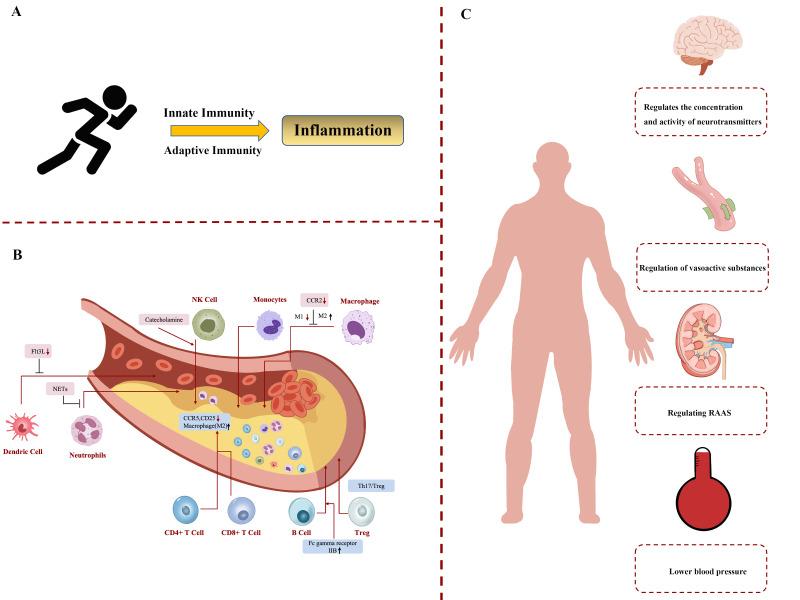
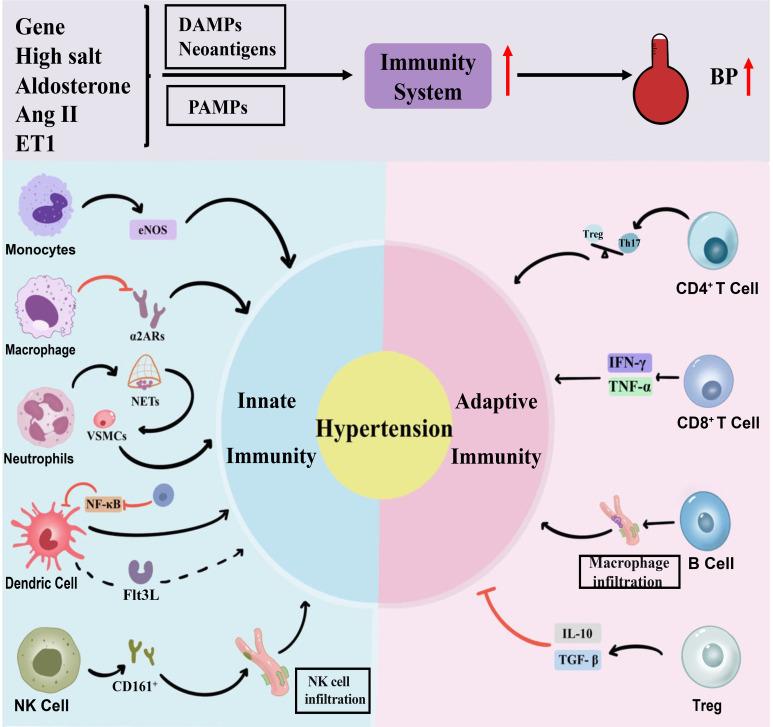
Hypertension and its resulting target organ damage is a complex process associated with a range of physiological and molecular factors, including immune regulation. The profound effects of exercise on normal immune system function and the development and progression of hypertension are well known. This review aims to create new avenues for preventing and treating hypertension and its associated target organ damage. This narrative review emphasizes the role of exercise training in the prevention/treatment of hypertension development through immune response modulation and presents current perspectives on the available scientific evidence. Several studies have shown that exercise regulates hypertension by altering immune cells, which is partly attributable to the anti-inflammatory effects of exercise training. Regular exercise modifies immune modulation and could represent a new mechanism for regulating hypertension. Although the utilization of exercise training and the immune system in conjunction for treating and preventing hypertension is still in its early stages, current scientific literature indicates numerous potential physiological links between exercise training, the immune system, and hypertension.
高血压及其导致的靶器官损害是一个复杂的过程,与一系列生理和分子因素相关,包括免疫调节。运动对正常免疫系统功能以及高血压的发生和发展具有深远影响,这是众所周知的。本综述旨在为预防和治疗高血压及其相关靶器官损害开辟新途径。这篇叙述性综述强调了运动训练通过调节免疫反应在预防/治疗高血压发生中的作用,并介绍了现有科学证据的当前观点。多项研究表明,运动通过改变免疫细胞来调节高血压,这部分归因于运动训练的抗炎作用。规律运动可改变免疫调节,可能代表一种调节高血压的新机制。尽管将运动训练与免疫系统结合用于治疗和预防高血压仍处于早期阶段,但当前科学文献表明,运动训练、免疫系统和高血压之间存在众多潜在的生理联系。
 Zotero 插件