
探寻组蛋白密码
On the Hunt for the Histone Code.
作者信息
Ueberheide Beatrix M, Mollah Sahana, Garcia Benjamin A
机构信息
Proteomics Laboratory, Division of Advanced Research Technologies, Department of Biochemistry and Molecular Pharmacology, New York University Langone Health Center, New York, New York, USA; Department of Neurology, New York University Langone Health Center, New York, New York, USA.
SCIEX, Redwood City, California, USA.
出版信息
Mol Cell Proteomics. 2024 Dec;23(12):100873. doi: 10.1016/j.mcpro.2024.100873. Epub 2024 Nov 1.
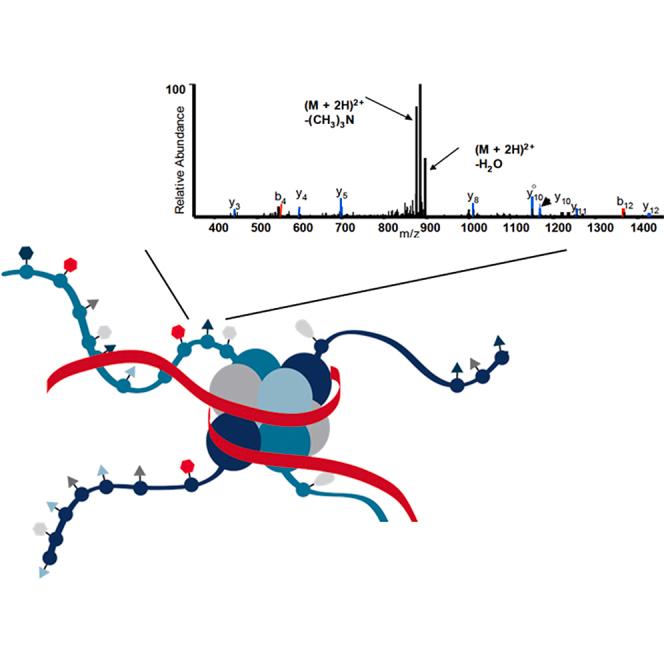
Our genome is not made of naked DNA but a fiber (chromatin) composed of DNA and proteins packaged into our chromosomes. The basic building block of chromatin is the nucleosome, which has two copies of each of the proteins called histones (H2A, H2B, H3, and H4) wrapped by 146 base pairs of DNA. Regions of our genetic material are found between the more open (euchromatin) and more compact (heterochromatin) regions of the genome that can be variably accessible to the underlying genes. Furthermore, post-translational modifications (PTMs) on histones, such as on H3, are critical for regulating chromatin accessibility and gene expression. While site-specific antibodies were the tool of choice for histone PTM analysis in the early days (pre-2000s), enter Don Hunt changing the histone PTM field forever. Don's clever thinking brought new innovative mass spectrometry-based approaches to the epigenetics field. His lab's effort led to the discovery of many new histone modifications and methods to facilitate the detection and quantification of histone PTMs, which are still considered state of the art in the proteomics field today. Due to Don's pioneering work in this area, many labs have been able to jump into the epigenetics field and "Hunt" down their own histone targets. A walkthrough of those early histone years in the Hunt Lab is described by three of us who were fortunate enough to be at the right place, at the right time.
我们的基因组并非由裸露的DNA构成,而是由一种纤维(染色质)组成,这种纤维由包装在我们染色体中的DNA和蛋白质构成。染色质的基本构建单元是核小体,它有两份被称为组蛋白(H2A、H2B、H3和H4)的每种蛋白质,被146个碱基对的DNA包裹着。我们遗传物质的区域存在于基因组中更开放(常染色质)和更紧密(异染色质)的区域之间,潜在基因对这些区域的可及性可能各不相同。此外,组蛋白上的翻译后修饰(PTM),比如H3上的修饰,对于调节染色质可及性和基因表达至关重要。在早期(21世纪前),位点特异性抗体是组蛋白PTM分析的首选工具,而唐·亨特永远地改变了组蛋白PTM领域。唐的巧妙思维为表观遗传学领域带来了基于质谱的新创新方法。他的实验室的努力促成了许多新的组蛋白修饰的发现以及促进组蛋白PTM检测和定量的方法,这些方法至今仍被认为是蛋白质组学领域的前沿技术。由于唐在这一领域的开创性工作,许多实验室得以投身表观遗传学领域,“追踪”他们自己的组蛋白靶点。我们三人有幸在合适的时间身处合适的地点,在此描述了亨特实验室早期那些关于组蛋白的岁月。
 Zotero 插件