
基于探索的稳定控制器学习预测运动适应。
Exploration-based learning of a stabilizing controller predicts locomotor adaptation.
机构信息
Department of Brain and Cognitive Sciences, Massachusetts Institute of Technology, Cambridge, MA, USA.
Department of Electrical Engineering and Computer Science, Massachusetts Institute of Technology, Cambridge, MA, USA.
出版信息
Nat Commun. 2024 Nov 3;15(1):9498. doi: 10.1038/s41467-024-53416-w.
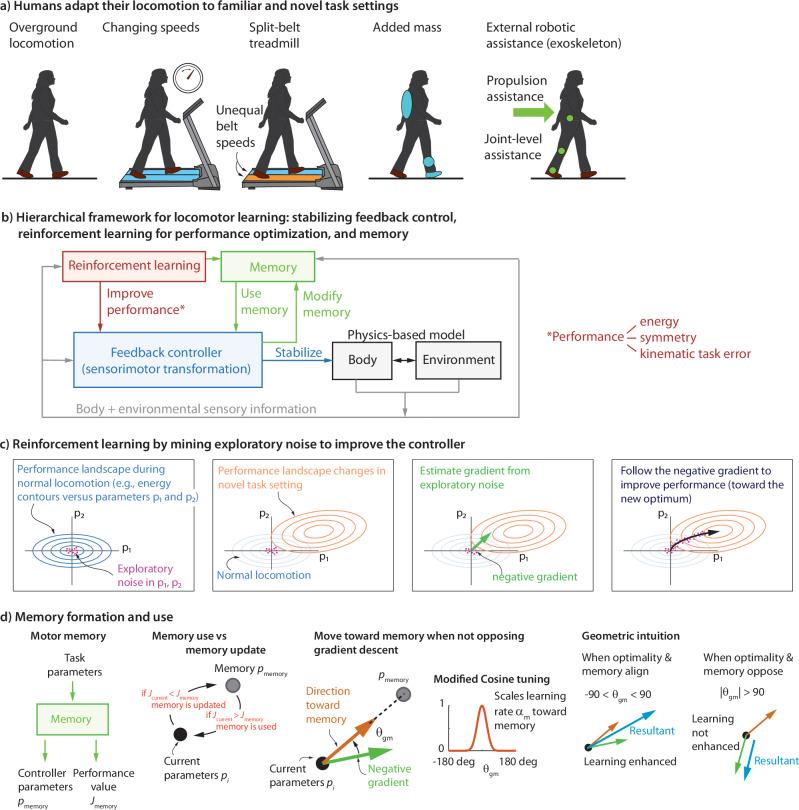
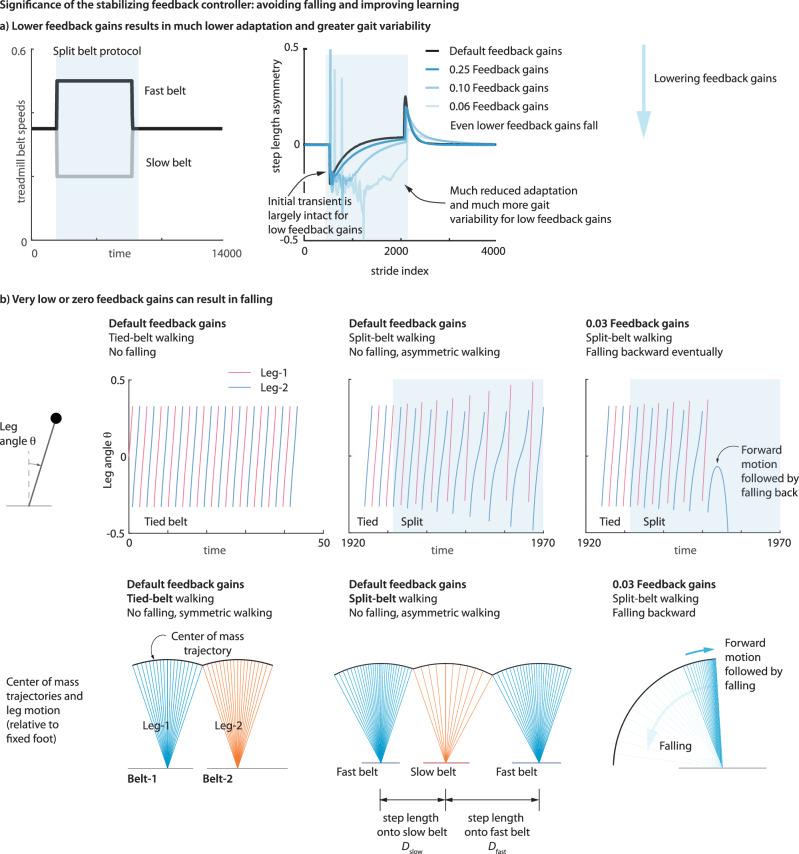
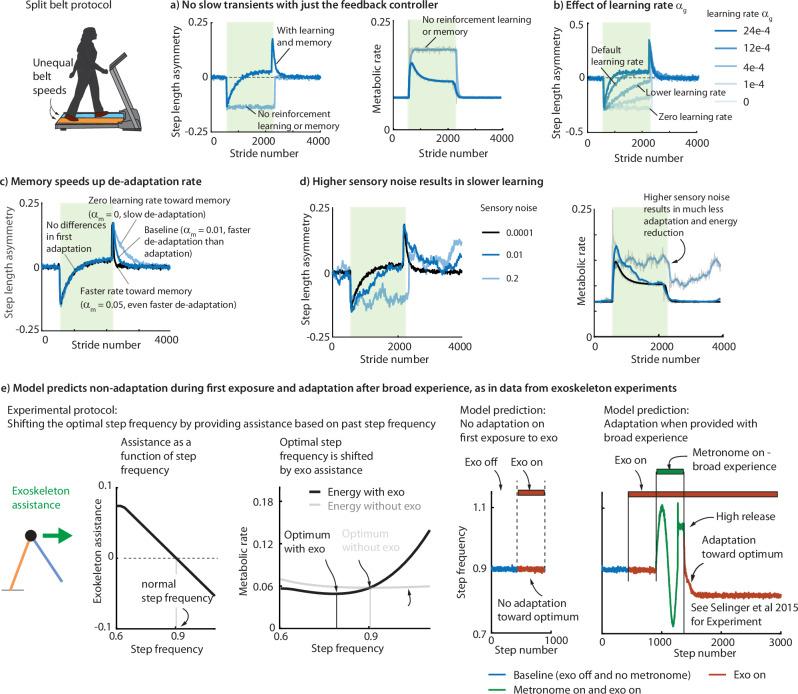
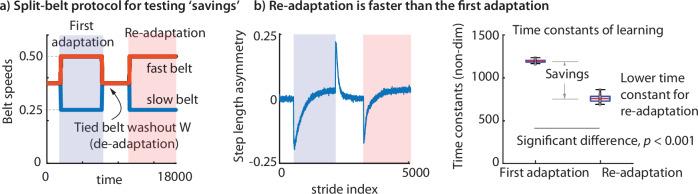
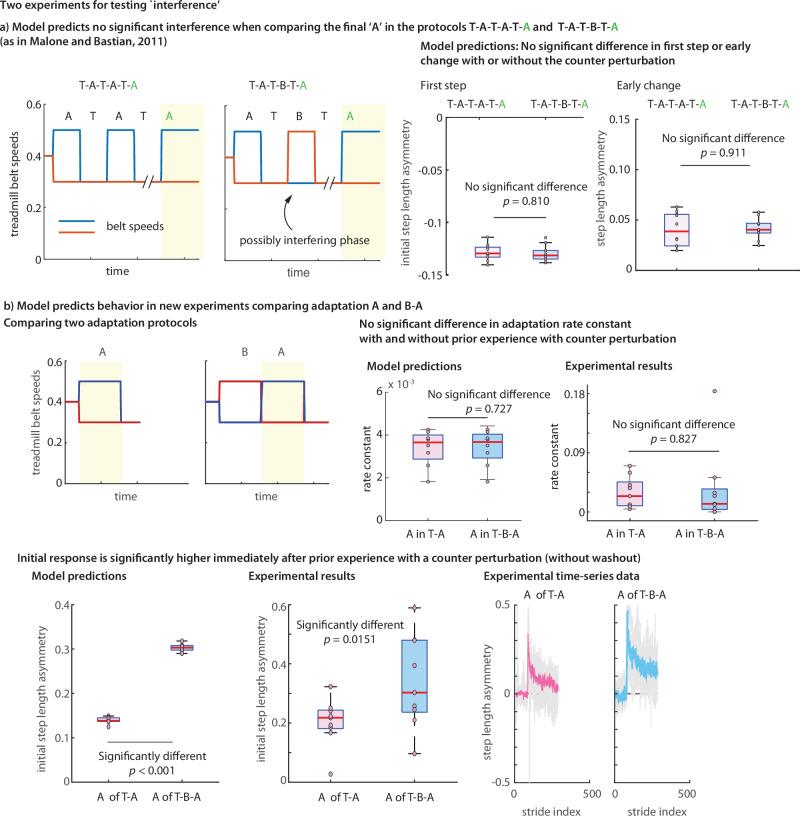
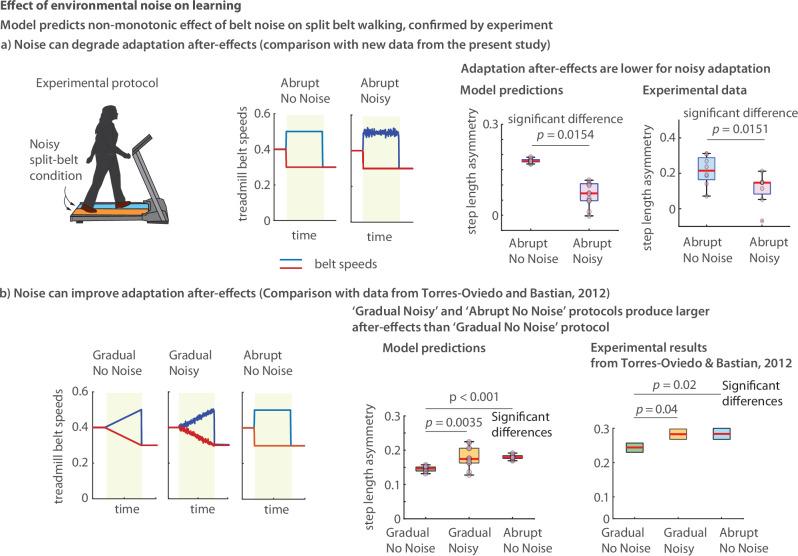
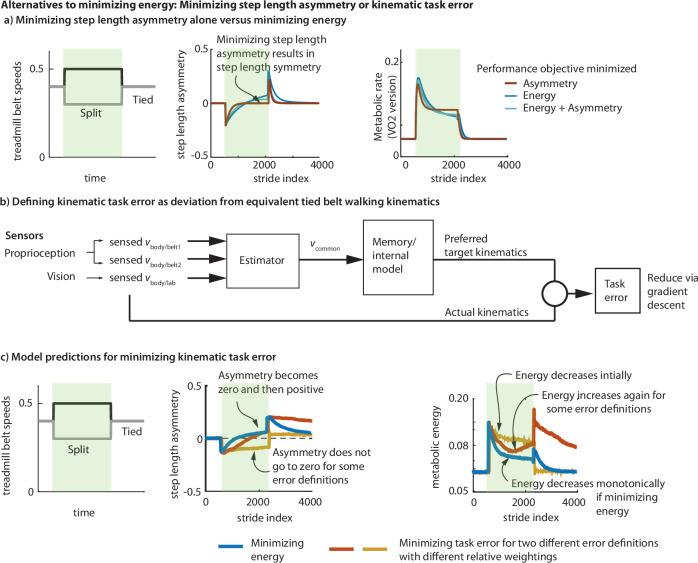
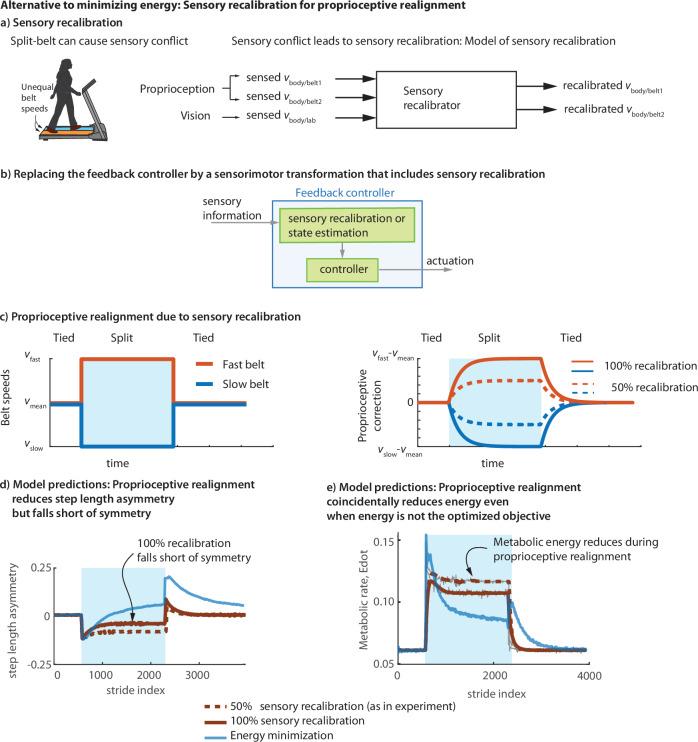
Humans adapt their locomotion seamlessly in response to changes in the body or the environment. It is unclear how such adaptation improves performance measures like energy consumption or symmetry while avoiding falling. Here, we model locomotor adaptation as interactions between a stabilizing controller that reacts quickly to perturbations and a reinforcement learner that gradually improves the controller's performance through local exploration and memory. This model predicts time-varying adaptation in many settings: walking on a split-belt treadmill (i.e. with both feet at different speeds), with asymmetric leg weights, or using exoskeletons - capturing learning and generalization phenomena in ten prior experiments and two model-guided experiments conducted here. The performance measure of energy minimization with a minor cost for asymmetry captures a broad range of phenomena and can act alongside other mechanisms such as reducing sensory prediction error. Such a model-based understanding of adaptation can guide rehabilitation and wearable robot control.
人类能够无缝地适应身体或环境的变化来改变他们的运动方式。目前尚不清楚这种适应如何提高能量消耗或对称性等性能指标,同时避免摔倒。在这里,我们将运动适应建模为一个快速响应扰动的稳定控制器和一个通过局部探索和记忆逐渐提高控制器性能的强化学习者之间的相互作用。该模型预测了许多环境下的时变适应:在分裂带跑步机上行走(即双脚以不同速度运动)、使用不对称的腿部重量或使用外骨骼 - 捕捉了十个先前实验和两个在此处进行的模型指导实验中的学习和泛化现象。以较小的不对称代价最小化能量的性能指标可以捕捉到广泛的现象,并可以与其他机制(例如减少感觉预测误差)一起发挥作用。这种基于模型的适应理解可以指导康复和可穿戴机器人控制。


 Zotero 插件