
潜伏性巨细胞病毒感染驱动的人体对疟疾感染和疫苗接种的免疫反应异质性。
Heterogeneity of the human immune response to malaria infection and vaccination driven by latent cytomegalovirus infection.
机构信息
Burnet Institute, Melbourne, Australia; School of Environmental Sciences, Griffith University, Brisbane, Australia; QIMR Berghofer Medical Research Institute, Brisbane, Australia.
Center for Infectious Diseases, Virology, Heidelberg University, Medical Faculty, University Hospital Heidelberg, Germany.
出版信息
EBioMedicine. 2024 Nov;109:105419. doi: 10.1016/j.ebiom.2024.105419. Epub 2024 Oct 26.
BACKGROUND
Human immune responses to infection and vaccination are heterogenous, driven by multiple factors including genetics, environmental exposures and personal infection histories. For malaria caused by Plasmodium falciparum parasites, host factors that impact on humoral immunity are poorly understood.
METHODS
We investigated the role of latent cytomegalovirus (CMV) on the host immune response to malaria using samples obtained from individuals in previously conducted Phase 1 trials of blood stage P. falciparum Controlled Human Malaria Infection (CHMI) and in a MSP1 vaccine clinical trial. Induced antibody and functions of antibodies, as well as CD4 T cell responses were quantified.
FINDINGS
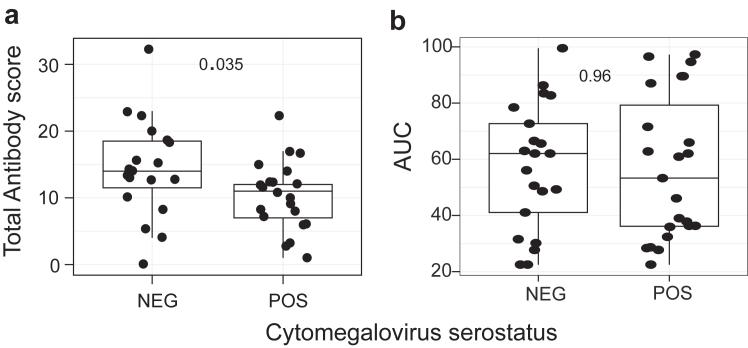
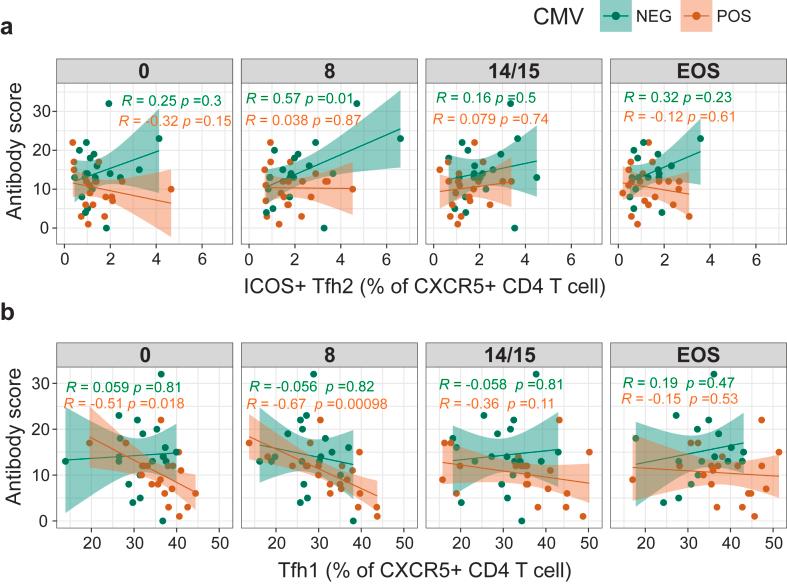
CMV seropositivity was associated with reduced induction of parasite specific antibodies following malaria infection and vaccination. During infection, reduced antibody induction was associated with modifications to the T -follicular helper (Tfh) cell compartment. CMV seropositivity was associated with a skew towards Tfh1 cell subsets before and after malaria infection, and reduced activation of Tfh2 cells. Protective Tfh2 cell activation was only associated with antibody development in individuals who were CMV seronegative, and a higher proportion of Tfh1 cells was associated with lower antibody development in individuals who were CMV seropositive. During MSP1 vaccination, reduced antibody induction in individuals who were CMV seropositive was associated with CD4 T cell expression of terminal differentiation marker CD57.
INTERPRETATION
These findings suggest that CMV seropositivity may be negatively associated with malaria antibody development. Further studies in larger cohorts, particularly in malaria endemic regions are required to investigate whether CMV infection may modify immunity to malaria gained during infection or vaccination in children.
FUNDING
Work was funded by National Health and Medical Research Council of Australia, CSL Australia and Snow Medical Foundation. Funders had no role in data generation, writing of manuscript of decision to submit for publication.
背景
人体对感染和疫苗接种的免疫反应是异质的,受多种因素驱动,包括遗传、环境暴露和个人感染史。对于由恶性疟原虫寄生虫引起的疟疾,宿主因素对体液免疫的影响知之甚少。
方法
我们利用以前进行的恶性疟原虫血期受控人体疟疾感染(CHMI)的第 1 期试验和 MSP1 疫苗临床试验中获得的个体样本,研究潜伏性巨细胞病毒(CMV)对疟疾宿主免疫反应的作用。定量了诱导抗体和抗体的功能以及 CD4 T 细胞反应。
发现
CMV 血清阳性与疟疾感染和接种后寄生虫特异性抗体的诱导减少有关。在感染期间,抗体诱导减少与 T-滤泡辅助(Tfh)细胞区室的改变有关。CMV 血清阳性与疟疾感染前后 Tfh1 细胞亚群的倾斜有关,并减少 Tfh2 细胞的激活。保护性 Tfh2 细胞激活仅与 CMV 血清阴性个体的抗体发育相关,而 CMV 血清阳性个体中 Tfh1 细胞的比例较高与抗体发育较低相关。在 MSP1 接种期间,CMV 血清阳性个体中抗体诱导减少与 CD4 T 细胞表达终末分化标志物 CD57 有关。
解释
这些发现表明,CMV 血清阳性可能与疟疾抗体的发展呈负相关。需要在更大的队列中进行进一步的研究,特别是在疟疾流行地区,以研究 CMV 感染是否可能改变儿童在感染或接种疫苗期间获得的疟疾免疫力。
资金
这项工作得到了澳大利亚国家卫生和医学研究委员会、CSL 澳大利亚和 Snow 医学基金会的资助。资助者在数据生成、手稿撰写或决定提交发表方面没有作用。



 Zotero 插件