
2008 - 2019年塞拉利昂孕期驱虫药物使用情况的趋势与不平等现象
Trends and inequalities in the use of deworming medication during pregnancy in Sierra Leone, 2008-2019.
作者信息
Osborne Augustus, Bai-Sesay Alpha Umaru, Tommy Alieu, Bangura Camilla, Ahinkorah Bright Opoku
机构信息
Department of Biological Sciences, School of Basic Sciences, Njala University, PMB, Freetown, Sierra Leone.
Ministry of Health and Sanitation, Freetown, Sierra Leone.
出版信息
Trop Med Health. 2024 Nov 4;52(1):79. doi: 10.1186/s41182-024-00638-9.
BACKGROUND
Intestinal worm infections are a significant public health concern for pregnant women in low- and middle-income countries. These infections can lead to anaemia, malnutrition, and adverse pregnancy outcomes, including premature birth and low birth weight. Deworming medication during pregnancy is a safe and effective strategy to prevent these complications and improve maternal and child health. This study aims to investigate the trends and inequalities in the use of deworming medication during pregnancy among women in Sierra Leone between 2008 and 2019.
METHODS
The study utilised data from the Sierra Leone Demographic Health Surveys conducted in 2008, 2013, and 2019. We used the Health Equity Assessment Toolkit developed by the World Health Organisation to calculate various measures of inequality, including difference, ratio, population attributable risk, and population attributable fraction. An inequality assessment was conducted for five stratifiers: age, economic status, level of education, place of residence, and sub-national province.
RESULTS
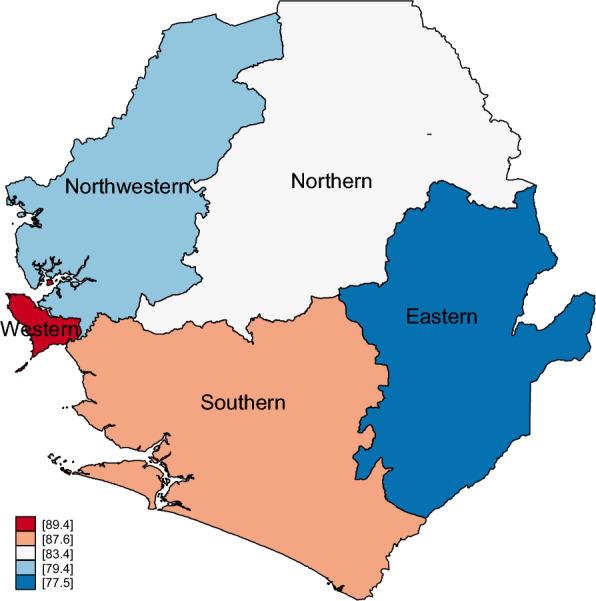
The prevalence of deworming medication during pregnancy was 43.8% in 2008, 72.4% in 2013, and 83.5% in 2019 in Sierra Leone. There was a decrease in age-related inequality from a difference of 3.7% in 2008 to -0.8% in 2019. Economic-related inequality increased from a difference of -8.5% in 2008 to -8.2% in 2019. Both population attributable fraction and population attributable risk were zero in all survey years for economic status, indicating no improvement in the setting average without economic-related inequality. Inequality in education increased from a difference of -8.9% in 2008 to -8.4% in 2019 and decreased from a difference of -2.6% in 2008 to -5.5% in 2019 for place of residence. Provincial inequality decreased from a difference of 29.5% in 2008 to 11.8% in 2019. The population attributable risk for province reveals that the setting average could have been 10.5 percentage points lower in 2008, 8.2 percentage points lower in 2013, and 5.9 percentage points lower in 2019 without provincial inequality.
CONCLUSION
The prevalence of deworming medication use during pregnancy substantially increased from 2008 to 2019 (43.8% to 83.5%) in Sierra Leone. This suggests a positive public health trend in maternal healthcare access and education. Inequalities related to economic status and education increased slightly while age-related, place of residence and provincial inequalities decreased. This indicates an inequitable distribution of this essential healthcare intervention across these stratifiers. The government and policymakers should continue efforts to raise awareness and promote the use of deworming medication during pregnancy.
背景
肠道蠕虫感染是低收入和中等收入国家孕妇面临的重大公共卫生问题。这些感染可导致贫血、营养不良以及不良妊娠结局,包括早产和低出生体重。孕期驱虫药物是预防这些并发症并改善母婴健康的一种安全有效的策略。本研究旨在调查2008年至2019年间塞拉利昂妇女孕期使用驱虫药物的趋势和不平等情况。
方法
该研究利用了2008年、2013年和2019年进行的塞拉利昂人口与健康调查的数据。我们使用了世界卫生组织开发的健康公平评估工具包来计算各种不平等指标,包括差异、比率、人群归因风险和人群归因分数。针对年龄、经济状况、教育水平、居住地点和国家以下省份这五个分层因素进行了不平等评估。
结果
2008年塞拉利昂孕期驱虫药物的使用率为43.8%,2013年为72.4%,2019年为83.5%。与年龄相关的不平等有所减少,从2008年的3.7%差异降至2019年的-0.8%差异。与经济相关的不平等从2008年的-8.5%差异增加到2019年的-8.2%差异。在所有调查年份中,经济状况的人群归因分数和人群归因风险均为零,这表明在不存在与经济相关的不平等情况下,设定平均值没有改善。教育方面的不平等从2008年的-8.9%差异增加到2019年的-8.4%差异,居住地点方面的不平等从2008年的-2.6%差异降至2019年的-5.5%差异。省级不平等从2008年的29.5%差异降至2019年的11.8%差异。省级人群归因风险显示,如果不存在省级不平等,2008年设定平均值可能会低10.5个百分点,2013年低8.2个百分点,2019年低5.9个百分点。
结论
2008年至2019年期间,塞拉利昂孕期驱虫药物的使用率大幅上升(从43.8%升至83.5%)。这表明在孕产妇医疗保健获取和教育方面呈现出积极的公共卫生趋势。与经济状况和教育相关的不平等略有增加,而与年龄、居住地点和省级相关的不平等有所减少。这表明这种基本医疗保健干预措施在这些分层因素中的分配不公平。政府和政策制定者应继续努力提高认识,并促进孕期使用驱虫药物。
 Zotero 插件