
鉴定和验证基质金属蛋白酶枢纽基因作为皮肤黑色素瘤的潜在生物标志物
Identification and validation of matrix metalloproteinase hub genes as potential biomarkers for Skin Cutaneous Melanoma.
作者信息
Zhang Zhongyi, Zhao Mei, Zhou Zubing, Ren Xiaodan, He Yunliang, Shen Tao, Zeng Hongping, Li Kai, Zhang Yong
机构信息
School of Basic Medicine, Chengdu University of Traditional Chinese Medicine, Chengdu, China.
Institute of Traditional Chinese Medicine, Sichuan Academy of Chinese Medicine Sciences, Chengdu, Sichuan, China.
出版信息
Front Oncol. 2024 Oct 18;14:1471267. doi: 10.3389/fonc.2024.1471267. eCollection 2024.
OBJECTIVES
The role of matrix metalloproteinases (MMPs) in Skin Cutaneous Melanoma (SKCM) development and progression is unclear so far. This comprehensive study delved into the intricate role of MMPs in SKCM development and progression.
METHODS
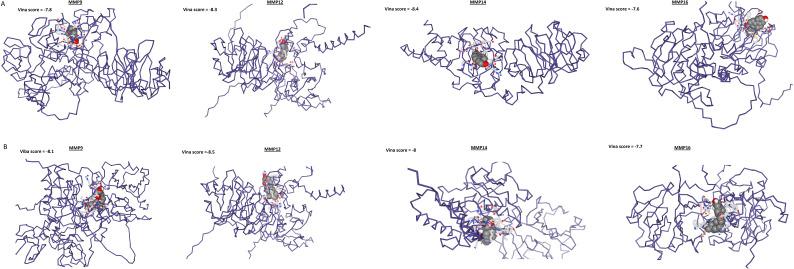
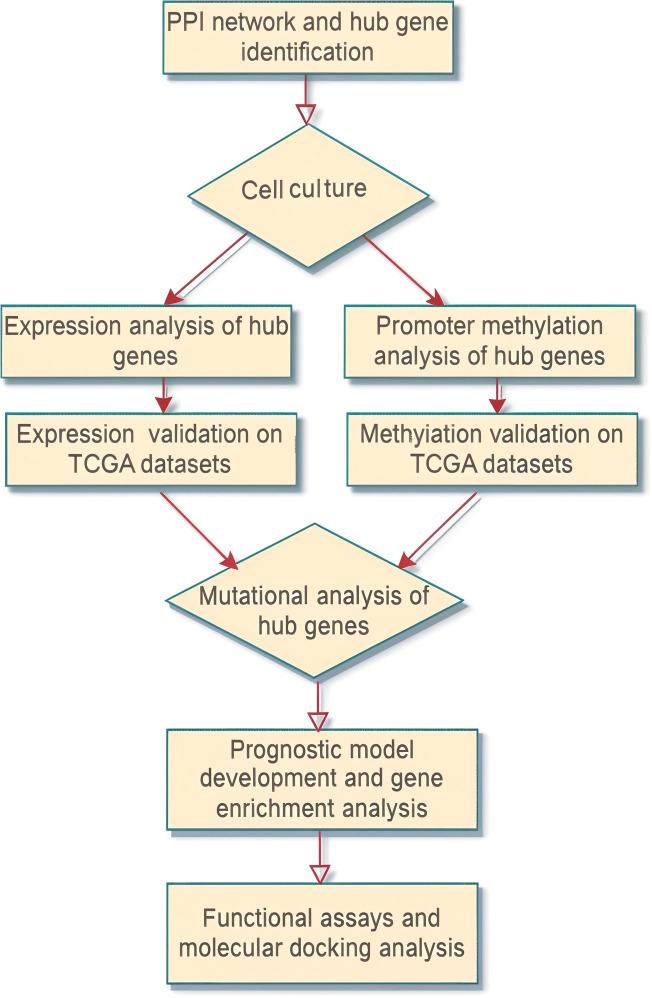
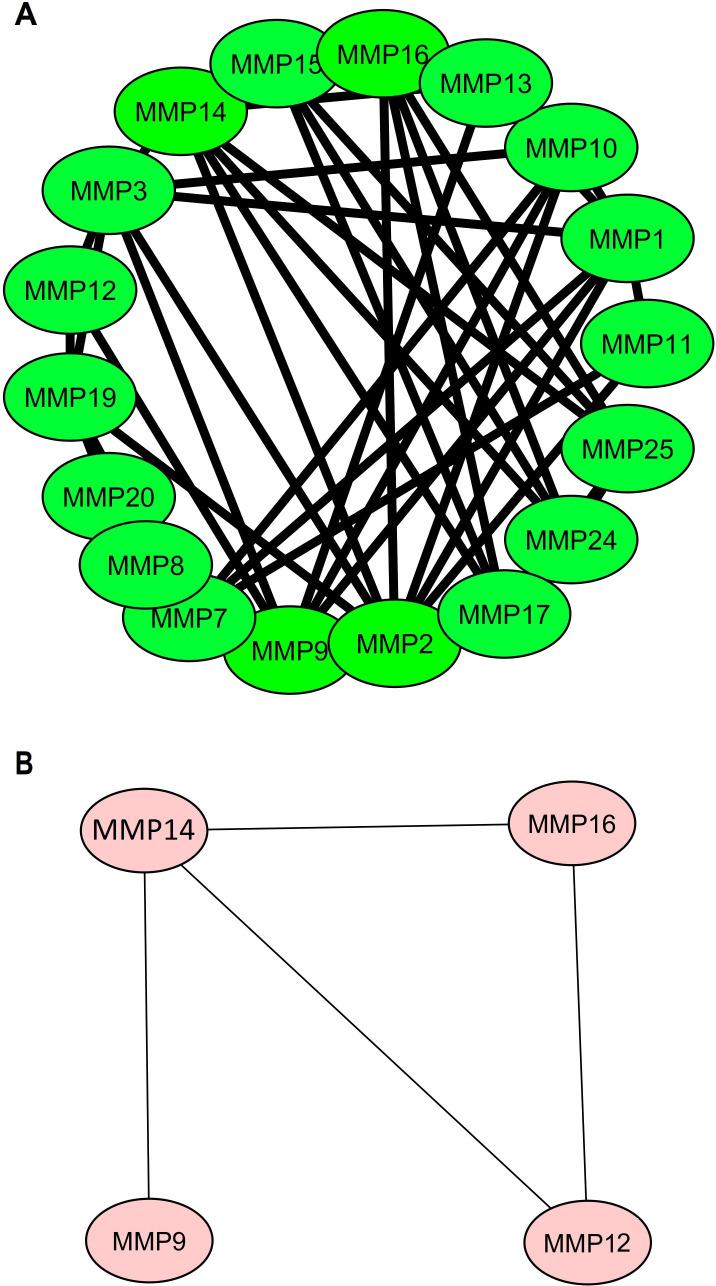
RT-qPCR, bisulfite sequencing, and WES analyzed MMP gene expression, promoter methylation, and mutations in SKCM cell lines. TCGA datasets validated findings. DrugBank and molecular docking identified potential regulatory drugs, and cell line experiments confirmed the role of key MMP genes in tumorigenesis.
RESULTS
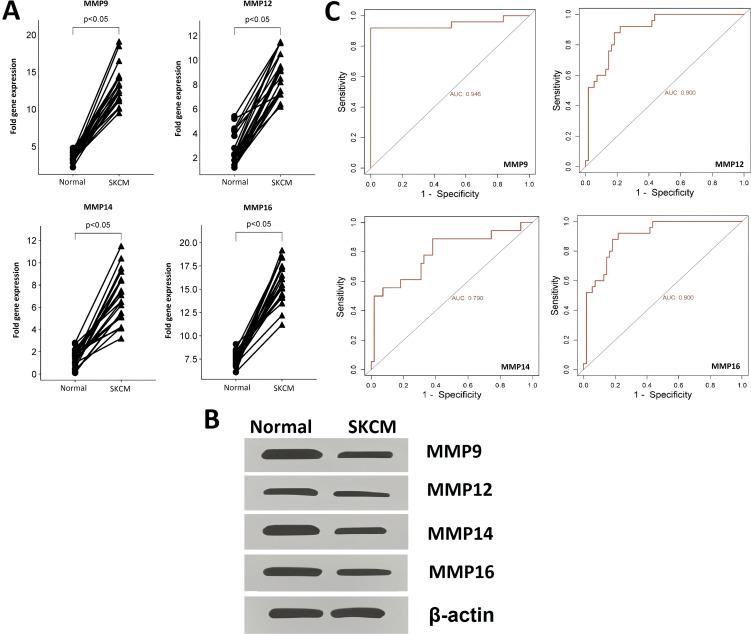
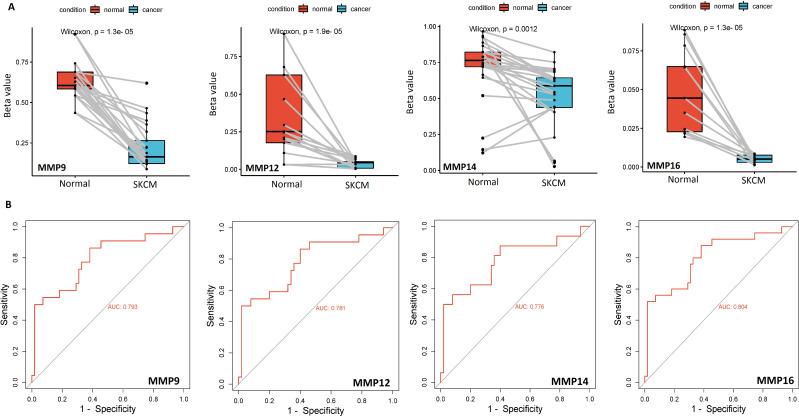
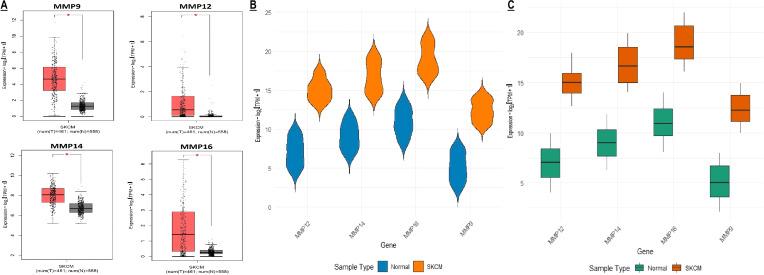
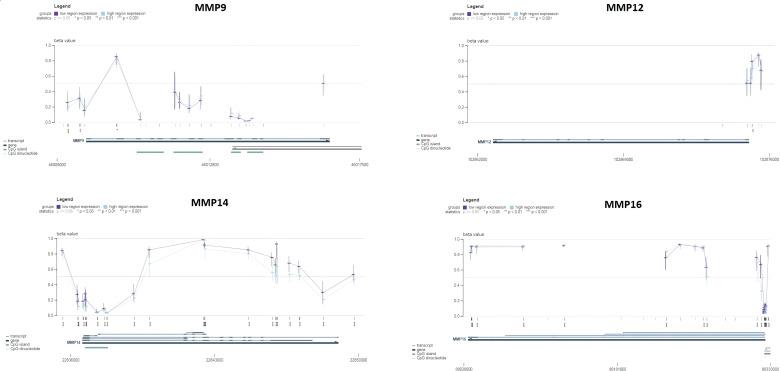
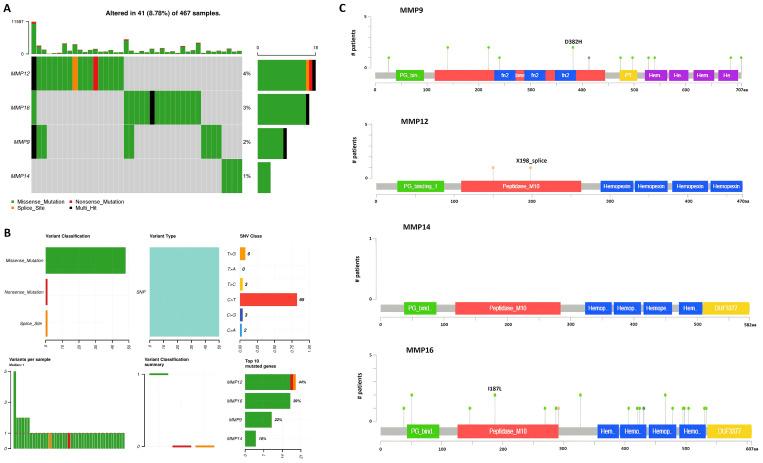
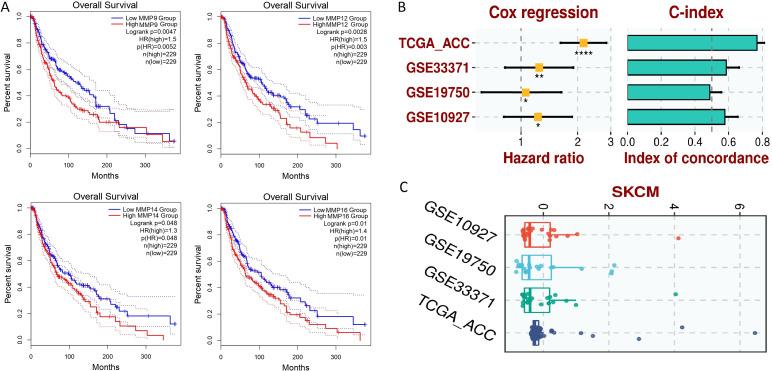
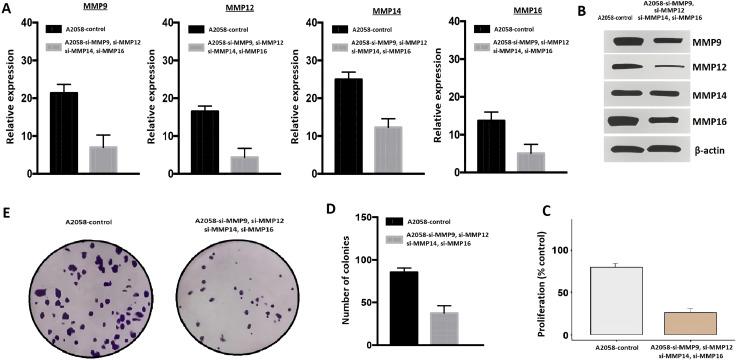
Our findings unveiled significant up-regulation of MMP9, MMP12, MMP14, and MMP16, coupled with hypomethylation of their promoters in SKCM cell lines, implicating their involvement in disease progression. Mutational analysis highlighted a low frequency of mutations in these genes, indicating less involvement of mutations in the expression regulatory mechanisms. Prognostic assessments showcased a significant correlation between elevated expression of these genes and poor overall survival (OS) in SKCM patients. Additionally, functional experiments involving gene silencing revealed a potential impact on cellular proliferation, further emphasizing the significance of MMP9, MMP12, MMP14, and MMP16 in SKCM pathobiology.
CONCLUSION
This study identifies Estradiol and Calcitriol as potential drugs for modulating MMP expression in SKCM, highlighting MMP9, MMP12, MMP14, and MMP16 as key diagnostic and prognostic biomarkers.
目的
基质金属蛋白酶(MMPs)在皮肤黑色素瘤(SKCM)发生发展中的作用目前尚不清楚。本全面研究深入探讨了MMPs在SKCM发生发展中的复杂作用。
方法
采用RT-qPCR、亚硫酸氢盐测序和全外显子测序(WES)分析SKCM细胞系中MMP基因的表达、启动子甲基化和突变情况。利用癌症基因组图谱(TCGA)数据集验证研究结果。通过药物数据库(DrugBank)和分子对接确定潜在的调控药物,并通过细胞系实验证实关键MMP基因在肿瘤发生中的作用。
结果
我们的研究结果显示,SKCM细胞系中MMP9、MMP12、MMP14和MMP16显著上调,同时其启动子发生低甲基化,提示它们参与疾病进展。突变分析表明这些基因的突变频率较低,表明突变在表达调控机制中的参与较少。预后评估显示,这些基因的高表达与SKCM患者较差的总生存期(OS)显著相关。此外,涉及基因沉默的功能实验揭示了对细胞增殖的潜在影响,进一步强调了MMP9、MMP12、MMP14和MMP16在SKCM病理生物学中的重要性。
结论
本研究确定雌二醇和骨化三醇为调节SKCM中MMP表达的潜在药物,强调MMP9、MMP12、MMP14和MMP16作为关键的诊断和预后生物标志物。
 Zotero 插件