
微(纳)塑料:人类健康的新负担
Micro(nano)plastics: an Emerging Burden for Human Health.
机构信息
Department of Precision Medicine, University of Campania Luigi Vanvitelli, Via L. De Crecchio 7, 80138 Naples, Italy.
出版信息
Int J Biol Sci. 2024 Oct 21;20(14):5779-5792. doi: 10.7150/ijbs.99556. eCollection 2024.
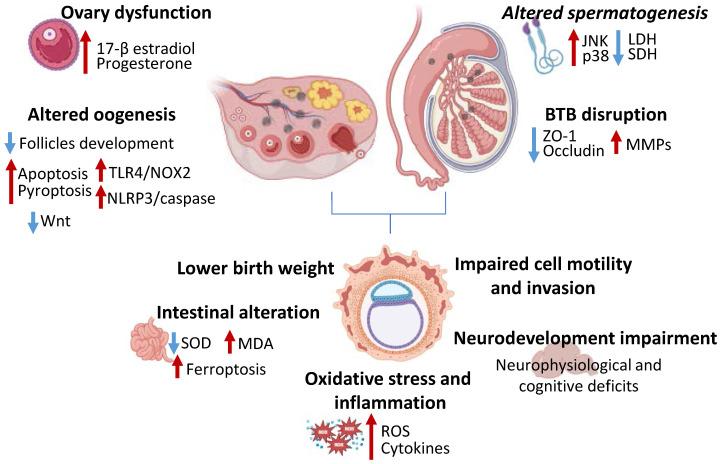
The escalation of plastic pollution represents a global environmental and health problem. Important toxic effects have been attributed to the increasing diffusion of microplastics (MPs) and nanoplastics (NPs) derived from the degradation of plastics. These particles have been ubiquitously observed in the environment, with humans being continuously exposed via ingestion, inhalation and skin contact. Nonetheless, the cellular homeostasis imbalance induced by micro- and nano- plastics (MNPs) in human health has been only recently shown, while most evidence and molecular mechanisms derived from studies and models. To date, the majority of available results testified the accumulation of MNPs in the cardiovascular, nervous, reproductive and digestive systems, and recently clear evidence about cardiovascular toxic effects of MNPs has been provided in humans. In this context, this review aims to provide a comprehensive update about the most recent studies reporting the effects of MNPs in different models, focusing on the available evidence in the main areas of study related to human health. Hopefully, this review will contribute to raise awareness about the toxicity and oxidative alteration exerted by MNPs, supporting the elaboration of new strategies to counteract plastic pandemics.
塑料污染的升级是一个全球性的环境和健康问题。越来越多的研究表明,微塑料(MPs)和纳米塑料(NPs)的扩散对环境和健康造成了重要的毒性影响,这些塑料来源于塑料的降解。这些颗粒在环境中无处不在,人类通过摄入、吸入和皮肤接触不断暴露于其中。然而,微塑料和纳米塑料(MNPs)在人类健康中引起的细胞内稳态失衡直到最近才被发现,而大多数证据和分子机制都来自于研究和模型。迄今为止,大多数可用的结果表明 MNPs 在心血管、神经、生殖和消化系统中的积累,最近在人类中提供了关于 MNPs 心血管毒性作用的明确证据。在这种情况下,本综述旨在提供关于不同模型中 MNPs 作用的最新研究的综合更新,重点介绍与人类健康相关的主要研究领域的现有证据。希望本综述将有助于提高对 MNPs 毒性和氧化改变的认识,支持制定新策略以应对塑料污染的流行。



 Zotero 插件