
非洲唇腭裂儿童的营养与饮食:系统评价。
Nutrition and diet in children with orofacial clefts in Africa: a scoping review.
机构信息
Faculty of Dentistry, University of Puthisastra, Phnom Penh, Cambodia.
Department of Preventive and Community Dentistry, University of Rwanda, Kigali, Rwanda.
出版信息
BMC Oral Health. 2024 Nov 5;24(1):1341. doi: 10.1186/s12903-024-05130-8.
BACKGROUND AND AIM
The burden of orofacial clefts (OFCs) has declined globally except in sub-Saharan Africa, with a great disease burden in North Africa. Children with OFCs have a high risk of malnutrition, and African countries have some of the highest malnutrition rates. This scoping review assessed the status of research on OFCs and nutrition and feeding among children living in African countries.
METHODS
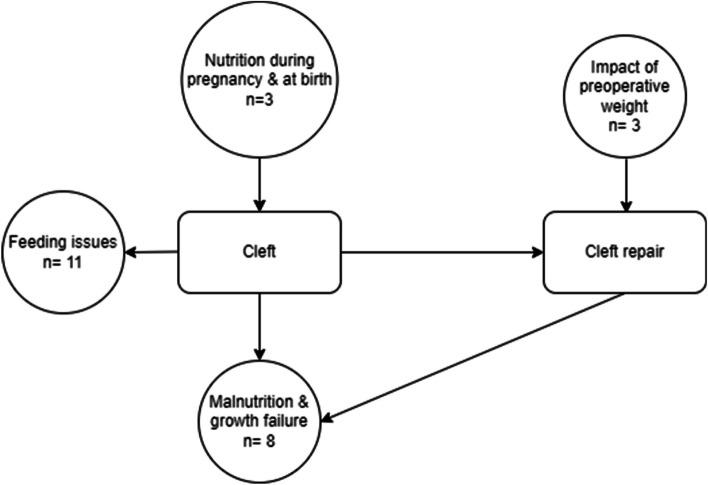
We followed the Joanna Briggs Institute guidelines for conducting scoping reviews. We searched eleven databases for articles on malnutrition and feeding among children with OFCs living in African countries. No restriction was done by type of study or publication date. Books, book chapters, and reviews were excluded. Only publications in English language were included. We extracted information about the publication year, study design, setting, location, participants' age, data collection methods, international collaboration, and funding. We classified articles into studies assessing (1) the impact of nutritional deficiencies during pregnancy on OFCs, (2) the impact of OFCs on malnutrition, (3) feeding problems in children with OFCs, and (4) the impact of nutritional status on OFCs repair outcomes. We calculated frequencies and used bar charts and a map.
RESULTS
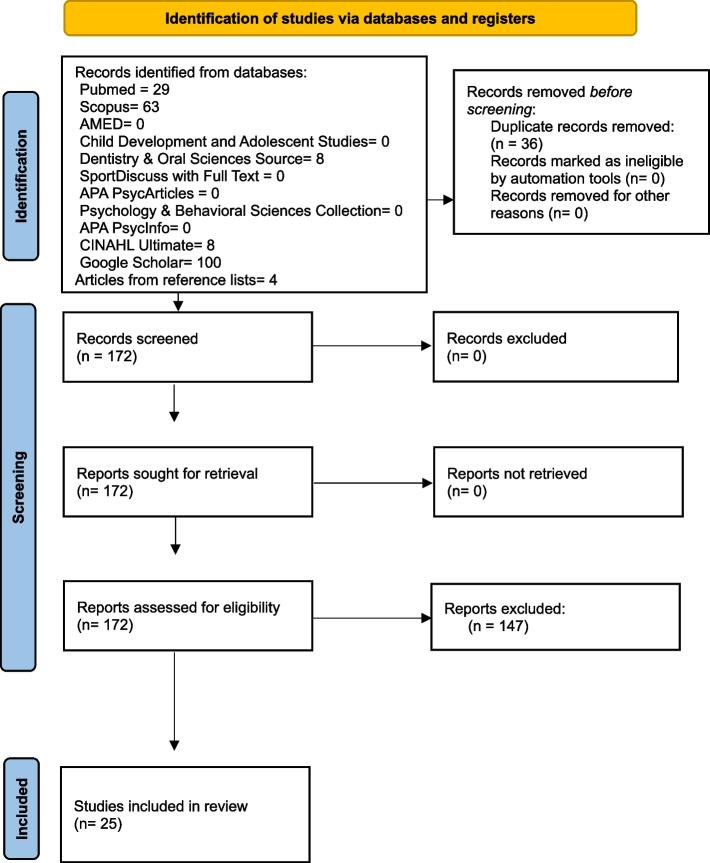
Out of 208 search results, 36 were duplicates, and 25 eventually fit the inclusion criteria, with 52% retrieved from Google Scholar. About 80% of the studies were from four countries: Nigeria, South Africa, Ghana, and Uganda; 72% were hospital-based and 52% were cross-sectional. The most frequent data collection method was clinical examination and questionnaires. Most studies focused on feeding problems in children with OFCs (44%) and the impact of OFCs on malnutrition (32%). International collaboration was observed in six studies, with one study showing South-South collaboration. Only two studies were funded.
CONCLUSIONS
There is a predominance of under-funded descriptive research not indexed by international databases. Minimal research has been directed to population-level OFC preventive programs in primary healthcare settings and assessing interventions supporting children with OFCs. A research agenda is needed to prioritize research needs and secure funds to support South-South collaboration to address the nutrition and feeding-related problems associated with OFCs.
背景与目的
唇腭裂(OFC)的负担在全球范围内有所下降,但撒哈拉以南非洲地区除外,北非的疾病负担仍然很高。唇腭裂患儿存在较高的营养不良风险,而非洲国家的营养不良率也处于较高水平。本范围界定审查评估了生活在非洲国家的唇腭裂患儿的 OFC 与营养和喂养相关研究的现状。
方法
我们遵循乔安娜·布里格斯研究所(Joanna Briggs Institute)的指导原则,开展了范围界定审查。我们在 11 个数据库中检索了有关生活在非洲国家的唇腭裂患儿营养不良和喂养的文章。未对研究类型或出版日期进行限制。排除书籍、章节和综述。仅纳入英文出版物。我们提取了出版物年份、研究设计、设置、地点、参与者年龄、数据收集方法、国际合作和资金信息。我们将文章分类为评估(1)孕期营养缺乏对 OFC 的影响、(2)OFC 对营养不良的影响、(3)OFC 患儿的喂养问题,以及(4)营养状况对 OFC 修复结果的影响的研究。我们计算了频率,并使用条形图和地图进行了展示。
结果
在 208 项搜索结果中,有 36 项是重复的,最终有 25 项符合纳入标准,其中 52%来自谷歌学术。约 80%的研究来自四个国家:尼日利亚、南非、加纳和乌干达;72%为医院基础研究,52%为横断面研究。最常用的数据收集方法是临床检查和问卷调查。大多数研究侧重于唇腭裂患儿的喂养问题(44%)和 OFC 对营养不良的影响(32%)。有 6 项研究进行了国际合作,其中一项研究显示了南南合作。只有两项研究获得了资助。
结论
目前主要存在的问题是资金不足且缺乏国际数据库索引的描述性研究。在初级保健环境中针对人群层面的 OFC 预防计划和评估支持唇腭裂患儿的干预措施的研究较少。需要制定一个研究议程,以确定研究需求的优先级,并筹集资金支持南南合作,以解决与 OFC 相关的营养和喂养问题。


 Zotero 插件