
早年生活应激会导致雄性大鼠内侧前额叶皮质中CB1R和FAAH的表达降低以及表观遗传变化。
Early life stress induces decreased expression of CB1R and FAAH and epigenetic changes in the medial prefrontal cortex of male rats.
作者信息
Demaili Arijana, Portugalov Anna, Maroun Mouna, Akirav Irit, Braun Katharina, Bock Jörg
机构信息
Department of Zoology/Developmental Neurobiology, Institute of Biology, Otto von Guericke University Magdeburg, Magdeburg, Germany.
Department of Psychology, School of Psychological Sciences, University of Haifa, Haifa, Israel.
出版信息
Front Cell Neurosci. 2024 Oct 22;18:1474992. doi: 10.3389/fncel.2024.1474992. eCollection 2024.
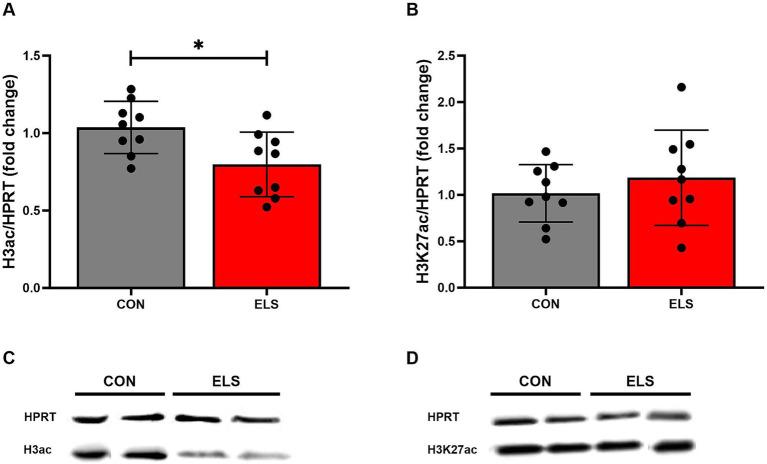
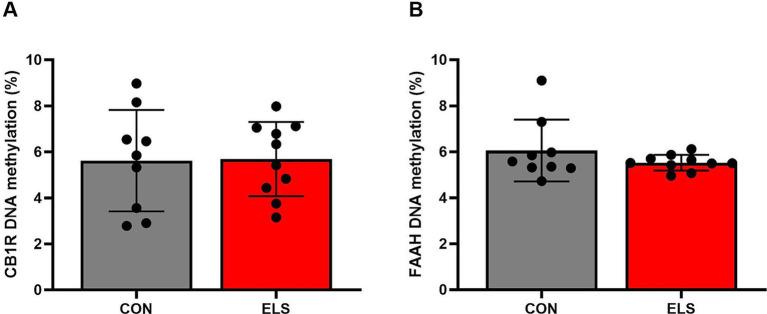
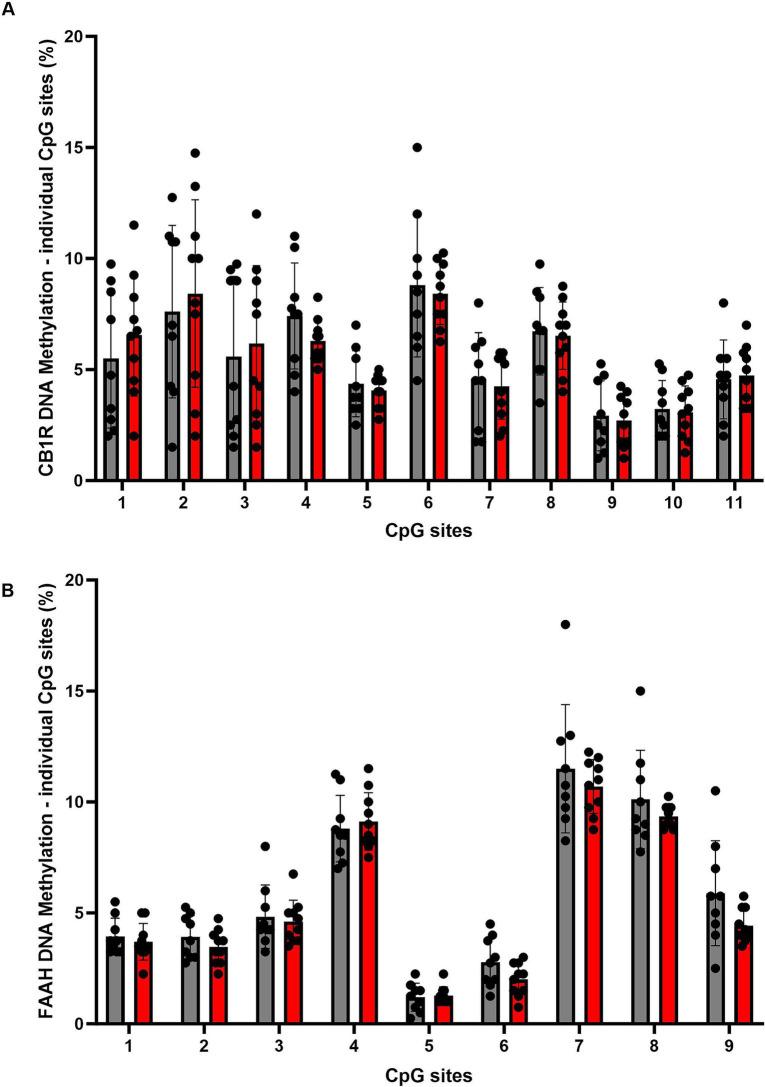
Several studies in both animal models and in humans have provided substantial evidence that early life stress (ELS) induces long-term changes in behavior and brain function, making it a significant risk factor in the aetiology of various mental disorders, including anxiety and depression. In this study, we tested the hypothesis that ELS in male rats (i) leads to increased anxiety and depressive-like symptoms; and (ii) that these behavioral changes are associated with functional alterations in the endocannabinoid system of the medial prefrontal cortex (mPFC). We further assessed whether the predicted changes in the gene expression of two key components of the endocannabinoid system, cannabinoid receptor 1 (CB1R) and the fatty acid amide hydrolase (FAAH), are regulated by epigenetic mechanisms. Behavioral profiling revealed that the proportion of behaviorally affected animals was increased in ELS exposed male rats compared to control animals, specifically showing symptoms of anhedonia and impaired social behavior. On the molecular level we observed a decrease in CB1R and FAAH mRNA expression in the mPFC of adult ELS exposed animals. These gene expression changes were accompanied by reduced global histone 3 acetylation in the mPFC, while no significant changes in DNA methylation and no significant changes of histone-acetylation at the promoter regions of the analyzed genes were detected. Taken together, our data provide evidence that ELS induces a long-term reduction of CB1R and FAAH expression in the mPFC of adult male rats, which may partially contribute to the ELS-induced changes in adult socio-emotional behavior.
多项针对动物模型和人类的研究提供了大量证据,表明早期生活压力(ELS)会引发行为和脑功能的长期变化,使其成为包括焦虑症和抑郁症在内的各种精神障碍病因中的一个重要风险因素。在本研究中,我们检验了以下假设:雄性大鼠中的ELS(i)会导致焦虑和抑郁样症状增加;以及(ii)这些行为变化与内侧前额叶皮质(mPFC)内源性大麻素系统的功能改变有关。我们进一步评估了内源性大麻素系统两个关键成分,大麻素受体1(CB1R)和脂肪酸酰胺水解酶(FAAH)的基因表达预测变化是否受表观遗传机制调控。行为分析表明,与对照动物相比,暴露于ELS的雄性大鼠中行为受影响动物的比例增加,具体表现为快感缺失和社交行为受损的症状。在分子水平上,我们观察到成年暴露于ELS的动物mPFC中CB1R和FAAH mRNA表达降低。这些基因表达变化伴随着mPFC中整体组蛋白3乙酰化的减少,而在分析基因的启动子区域未检测到DNA甲基化的显著变化和组蛋白乙酰化的显著变化。综上所述,我们的数据提供了证据,表明ELS会导致成年雄性大鼠mPFC中CB1R和FAAH表达的长期降低,这可能部分促成了ELS诱导的成年社会情感行为变化。



 Zotero 插件