
老年意大利人家庭照顾者的照顾负担、社会支持和心理健康:一项横断面研究。
Caregiving burden, social support, and psychological well-being among family caregivers of older Italians: a cross-sectional study.
机构信息
Department of Political Science, Communication and International Relations, University of Macerata, Macerata, Italy.
Department of Economics and Law, University of Macerata, Macerata, Italy.
出版信息
Front Public Health. 2024 Oct 23;12:1474967. doi: 10.3389/fpubh.2024.1474967. eCollection 2024.
OBJECTIVES
This study aimed to identify factors affecting the psychological well-being of family caregivers of dependent older adults in Italy. Understanding these variables is essential for designing interventions to prevent negative outcomes in at-risk caregivers. The research explored how varying levels of caregiving burden and types of perceived social support influence psychological well-being.
METHODS
A cross-sectional study was conducted among 387 family caregivers of older adults in the Marche region (Italy) between November 2019 and March 2020. Data were collected via a structured questionnaire assessing psychological well-being (WHO-5 Well-Being Index), caregiving burden, and social support (COPE Index). Statistical analyses were performed using Jamovi software, with a significance threshold set at < 0.05.
RESULTS
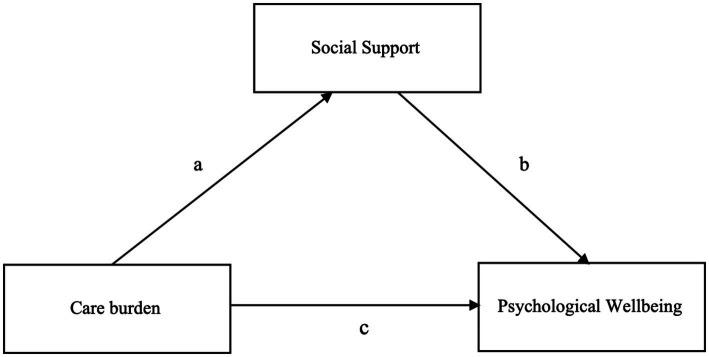
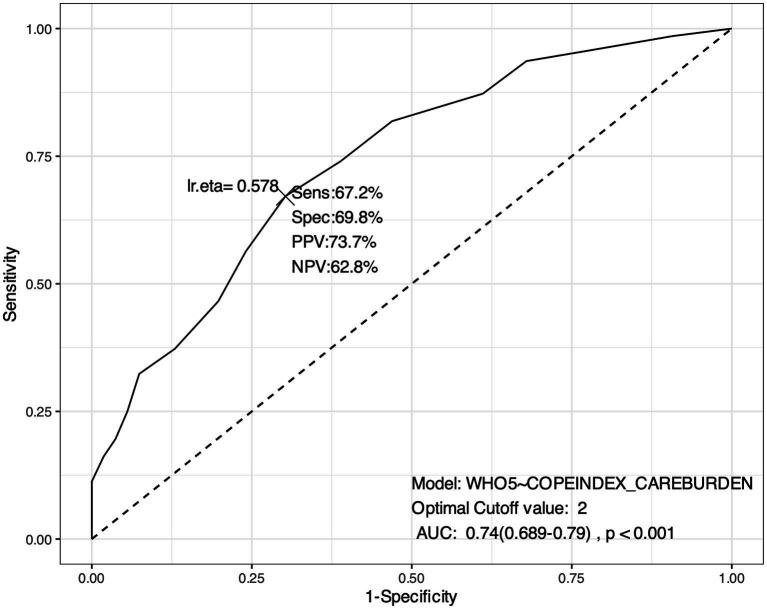
A significant negative correlation was found between caregiving burden and psychological well-being [ (364) = - 0.540, < 0.001], with caregiving burden being a significant predictor of psychological well-being reduction ( = 0.290; = 150, < 0.001). A threshold value of 2 (on a 1-4 scale) was identified, where caregiving burden predicted a significant reduction in psychological well-being. Conversely, greater perceived social support was positively correlated with better psychological well-being [ (357) = 0.348, < 0.001] and was a significant predictor of it [ = 0.121; = 49.2, < 0.001]. Support from social and health services had the most notable impact on psychological well-being. Moreover, social support mitigated the negative impact of caregiving burden on psychological well-being.
CONCLUSION
The study confirms that high caregiving burden adversely affects caregivers' psychological well-being, while social support plays a protective role. These findings highlight the need for interventions focused on reducing caregiving burden and enhancing support systems for family caregivers.
目的
本研究旨在确定影响意大利依赖老年人家庭照顾者心理健康的因素。了解这些变量对于设计干预措施以预防高危照顾者的负面结果至关重要。该研究探讨了不同程度的照顾负担和感知社会支持类型如何影响心理健康。
方法
2019 年 11 月至 2020 年 3 月期间,在意大利马尔凯地区对 387 名老年人家属照顾者进行了横断面研究。通过评估心理幸福感(WHO-5 幸福感指数)、照顾负担和社会支持(COPE 指数)的结构化问卷收集数据。使用 Jamovi 软件进行统计分析,显著性阈值设为 < 0.05。
结果
发现照顾负担与心理幸福感呈显著负相关 [ (364) = - 0.540, < 0.001],照顾负担是心理幸福感降低的显著预测因子 ( = 0.290; = 150, < 0.001)。确定了一个 2 分的阈值(1-4 分制),其中照顾负担预测心理幸福感显著降低。相反,更大的感知社会支持与更好的心理幸福感呈正相关 [ (357) = 0.348, < 0.001],并对其有显著预测作用 [ = 0.121; = 49.2, < 0.001]。社会和卫生服务的支持对心理幸福感的影响最为显著。此外,社会支持减轻了照顾负担对心理幸福感的负面影响。
结论
该研究证实,高照顾负担会对照顾者的心理健康产生不利影响,而社会支持则起到保护作用。这些发现强调了需要针对减轻照顾负担和加强家庭照顾者支持系统的干预措施。

 Zotero 插件