
肥胖女性的妊娠与子代心血管风险增加的机制。
Pregnancy in obese women and mechanisms of increased cardiovascular risk in offspring.
作者信息
Cochrane Anna L K, Murphy Michael P, Ozanne Susan E, Giussani Dino A
机构信息
Department of Physiology, Development and Neuroscience, University of Cambridge, Downing Street, Cambridge CB2 3EG, UK.
Department of Medicine, University of Cambridge, Hills Road, Cambridge CB2 0QQ, UK.
出版信息
Eur Heart J. 2024 Dec 23;45(48):5127-5145. doi: 10.1093/eurheartj/ehae671.
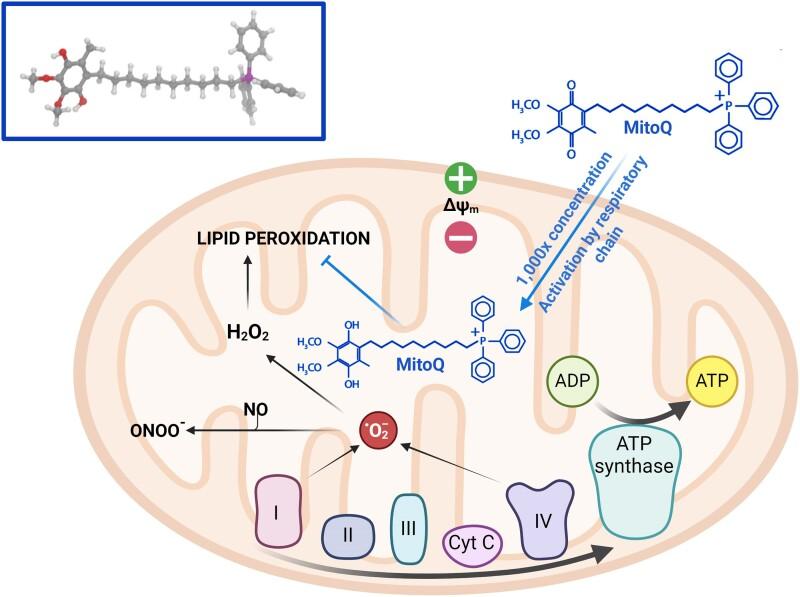
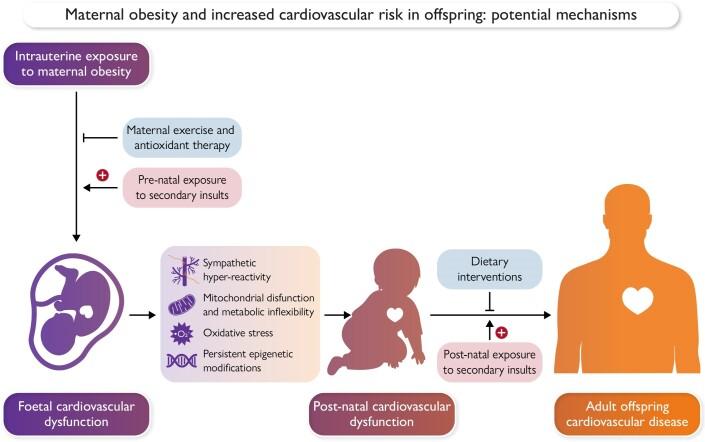
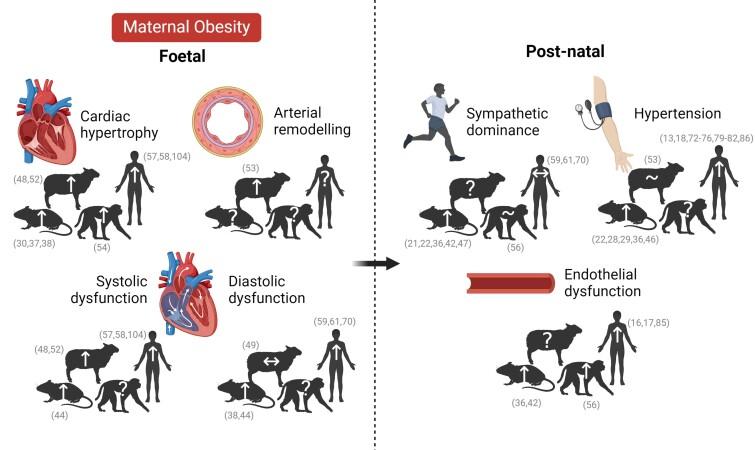
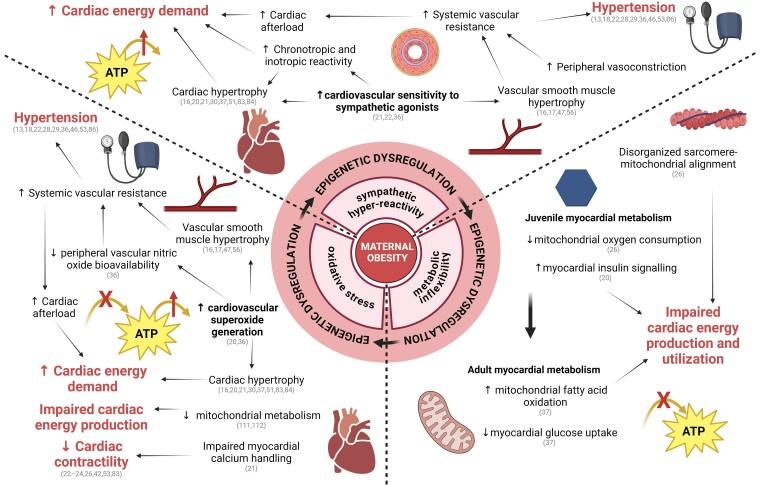
Pregnancy complicated by maternal obesity contributes to an increased cardiovascular risk in offspring, which is increasingly concerning as the rates of obesity and cardiovascular disease are higher than ever before and still growing. There has been much research in humans and preclinical animal models to understand the impact of maternal obesity on offspring health. This review summarizes what is known about the offspring cardiovascular phenotype, describing a mechanistic role for oxidative stress, metabolic inflexibility, and mitochondrial dysfunction in mediating these impairments. It also discusses the impact of secondary postnatal insults, which may reveal latent cardiovascular deficits that originated in utero. Finally, current interventional efforts and gaps of knowledge to limit the developmental origins of cardiovascular dysfunction in offspring of obese pregnancy are highlighted.
妊娠合并孕妇肥胖会增加子代患心血管疾病的风险,鉴于肥胖率和心血管疾病发生率高于以往且仍在上升,这一问题日益受到关注。目前已有许多针对人类和临床前动物模型的研究,旨在了解孕妇肥胖对后代健康的影响。本综述总结了关于子代心血管表型的已知信息,阐述了氧化应激、代谢灵活性受损和线粒体功能障碍在介导这些损害过程中的机制作用。还讨论了产后继发性损伤的影响,这些损伤可能会揭示源于子宫内的潜在心血管缺陷。最后,强调了当前为限制肥胖孕妇子代心血管功能障碍的发育起源所做的干预努力及知识空白。

 Zotero 插件