
美国人群中心肾综合征与抑郁症状的关系:通过血脂指数的中介分析。
Association between cardiorenal syndrome and depressive symptoms among the US population: a mediation analysis via lipid indices.
机构信息
Cardiac Division of Emergency Intensive Care Unit, Beijing Anzhen Hospital, Capital Medical University, Anzhen Road Second, Chaoyang District, Beijing, 100029, People's Republic of China.
出版信息
Lipids Health Dis. 2024 Nov 8;23(1):365. doi: 10.1186/s12944-024-02356-x.
BACKGROUND
Cardiovascular diseases (CVD), chronic kidney disease (CKD), and lipids are positively correlated with the presence of depressive symptoms. However, investigation into the complex link that exists between cardiorenal syndrome (CRS) and lipid indices and depression remains scarce.
METHODS
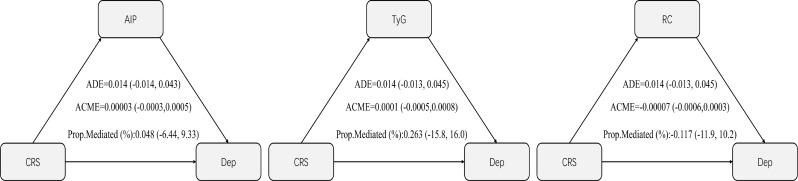
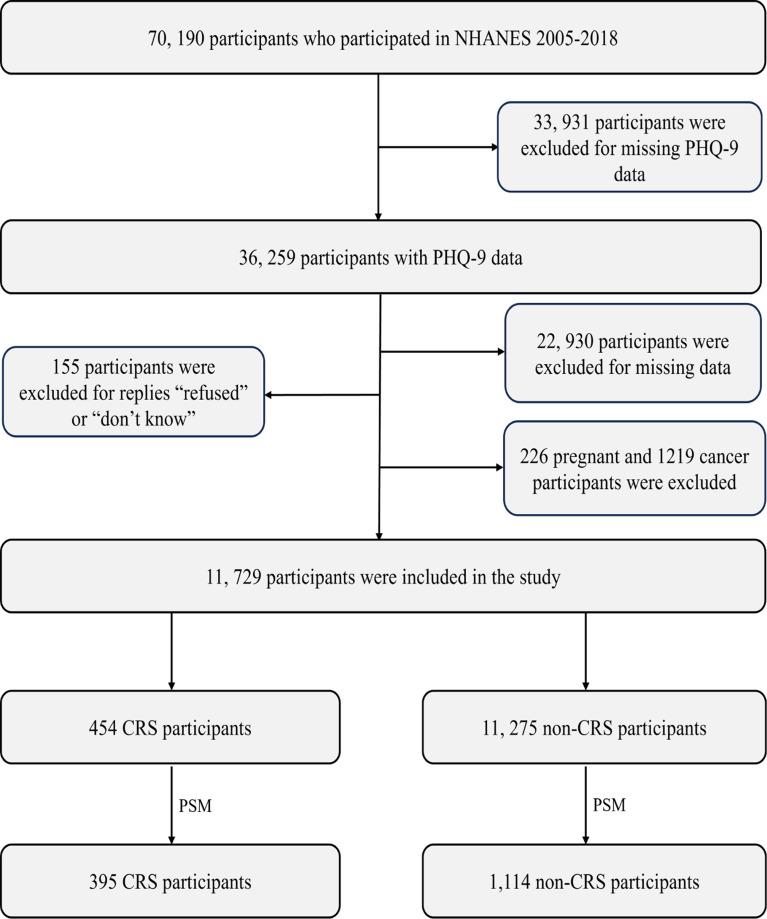
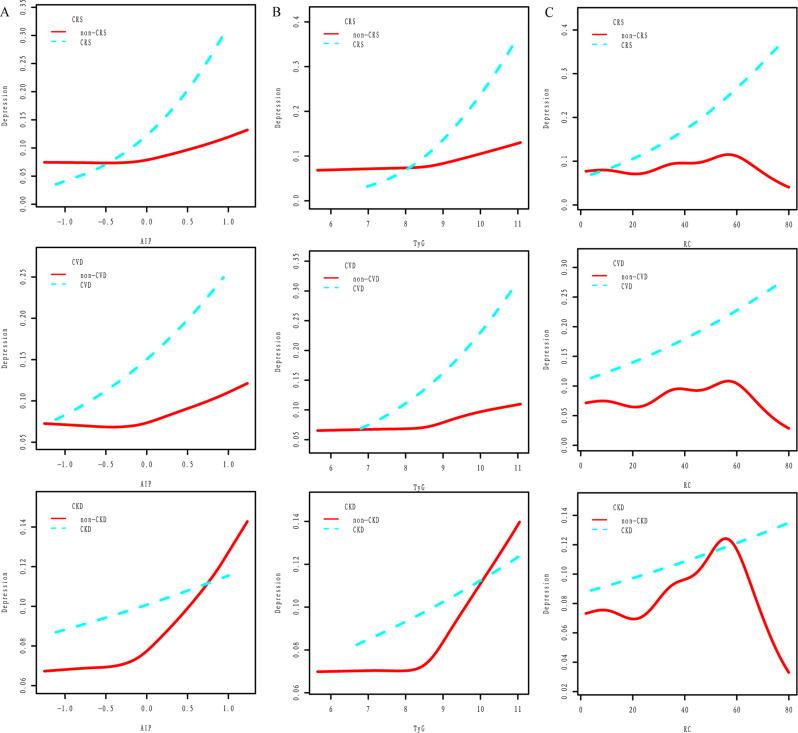
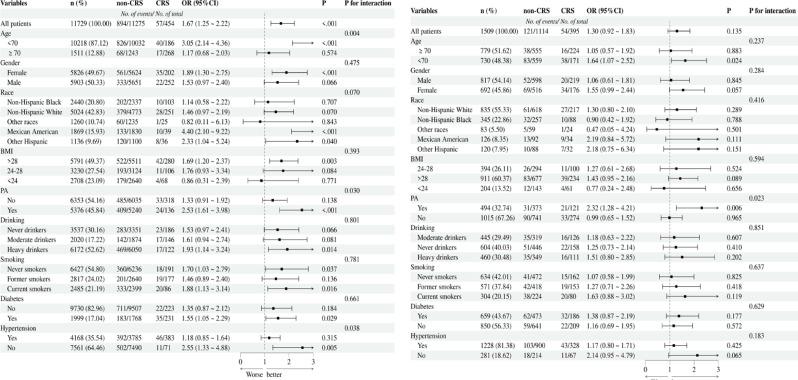
This study analyzed data from 11, 729 adults in the National Health and Nutritional Examination Surveys from 2005 to 2018. Weighted regression analysis was employed to examine the relationships between CRS and depression, CRS and the Patient Health Questionnaire-9 score, and lipid indices with depression. The restricted cubic spline analysis was used to determine whether there is a linear association between lipid indices and depression. Smooth curve fitting was employed to illustrate the relationship between lipids, depression, and cardiorenal diseases. Subgroup and sensitivity analyses were also conducted to enhance the stability of the results. Finally, we applied mediation analysis to explore whether the Atherogenic Index of Plasma (AIP), triglyceride glucose (TyG) index, and remnant cholesterol (RC) mediate the association between CRS and depression.
RESULTS
After applying propensity score matching (PSM), 1,509 adults remained in the study. After PSM, more remarkable results were rendered that CRS was associated with depression compared with non-CRS (OR: 1. 240, 95% CI: 1. 237 ~ 1. 243), only-CVD (OR: 0. 646, 95% CI: 0. 644 ~ 0. 649), and only-CKD (OR: 1.432, 95% CI: 1.428 ~ 1.437) in a fully corrected model. Smooth curve fitting shows that the intersection point of the lines of CRS and non-CRS occurs at a higher value on the horizontal axis than the intersection point of the lines representing CVD and non-CVD. In the fully corrected model, AIP, TyG, and RC did not independently mediate the association between CRS and depression.
CONCLUSION
There was a significant association between CRS and depression and a linear relationship between AIP, TyG, and RC and depression. However, the above lipid indicators did not mediate the association between CRS and depression.
背景
心血管疾病(CVD)、慢性肾脏病(CKD)和脂质与抑郁症状的存在呈正相关。然而,关于心脏肾脏综合征(CRS)与血脂指数和抑郁之间复杂联系的研究仍然很少。
方法
本研究分析了 2005 年至 2018 年全国健康和营养调查中 11729 名成年人的数据。采用加权回归分析研究 CRS 与抑郁、CRS 与患者健康问卷-9 评分以及血脂指数与抑郁之间的关系。采用限制立方样条分析确定血脂指数与抑郁之间是否存在线性关系。采用平滑曲线拟合来描述血脂、抑郁和心脏肾脏疾病之间的关系。还进行了亚组和敏感性分析,以增强结果的稳定性。最后,我们应用中介分析来探讨血浆致动脉粥样硬化指数(AIP)、三酰甘油葡萄糖(TyG)指数和残余胆固醇(RC)是否在 CRS 与抑郁之间起中介作用。
结果
在应用倾向评分匹配(PSM)后,研究中仍有 1509 名成年人。与非 CRS 相比,PSM 后 CRS 与抑郁的关联更加显著(OR:1.240,95%CI:1.2371.243),仅 CVD(OR:0.646,95%CI:0.6440.649)和仅 CKD(OR:1.432,95%CI:1.428~1.437)在完全校正模型中。平滑曲线拟合显示,CRS 与非 CRS 两条线的交点在横轴上的数值高于代表 CVD 与非 CVD 的两条线的交点。在完全校正模型中,AIP、TyG 和 RC 均不能独立中介 CRS 与抑郁之间的关系。
结论
CRS 与抑郁之间存在显著关联,AIP、TyG 和 RC 与抑郁之间存在线性关系。然而,上述血脂指标不能介导 CRS 与抑郁之间的关系。

 Zotero 插件