
加纳 6-59 月龄儿童贫血患病率的趋势和不平等,2003-2022 年。
Trends and inequalities in anaemia prevalence among children aged 6-59 months in Ghana, 2003-2022.
机构信息
Department of Biological Sciences, School of Basic Sciences, Njala University, PMB, Freetown, Sierra Leone.
Elaine Marieb College of Nursing, University of Massachusetts, Amherst, United States.
出版信息
Int J Equity Health. 2024 Nov 8;23(1):231. doi: 10.1186/s12939-024-02315-z.
BACKGROUND
Anaemia, characterised by a deficiency in red blood cells or haemoglobin, is a public health issue in Ghana, particularly among children. The prevalence of anaemia in this age group has been a longstanding concern due to its adverse effects on cognitive development, physical growth, and well-being. This study examined the trends and inequalities in anaemia prevalence among children aged 6-59 months in Ghana between 2003 and 2022.
METHODS
Data from the Ghana Demographic Health Survey conducted between 2003 and 2022 was used to analyse the prevalence of anaemia in children aged 6-59 months. The World Health Organization's Health Equity Assessment Toolkit software calculated several inequality measures, including difference, ratio, population-attributable risk, and population-attributable percentage. An inequality assessment was performed for six stratifiers: child's age, mother's economic status, maternal educational level, place of residence, child's sex, and sub-national region.
RESULTS
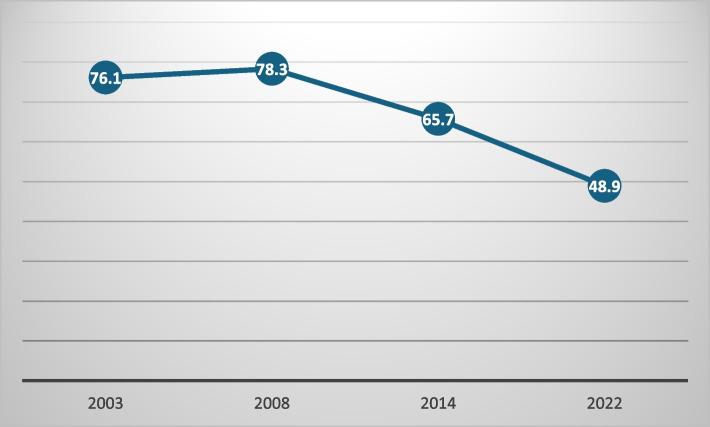
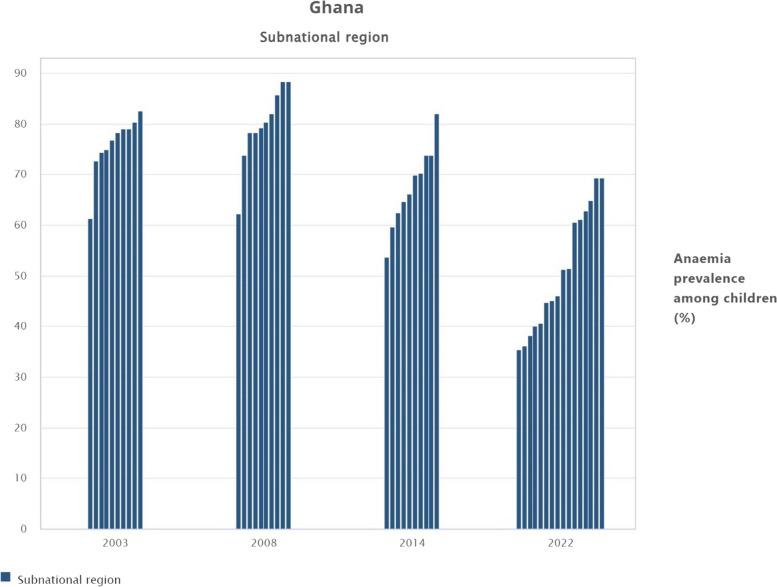
Anaemia prevalence among children aged 6-59 months in Ghana declined from 76.1% in 2003 to 48.9% by 2022. The results revealed an age-related inequality in anaemia prevalence among children in Ghana, with younger age group ( 6-11 months) consistently showing higher rates. The age-related inequality Difference was 24.6 percentage points in 2022, indicating that age is crucial to understanding anaemia risk. Economic-related inequality between children of mothers in Quintile 5 (richest) and Quintile 1 (poorest) increased from a Difference of 21.1 percentage points in 2003 to 32.7 percentage points in 2022 highlighting the stark inequalities across wealth quintiles. Education inequality between children of mothers with higher education and no education decreased from a Difference of 29.4 percentage points in 2003 to 25.3 percentage points in 2022, suggesting that children from less educated households are still at higher risk. Place of residence inequality between children of mothers living in urban areas and rural areas increased from a Difference of 12.3 percentage points in 2003 to 14.8 percentage points in 2022 reflecting urban-rural disparities. Sex-related inequality between male and female children decreased from a Difference of -0.3 percentage points in 2003 to -5.5 percentage points in 2022 indicating the absence of inequality based on sex of the child. Lastly, regional inequalities are pronounced, as indicated by an increase in the Difference from 21.2 percentage points in 2003 to 34.0 percentage points in 2022, highlighting that children in certain regions like the Northern and Upper East are more affected by anaemia.
CONCLUSION
The decline in anaemia prevalence among children aged 6-59 months in Ghana, reflects substantial progress; however, notable inequalities persist across age, economic status, education, place of residence, and region. To address these disparities, strategies such as enhancing access to healthcare services in underserved regions, implementing community education programs to raise awareness about nutrition and health, and promoting economic empowerment initiatives can be effective. Additionally, community education can play a crucial role in offsetting the effects of low household education levels, fostering a more informed population that can advocate for better health practices and policies. By addressing these key areas, we can work towards reducing anaemia prevalence and improving child health outcomes across all populations in Ghana.
背景
贫血是一种红细胞或血红蛋白不足的疾病,在加纳是一个公共卫生问题,尤其是在儿童中。由于贫血对认知发展、身体生长和健康的不利影响,该年龄段儿童贫血的患病率一直是一个长期存在的问题。本研究调查了 2003 年至 2022 年间加纳 6-59 个月儿童贫血患病率的趋势和不平等情况。
方法
使用 2003 年至 2022 年期间进行的加纳人口健康调查的数据,分析了 6-59 个月儿童贫血的患病率。世界卫生组织的卫生公平评估工具包软件计算了几个不平等措施,包括差异、比率、人群归因风险和人群归因百分比。对六个分层因素进行了不平等评估:儿童年龄、母亲经济状况、母亲教育水平、居住地、儿童性别和国家以下地区。
结果
加纳 6-59 个月儿童贫血患病率从 2003 年的 76.1%下降到 2022 年的 48.9%。结果显示,加纳儿童贫血患病率存在年龄相关的不平等,年龄较小的组(6-11 个月)的发病率一直较高。2022 年年龄相关差异为 24.6 个百分点,表明年龄是了解贫血风险的关键。母亲在五分位 5(最富有)和五分位 1(最贫穷)的儿童之间的经济相关不平等从 2003 年的 21.1 个百分点增加到 2022 年的 32.7 个百分点,突出了财富五分位数之间的明显不平等。母亲受教育程度较高和未受教育的儿童之间的教育不平等从 2003 年的 29.4 个百分点下降到 2022 年的 25.3 个百分点,表明来自教育程度较低家庭的儿童仍然面临更高的风险。母亲居住在城市和农村地区的儿童之间的居住地不平等从 2003 年的 12.3 个百分点增加到 2022 年的 14.8 个百分点,反映了城乡差距。男女儿童之间的性别不平等从 2003 年的-0.3 个百分点下降到 2022 年的-5.5 个百分点,表明儿童的性别不存在不平等。最后,区域不平等很明显,2003 年的差异从 21.2 个百分点增加到 2022 年的 34.0 个百分点,这表明在北部和上东部等特定地区,儿童更容易受到贫血的影响。
结论
加纳 6-59 个月儿童贫血患病率的下降反映了取得了实质性进展;然而,在年龄、经济状况、教育、居住地和地区方面仍然存在显著的不平等。为了解决这些差距,可以采取增强服务不足地区获得医疗保健服务的战略、实施社区教育计划提高营养和健康意识以及促进经济赋权举措等。此外,社区教育可以在缓解低家庭教育水平的影响方面发挥关键作用,培养更有见识的人口,他们可以倡导更好的健康实践和政策。通过解决这些关键领域,我们可以努力降低加纳所有人群的贫血患病率,改善儿童健康结果。


 Zotero 插件