
放射治疗与热疗联合应用:对增强辐射诱导的远隔效应的免疫协同作用的系统评价
Combined Radiotherapy and Hyperthermia: A Systematic Review of Immunological Synergies for Amplifying Radiation-Induced Abscopal Effects.
作者信息
Van Dieren Loïc, Quisenaerts Tom, Licata Mackenzie, Beddok Arnaud, Lellouch Alexandre G, Ysebaert Dirk, Saldien Vera, Peeters Marc, Gorbaslieva Ivana
机构信息
Vascularized Composite Allotransplantation Laboratory, Center for Transplantation Sciences, Massachusetts General Hospital, Harvard Medical School, Boston, MA 02114, USA.
Faculty of Medicine and Health Sciences, University of Antwerp, 2610 Wilrijk, Belgium.
出版信息
Cancers (Basel). 2024 Oct 30;16(21):3656. doi: 10.3390/cancers16213656.
INTRODUCTION
The abscopal effect is a systemic immune response characterized by metastases regression at sites distant from the irradiated lesion. This systematic review aims to explore the immunological mechanisms of action underlying the abscopal effect and to investigate how hyperthermia (HT) can increase the chances of radiotherapy (RT) triggering systemic anti-tumor immune responses.
METHODS
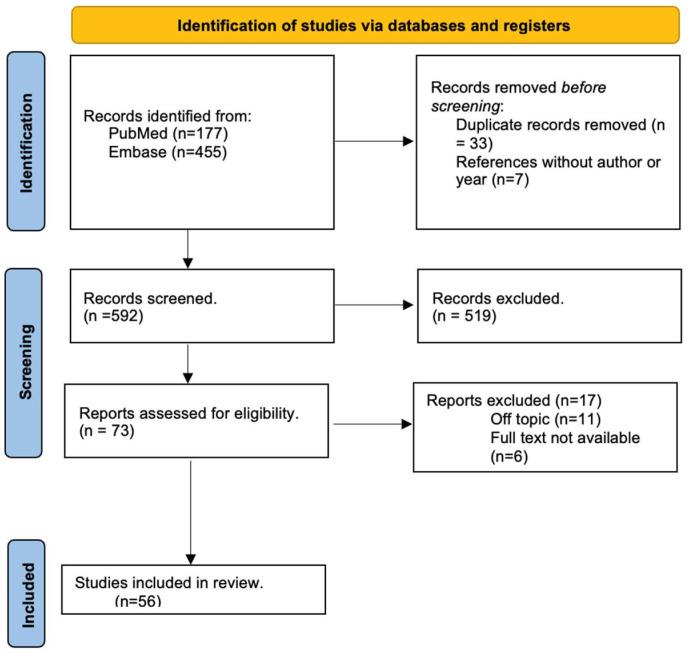
This review is created in accordance with the PRISMA guidelines.
RESULTS AND CONCLUSION
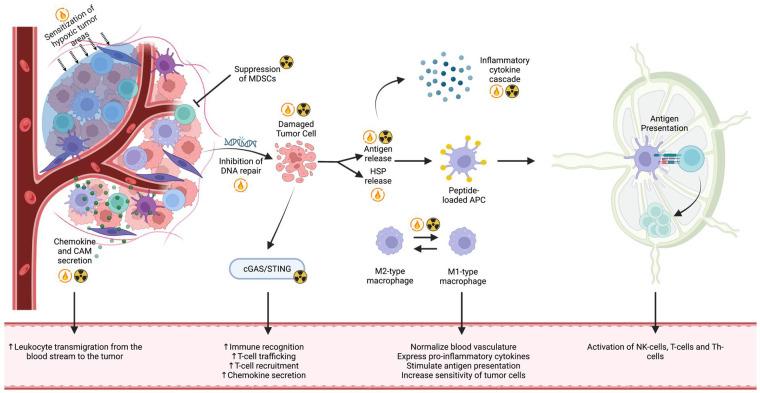
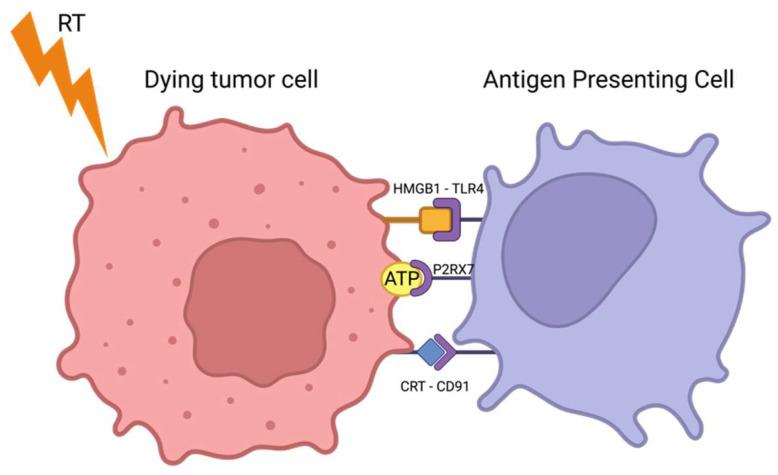
HT and RT have both complementary and synergistic immunological effects. Both methods trigger danger signal release, promoting cytokine and chemokine secretion, which increases T-cell infiltration and facilitates cell death. Both treatments upregulate extracellular tumor HSP70, which could amplify DAMP recognition by macrophages and DCs, leading to stronger tumor antigen presentation and CTL-mediated immune responses. Additionally, the combined increase in cell adhesion molecules (VCAM-1, ICAM-1, E-selectin, L-selectin) could enhance leukocyte adhesion to tumors, improving lymphocyte trafficking and boosting systemic anti-tumor effects. Lastly, HT causes vasodilation and improves blood flow, which might exacerbate those distant effects. We suggest the combination of local radiotherapy with fever-range whole-body hyperthermia to optimally enhance the chances of triggering the abscopal effect mediated by the immune system.
引言
远隔效应是一种全身性免疫反应,其特征为远离受照射病灶部位的转移灶发生消退。本系统评价旨在探讨远隔效应潜在的免疫作用机制,并研究热疗(HT)如何增加放射治疗(RT)引发全身性抗肿瘤免疫反应的机会。
方法
本评价按照PRISMA指南制定。
结果与结论
热疗和放射治疗具有互补和协同的免疫效应。两种方法均触发危险信号释放,促进细胞因子和趋化因子分泌,增加T细胞浸润并促进细胞死亡。两种治疗均上调细胞外肿瘤热休克蛋白70(HSP70),这可增强巨噬细胞和树突状细胞(DC)对损伤相关分子模式(DAMP)的识别,导致更强的肿瘤抗原呈递和细胞毒性T淋巴细胞(CTL)介导的免疫反应。此外,细胞黏附分子(血管细胞黏附分子1、细胞间黏附分子1、E选择素、L选择素)的联合增加可增强白细胞与肿瘤的黏附,改善淋巴细胞运输并增强全身性抗肿瘤作用。最后,热疗引起血管舒张并改善血流,这可能会加剧那些远处效应。我们建议将局部放疗与热疗范围的全身热疗联合使用,以最佳地增加触发由免疫系统介导的远隔效应的机会。

 Zotero 插件