
使用简单切碎的消费后塑料废料骨料和糖蜜对砂浆性能的研究。
Investigation on properties of mortar with the use of simply shredded post-consumer plastic waste aggregate and molasses.
作者信息
Dumre Ghanashyam, Bhat Kushal Rana, Gyawali Tek Raj
机构信息
School of Engineering, Faculty of Science and Technology, Pokhara University, Pokhara, Nepal.
出版信息
Heliyon. 2024 Oct 26;10(21):e39881. doi: 10.1016/j.heliyon.2024.e39881. eCollection 2024 Nov 15.
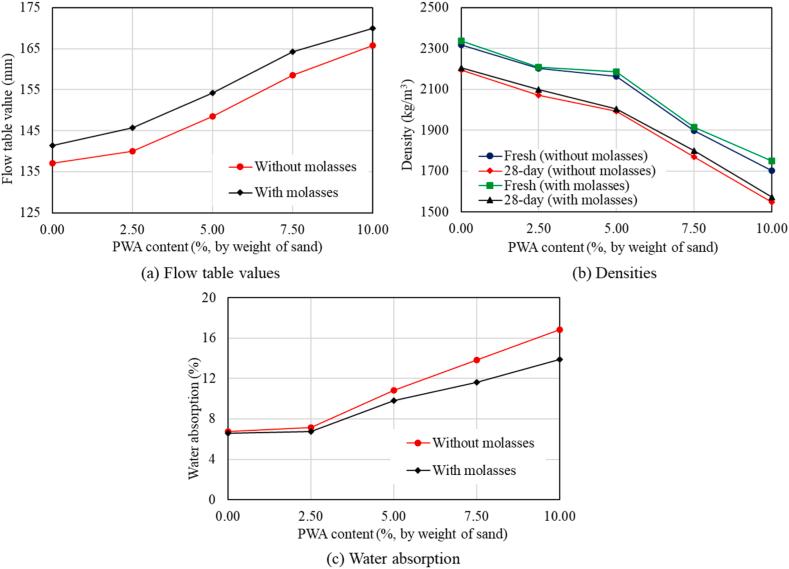
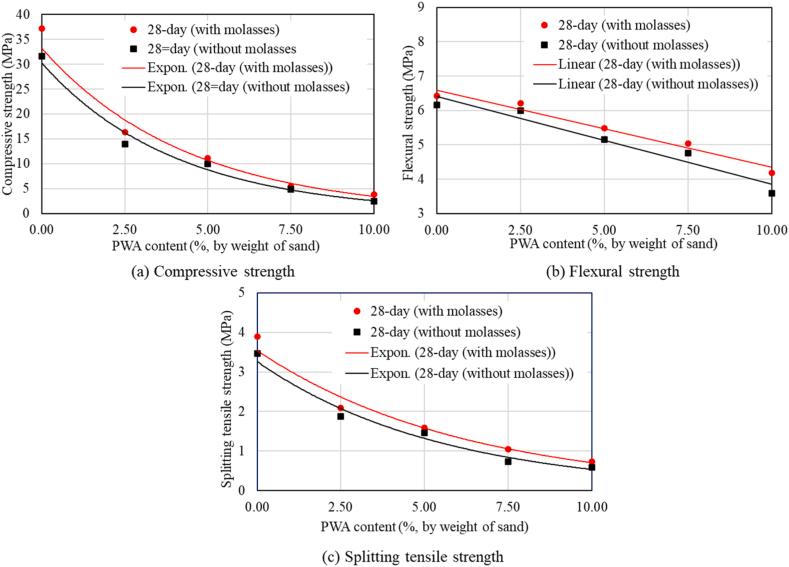
The world faces significant challenges in managing plastic waste, which does not decompose and releases toxic gases when burned, posing severe health hazards. Concurrently, Nepal's heavy burnt-clay brick walls in reinforced concrete building structures urgently need replacement with lightweight walls. To tackle these dual challenges, this paper uniquely explores the innovative reuse of post-consumer plastic waste aggregate (PWA) as a sustainable alternative to sand, aiming to produce lightweight mortar for enhanced building applications. The control mortar used a water: cement: sand ratio of 1:2:4 (by weight). Shredded PWA was incorporated at varying contents of 0.00 %, 2.50 %, 5.00 %, 7.50 %, and 10.00 % by weight of sand. The study also examined the effect of adding 0.05 % molasses by weight of cement on the mortar's properties. The physical, mechanical, and water absorption properties of each mortar mix were evaluated using standard tests. The table flow value and water absorption of the mortar with 10.00 % PWA content increased by 20.83 % and 148.72 %, respectively, compared to the control mortar. However, the 28-day compressive, flexural, and splitting tensile strengths decreased by 92.29 %, 41.70 %, and 83.26 %, respectively. It was feasible to use 7.50 % and 10.00 % PWA to produce lightweight panels for walls, with and without molasses, respectively. The use of PWA in concrete addresses critical plastic waste management challenges while enabling the production of sustainable structural and non-structural concrete. PWA mortar can replace heavy brick walls, reducing building weight and enhancing seismic resistance. Additionally, substituting brick walls lowers reliance on brick kilns, leading to reduced CO₂ emissions and land degradation, while also cutting concrete production costs.
在管理塑料垃圾方面,世界面临着重大挑战,塑料垃圾不会分解,燃烧时会释放有毒气体,对健康构成严重危害。与此同时,尼泊尔钢筋混凝土建筑结构中厚重的烧粘土砖墙迫切需要用轻质墙体来替代。为应对这双重挑战,本文独特地探索了将消费后塑料垃圾骨料(PWA)创新再利用,作为沙子的可持续替代品,旨在生产用于增强建筑应用的轻质砂浆。对照砂浆的水:水泥:沙子比例为1:2:4(按重量计)。按沙子重量的0.00%、2.50%、5.00%、7.50%和10.00%的不同含量掺入切碎的PWA。该研究还考察了按水泥重量的0.05%添加糖蜜对砂浆性能的影响。使用标准试验评估每种砂浆混合物的物理、力学和吸水性能。与对照砂浆相比,PWA含量为10.00%的砂浆的扩展度值和吸水率分别提高了20.83%和148.72%。然而,28天抗压强度、抗折强度和劈裂抗拉强度分别降低了92.29%、41.70%和83.26%。分别使用7.50%和10.00%的PWA来生产带和不带糖蜜的轻质墙板是可行的。在混凝土中使用PWA解决了关键的塑料垃圾管理挑战,同时能够生产可持续的结构和非结构混凝土。PWA砂浆可以替代厚重的砖墙,减轻建筑重量并增强抗震性。此外,用PWA砂浆替代砖墙降低了对砖窑的依赖,从而减少了二氧化碳排放和土地退化,同时还降低了混凝土生产成本。




 Zotero 插件