
胰腺炎中的胰蛋白酶:是罪魁祸首,还是中介,亦或是一种偶然现象?
Trypsin in pancreatitis: The culprit, a mediator, or epiphenomenon?
机构信息
Department of Medicine, David Geffen School of Medicine, University of California at Los Angeles, Los Angeles, CA 90073, United States.
Department of Medicine, VA Greater Los Angeles Healthcare System, Los Angeles, CA 90073, United States.
出版信息
World J Gastroenterol. 2024 Nov 7;30(41):4417-4438. doi: 10.3748/wjg.v30.i41.4417.
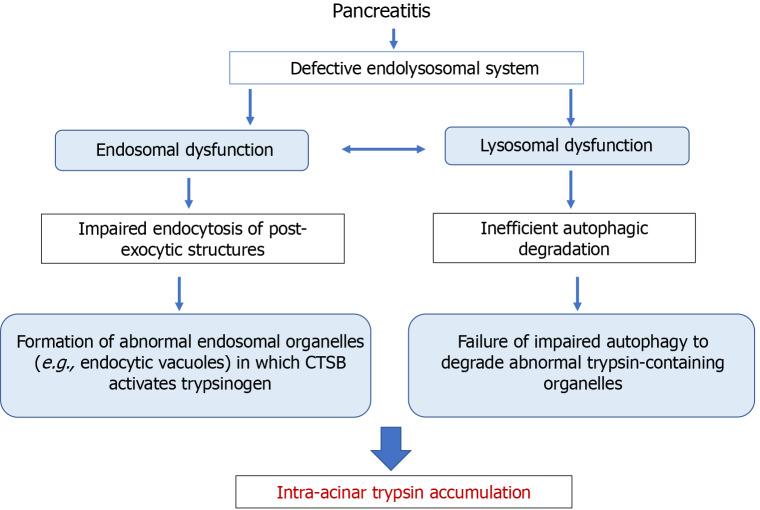
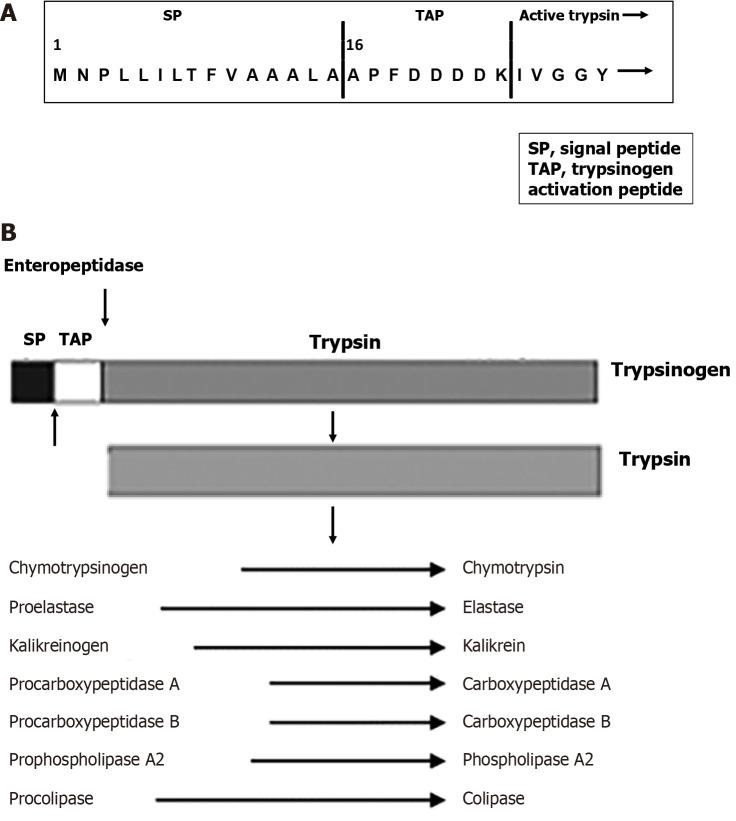
Pancreatitis is a common, life-threatening inflammatory disease of the exocrine pancreas. Its pathogenesis remains obscure, and no specific or effective treatment is available. Gallstones and alcohol excess are major etiologies of pancreatitis; in a small portion of patients the disease is hereditary. Pancreatitis is believed to be initiated by injured acinar cells (the main exocrine pancreas cell type), leading to parenchymal necrosis and local and systemic inflammation. The primary function of these cells is to produce, store, and secrete a variety of enzymes that break down all categories of nutrients. Most digestive enzymes, including all proteases, are secreted by acinar cells as inactive proforms (zymogens) and in physiological conditions are only activated when reaching the intestine. The generation of trypsin from inactive trypsinogen in the intestine plays a critical role in physiological activation of other zymogens. It was proposed that pancreatitis results from proteolytic autodigestion of the gland, mediated by premature/inappropriate trypsinogen activation within acinar cells. The intra-acinar trypsinogen activation is observed in experimental models of acute and chronic pancreatitis, and in human disease. On the basis of these observations, it has been considered the central pathogenic mechanism of pancreatitis - a concept with a century-old history. This review summarizes the data on trypsinogen activation in experimental and genetic rodent models of pancreatitis, particularly the more recent genetically engineered mouse models that mimic mutations associated with hereditary pancreatitis; analyzes the mechanisms mediating trypsinogen activation and protecting the pancreas against its' damaging effects; discusses the gaps in our knowledge, potential therapeutic approaches, and directions for future research. We conclude that trypsin is not the culprit in the disease pathogenesis but, at most, a mediator of some pancreatitis responses. Therefore, the search for effective therapies should focus on approaches to prevent or normalize other intra-acinar pathologic processes, such as defective autophagy leading to parenchymal cell death and unrelenting inflammation.
胰腺炎是一种常见的、危及生命的胰腺外分泌炎症性疾病。其发病机制尚不清楚,也没有特定或有效的治疗方法。胆石症和酒精过量是胰腺炎的主要病因;在一小部分患者中,这种疾病是遗传性的。胰腺炎被认为是由受损的腺泡细胞(胰腺的主要外分泌细胞类型)引起的,导致实质坏死和局部及全身炎症。这些细胞的主要功能是产生、储存和分泌各种分解所有营养类别的酶。大多数消化酶,包括所有蛋白酶,都是以无活性的前体(酶原)形式由腺泡细胞分泌的,在生理条件下,只有到达肠道时才会被激活。肠内无活性的胰蛋白酶原转化为胰蛋白酶,在其他酶原的生理激活中起着关键作用。有人提出,胰腺炎是由腺泡细胞内过早/不当的胰蛋白酶原激活介导的腺体蛋白水解自噬引起的。在急性和慢性胰腺炎的实验模型以及人类疾病中,都观察到了腺泡细胞内的胰蛋白酶原激活。基于这些观察结果,它被认为是胰腺炎的中心发病机制——这是一个具有百年历史的概念。本文综述了实验和遗传啮齿动物胰腺炎模型中胰蛋白酶原激活的相关数据,特别是近年来模拟与遗传性胰腺炎相关的基因突变的基因工程小鼠模型;分析了介导胰蛋白酶原激活和保护胰腺免受其损伤作用的机制;讨论了我们知识中的空白、潜在的治疗方法以及未来研究的方向。我们的结论是,胰蛋白酶不是疾病发病机制中的罪魁祸首,最多只是一些胰腺炎反应的介导物。因此,寻找有效的治疗方法应该集中在预防或使其他腺泡内病理过程正常化的方法上,例如导致实质细胞死亡和持续炎症的缺陷自噬。

 Zotero 插件