
TYR 基因中影响人酪氨酸酶蛋白和蛋白稳定性的有害非同义单核苷酸多态性(nsSNP)的计算分析。
Computational analysis of the deleterious non-synonymous single nucleotide polymorphisms (nsSNPs) in TYR gene impacting human tyrosinase protein and the protein stability.
机构信息
Department of Laboratory Medicine, Huaian Cancer Hospital, Huaian, Jiangsu, China.
Nephrology Department, Huaian Cancer Hospital, Huaian, Jiangsu, China.
出版信息
PLoS One. 2024 Nov 14;19(11):e0308927. doi: 10.1371/journal.pone.0308927. eCollection 2024.
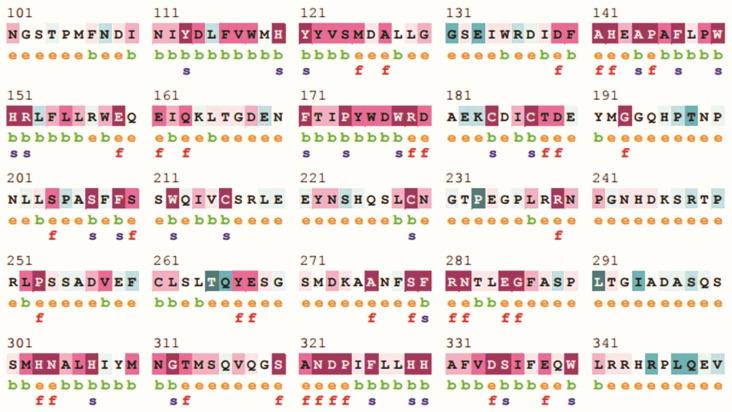
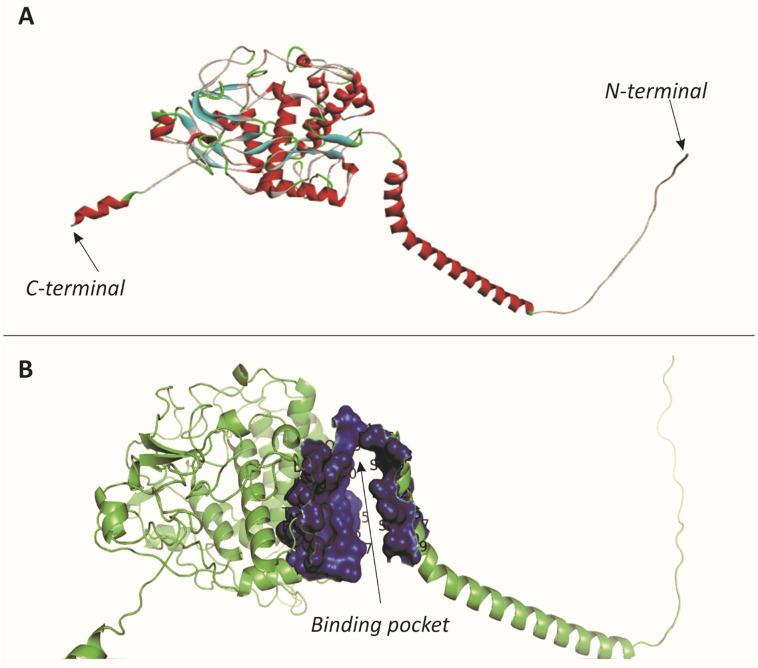
Tyrosinase, a copper-containing oxidase, plays a vital role in the melanin biosynthesis pathway. Mutations in the tyrosinase gene can disrupt the hydroxylation of tyrosine, leading to decreased production of 3,4-dihydroxyphenylalanine (DOPA). Consequently, this impairs the subsequent formation of dopaquinone, a key precursor in melanin pigment synthesis. This study aimed to identify the deleterious non-synonymous single nucleotide polymorphisms (nsSNPs) within the TYR gene that exert an influence on the human TYR protein. Additionally, we evaluated the impact of 10 FDA-approved drugs on the protein stability of mutated structures, exploring the potential for inhibitory pharmaceutical interventions. Through various bioinformatics tools, we detected 47900 nsSNPs, particularly K142M, I151N, M179R, S184L, L189P, and C321R, which were found to be the most deleterious variants, decreasing the protein stability. These drugs (Sapropterin, Azelaic Acid, Menobenzone, Levodopda, Mequinol, Arbutin, Hexylresorcinol, Artenimol, Alloin and Curcumin) interacted with the binding sites in four mutant models K142M, I151N, M179R, and S184L proving that these ligands directly bind with the active site of mutant tyrosinase protein to inhibit it's working. On the other hand, two mutant models L189P and C321R did not show any binding site residue interaction with any ligands. In conclusion, this in-silico analysis of deleterious nsSNPs in the TYR gene, coupled with the evaluation of ligands/drugs on mutated tyrosinase structures not only advances our understanding of molecular variations but also highlights promising pathways for targeted inhibitory interventions in the intricate network of melanin biosynthesis.
酪氨酸酶是一种含铜的氧化酶,在黑色素生物合成途径中起着至关重要的作用。酪氨酸酶基因的突变会破坏酪氨酸的羟化作用,导致 3,4-二羟苯丙氨酸(DOPA)的产生减少。因此,这会损害多巴醌的后续形成,多巴醌是黑色素色素合成的关键前体。本研究旨在鉴定 TYR 基因内对人类 TYR 蛋白有影响的有害非同义单核苷酸多态性(nsSNP)。此外,我们评估了 10 种 FDA 批准的药物对突变结构蛋白稳定性的影响,探索了抑制药物干预的潜力。通过各种生物信息学工具,我们检测到 47900 个 nsSNP,特别是 K142M、I151N、M179R、S184L、L189P 和 C321R,这些变体被认为是最具破坏性的变体,降低了蛋白质稳定性。这些药物(沙利度胺、壬二酸、苯佐卡因、左旋多巴、间苯二酚、熊果苷、己基间苯二酚、阿替洛尔、大蒜素和姜黄素)与四个突变模型(K142M、I151N、M179R 和 S184L)的结合部位相互作用,证明这些配体直接与突变酪氨酸酶蛋白的活性部位结合,从而抑制其作用。另一方面,两个突变模型 L189P 和 C321R 与任何配体都没有显示出任何结合部位残基相互作用。总之,本研究对 TYR 基因中有害 nsSNP 的计算机分析,以及对突变酪氨酸酶结构的配体/药物的评估,不仅提高了我们对分子变异的认识,还突出了针对黑色素生物合成复杂网络中靶向抑制干预的有前景的途径。



 Zotero 插件