
在纳米医学中,患者特异性变量在蛋白冠形成和治疗效果中的作用。
The role of patient-specific variables in protein corona formation and therapeutic efficacy in nanomedicine.
机构信息
Department of Biomedical Engineering, Northwestern University, Evanston, IL, USA.
McKetta Department of Chemical Engineering, The University of Texas at Austin, Austin, TX, USA.
出版信息
J Nanobiotechnology. 2024 Nov 15;22(1):714. doi: 10.1186/s12951-024-02954-y.
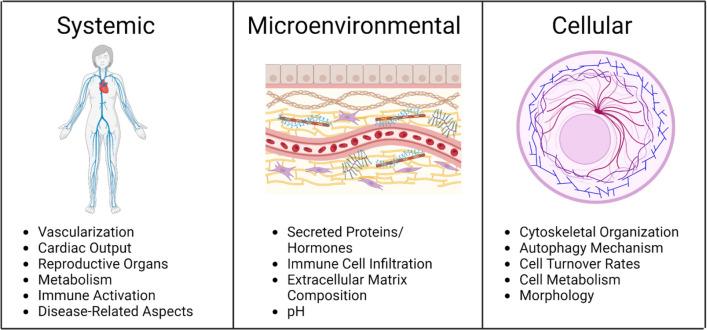
Despite their potential, the adoption of nanotechnology in therapeutics remains limited, with only around eighty nanomedicines approved in the past 30 years. This disparity is partly due to the "one-size-fits-all" approach in medical design, which often overlooks patient-specific variables such as biological sex, genetic ancestry, disease state, environment, and age that influence nanoparticle behavior. Nanoparticles (NPs) must be transported through systemic, microenvironmental, and cellular barriers that vary across heterogeneous patient populations. Key patient-dependent properties impacting NP delivery include blood flow rates, body fat distribution, reproductive organ vascularization, hormone and protein levels, immune responses, and chromosomal differences. Understanding these variables is crucial for developing effective, patient-specific nanotechnologies. The formation of a protein corona around NPs upon exposure to biological fluids significantly alters NP properties, affecting biodistribution, pharmacokinetics, cytotoxicity, and organ targeting. The dynamics of the protein corona, such as time-dependent composition and formation of soft and hard coronas, depend on NP characteristics and patient-specific serum components. This review highlights the importance of understanding protein corona formation across different patient backgrounds and its implications for NP design, including sex, ancestry, age, environment, and disease state. By exploring these variables, we aim to advance the development of personalized nanomedicine, improving therapeutic efficacy and patient outcomes.
尽管纳米技术具有潜力,但在治疗中的应用仍然有限,在过去的 30 年中,只有大约 80 种纳米药物获得批准。这种差异部分归因于医疗设计中的“一刀切”方法,这种方法经常忽略了影响纳米颗粒行为的患者特异性变量,如生物性别、遗传背景、疾病状态、环境和年龄。纳米颗粒(NPs)必须通过系统、微环境和细胞屏障运输,这些屏障在异质患者群体中存在差异。影响 NP 传递的关键患者依赖特性包括血流速度、体脂分布、生殖器官血管化、激素和蛋白质水平、免疫反应和染色体差异。了解这些变量对于开发有效的、针对患者的纳米技术至关重要。 NPs 暴露于生物体液后会形成蛋白质冠,这会显著改变 NP 的特性,影响其生物分布、药代动力学、细胞毒性和器官靶向性。蛋白质冠的动力学,如软、硬冠的组成和形成的时间依赖性,取决于 NP 的特性和患者特异性血清成分。本综述强调了理解不同患者背景下蛋白质冠形成的重要性,以及其对 NP 设计的影响,包括性别、遗传背景、年龄、环境和疾病状态。通过探索这些变量,我们旨在推进个性化纳米医学的发展,提高治疗效果和患者预后。


 Zotero 插件