
通过氮气和四氟甲烷等离子体处理增强ZnS/TiO纳米复合材料的光催化活性。
Enhanced photocatalytic activity of ZnS/TiO nanocomposite by nitrogen and tetrafluoromethane plasma treatments.
作者信息
Khosravi S, Chaibakhsh N, Jafari S, Nilkar M
机构信息
Department of Physics, Faculty of Science, University of Guilan, Rasht, 41335-1914, Iran.
Department of Physics "G. Occhialini", University of Milano-Bicocca, Piazza della Scienza 3, Milano, 20126, Italy.
出版信息
Sci Rep. 2024 Nov 18;14(1):28385. doi: 10.1038/s41598-024-78009-x.
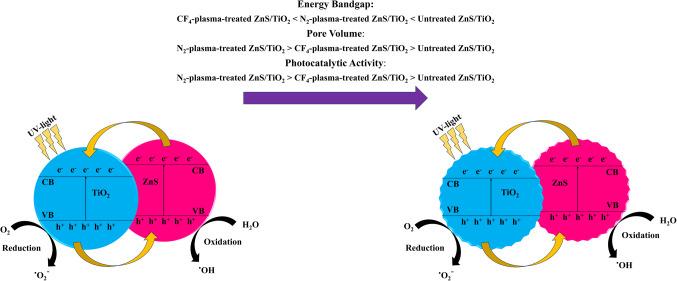
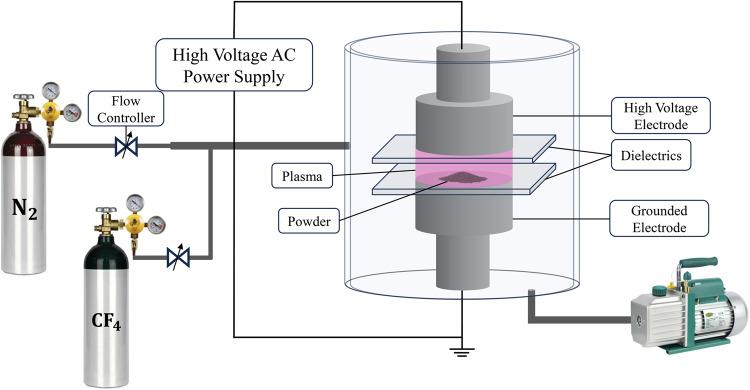
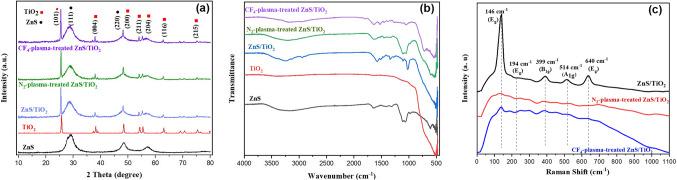
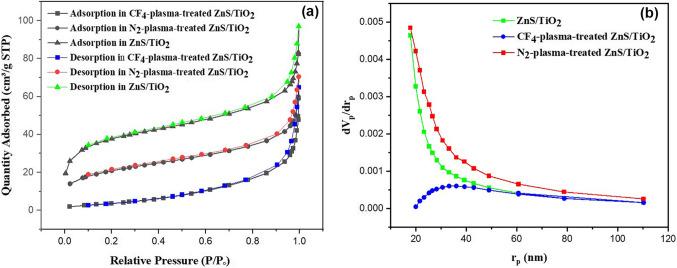
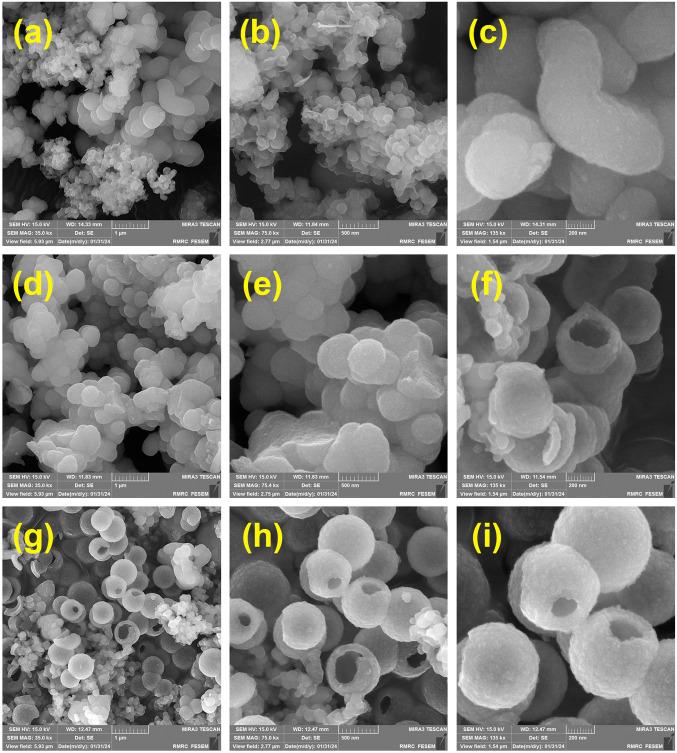
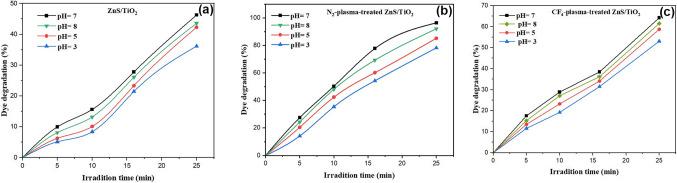
In the present study, the photocatalytic performance of ZnS/TiO nanocomposite was investigated through the photodegradation of Acid Blue 113 (AB113) dye under ultraviolet light exposure. TiO and ZnS-based nanocomposites suffer from relatively wide bandgap energy and low adsorption capacity which limit their photocatalytic applications. These problems can be suppressed by modifying the surface of nanocomposite particles by the non-thermal plasma. Herein, surface modification of the ZnS/TiO nanocomposite was performed using a dielectric-barrier discharge plasma under nitrogen (N) and tetrafluoromethane (CF) gases. The characteristics of the plasma-treated nanocomposites were evaluated by XRD, FTIR, Raman, FESEM, EDS, BET, BJH, and DRS analyses. According to the results, by applying plasma treatment, cation and anion vacancies are produced that reduces the band gap energy of the photocatalyst hence improves its performance. The results indicate that the photocatalytic efficiency of the N-plasma-treated nanocatalyst has been almost two times higher than that of the untreated ZnS/TiO. It was found that after 25 min of UV irradiation, the AB113 was almost completely degraded in the presence of N-plasma-treated ZnS/TiO nanocomposite (about 95%), whereas, it was degraded by 64% and 46% in the presence of CF-plasma-treated ZnS/TiO and untreated ZnS/TiO, respectively. This study presents a new approach to designing cost-effective plasma-treated photocatalysts to degrade organic contaminants in wastewater.
在本研究中,通过在紫外光照射下对酸性蓝113(AB113)染料进行光降解,研究了ZnS/TiO纳米复合材料的光催化性能。基于TiO和ZnS的纳米复合材料存在带隙能量相对较宽和吸附能力较低的问题,这限制了它们的光催化应用。通过非热等离子体对纳米复合材料颗粒表面进行改性,可以抑制这些问题。在此,使用氮气(N)和四氟甲烷(CF)气体下的介质阻挡放电等离子体对ZnS/TiO纳米复合材料进行表面改性。通过XRD、FTIR、拉曼、FESEM、EDS、BET、BJH和DRS分析对等离子体处理后的纳米复合材料的特性进行了评估。结果表明,通过等离子体处理,产生了阳离子和阴离子空位,降低了光催化剂的带隙能量,从而提高了其性能。结果表明,N等离子体处理的纳米催化剂的光催化效率几乎是未处理的ZnS/TiO的两倍。研究发现,在紫外光照射25分钟后,在N等离子体处理的ZnS/TiO纳米复合材料存在下,AB113几乎完全降解(约95%),而在CF等离子体处理的ZnS/TiO和未处理的ZnS/TiO存在下,AB113分别降解了64%和46%。本研究提出了一种设计经济高效的等离子体处理光催化剂以降解废水中有机污染物的新方法。



 Zotero 插件