
源自红树林植物的植物化学物质的抗癌潜力:全面的机制见解。
Anticancer potential of phytochemicals derived from mangrove plants: Comprehensive mechanistic insights.
作者信息
Chowdhury Raihan, Bhuia Md Shimul, Al Hasan Md Sakib, Hossain Snigdha Shadid, Afrin Sadia, Büsselberg Dietrich, Habtemariam Solomon, Sönmez Gürer Eda, Sharifi-Rad Javad, Ahmed Aldahish Afaf, Аkhtayeva Nursulu, Islam Muhammad Torequl
机构信息
Department of Pharmacy Bangabandhu Sheikh Mujibur Rahman Science and Technology University Gopalganj Bangladesh.
Phytochemistry and Biodiversity Research Laboratory BioLuster Research Center Gopalganj Bangladesh.
出版信息
Food Sci Nutr. 2024 Jul 10;12(9):6174-6205. doi: 10.1002/fsn3.4318. eCollection 2024 Sep.
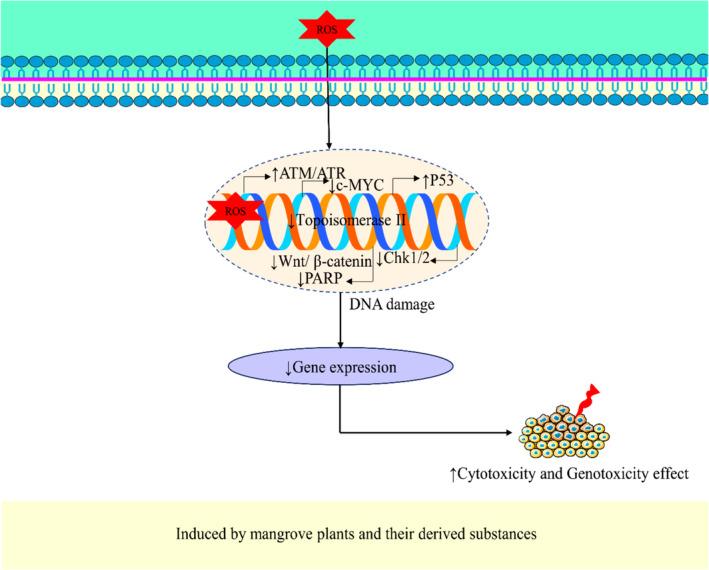
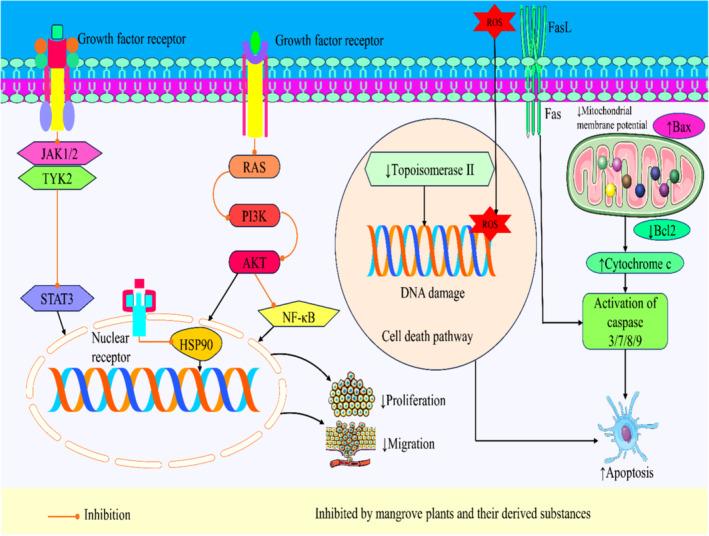
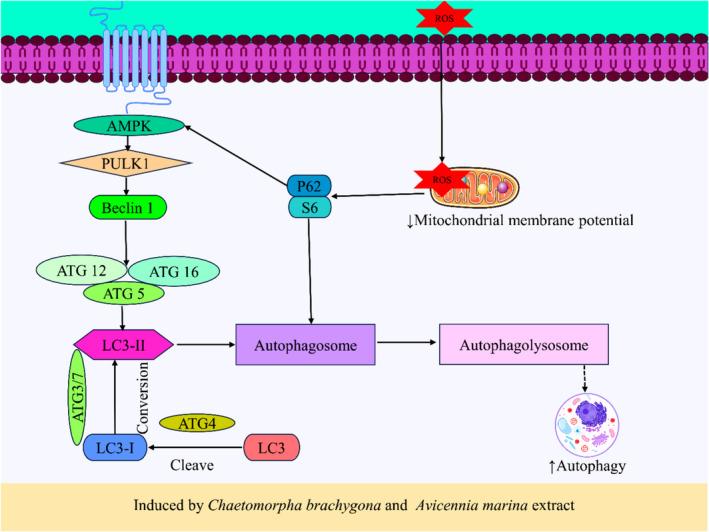
Cancer is a collection of illnesses characterized by aberrant cellular proliferation that can infiltrate or metastasize to distant anatomical sites, posing a notable threat to human well-being due to its substantial morbidity and death rates worldwide. The potential of plant-derived natural compounds as anticancer medicines has been assessed owing to their favorable attributes of few side effects and significant antitumor activity. Mangrove plants and their derived compounds have been scientifically shown to exhibit many significant beneficial biological activities, such as anti-inflammatory, immunomodulatory, antioxidant, neuroprotective, cardioprotective, and hepatoprotective properties. This study summarized mangrove plants and their derived compounds as potential anticancer agents, with an emphasis on the underlying molecular mechanisms. To explore this, we gathered data on the preclinical (in vivo and in vitro) anticancer effects of mangrove plants and their derived compounds from reputable literature spanning 2000 to 2023. We conducted thorough searches in various academic databases, including PubMed, ScienceDirect, Wiley Online, SpringerLink, Google Scholar, Scopus, and the Web of Science. The results demonstrated that mangrove plants and their derived compounds have promising anticancer properties in preclinical pharmacological test systems through various molecular mechanisms, including induction of oxidative stress and mitochondrial dysfunction, cytotoxicity, genotoxicity, cell cycle arrest, apoptosis, autophagy, antiproliferative, antimetastatic, and other miscellaneous actions. Upon thorough observation of the pertinent information, it is suggested that mangrove plants and their derived chemicals may serve as a potential lead in the development of novel drugs for cancer therapy.
癌症是一类以异常细胞增殖为特征的疾病,可浸润或转移至远处解剖部位,因其在全球范围内的高发病率和死亡率,对人类健康构成重大威胁。由于植物源天然化合物具有副作用少和显著抗肿瘤活性等有利特性,其作为抗癌药物的潜力已得到评估。科学研究表明,红树林植物及其衍生化合物具有许多重要的有益生物活性,如抗炎、免疫调节、抗氧化、神经保护、心脏保护和肝脏保护特性。本研究总结了红树林植物及其衍生化合物作为潜在抗癌剂的情况,重点关注其潜在的分子机制。为了探究这一点,我们从2000年至2023年的权威文献中收集了红树林植物及其衍生化合物的临床前(体内和体外)抗癌作用数据。我们在包括PubMed、ScienceDirect、Wiley Online、SpringerLink、Google Scholar、Scopus和Web of Science在内的多个学术数据库中进行了全面搜索。结果表明,红树林植物及其衍生化合物在临床前药理测试系统中通过多种分子机制具有有前景的抗癌特性,包括诱导氧化应激和线粒体功能障碍、细胞毒性、遗传毒性、细胞周期阻滞、凋亡、自噬、抗增殖、抗转移及其他杂项作用。在对相关信息进行全面观察后,建议红树林植物及其衍生化学物质可能成为开发新型癌症治疗药物的潜在先导。



 Zotero 插件