
住院康复期间的间歇性低氧-高氧训练可改善长新冠患者的运动能力和功能结局:一项对照临床试点试验的结果
Intermittent Hypoxic-Hyperoxic Training During Inpatient Rehabilitation Improves Exercise Capacity and Functional Outcome in Patients With Long Covid: Results of a Controlled Clinical Pilot Trial.
作者信息
Doehner Wolfram, Fischer Azadeh, Alimi Banafsheh, Muhar Jasmin, Springer Jochen, Altmann Christoph, Schueller Per Otto
机构信息
Berlin Institute of Health Center for Regenerative Therapies, Charité - Universitätsmedizin Berlin, Berlin, Germany.
German Heart Center of the Charite, Department of Cardiology, Campus Virchow, German Centre for Cardiovascular Research (DZHK), partner site Berlin, Charité - Universitätsmedizin Berlin, Berlin, Germany.
出版信息
J Cachexia Sarcopenia Muscle. 2024 Dec;15(6):2781-2791. doi: 10.1002/jcsm.13628. Epub 2024 Nov 19.
INTRODUCTION
Long COVID-19 illness is a severely disabling disease with shortness of breath, weakness and fatigue as leading symptoms, resulting in poor quality of life and substantial delay in return to work. No specific respiratory therapy has been validated for patients with long COVID. The intermittent hypoxia-hyperoxia training (IHHT) is a respiratory therapeutic modality to improve exercise performance via controlled respiratory conditioning. The purpose of the present study is to investigate the therapeutic effect of IHHT on functional and symptomatic recovery of patients with long COVID syndrome.
METHODS
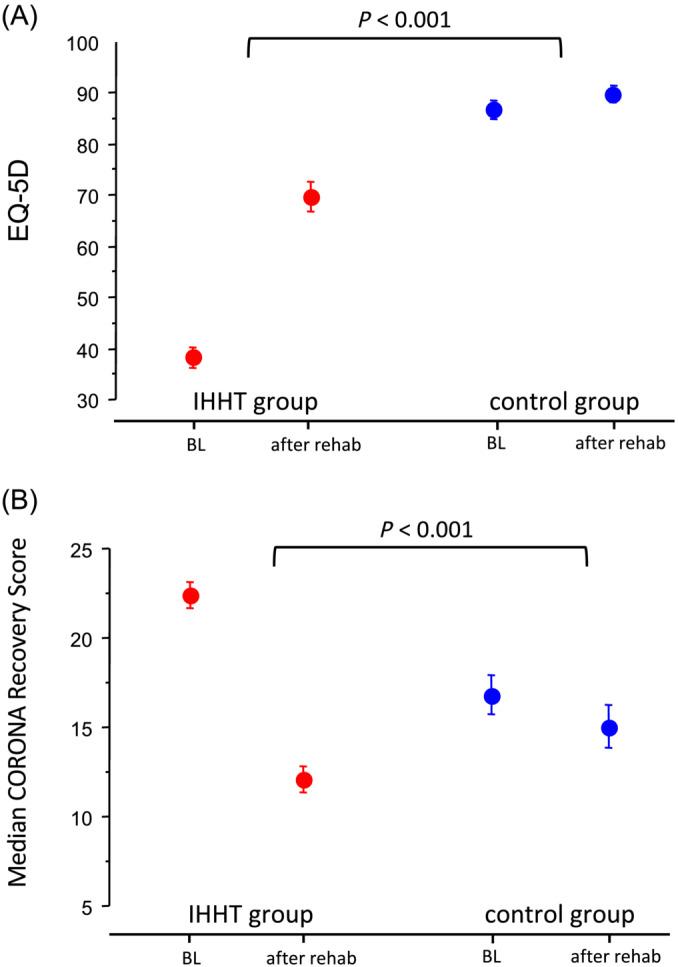
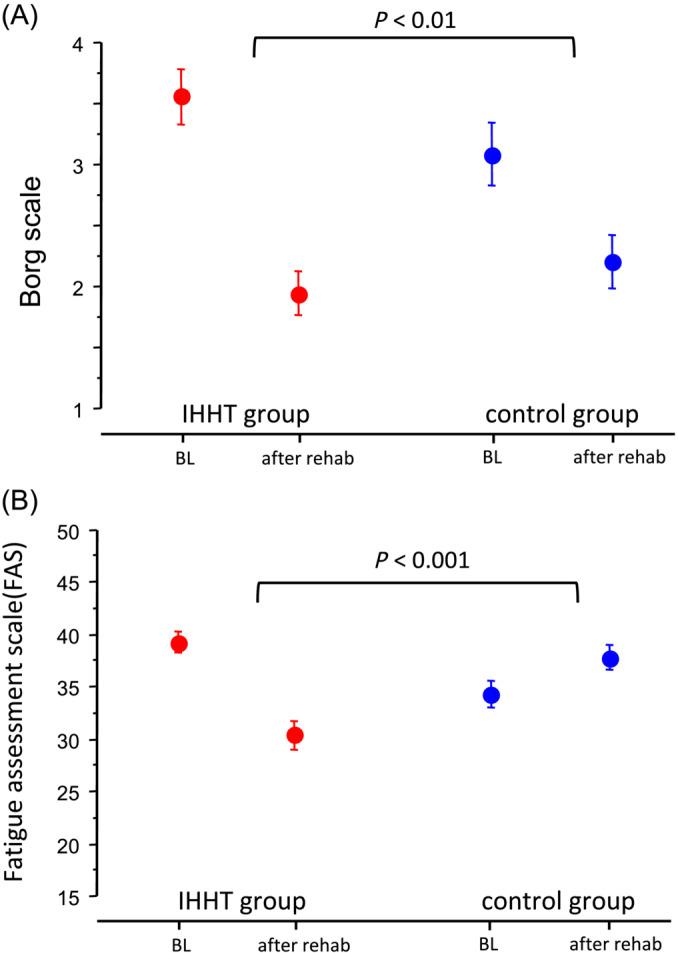
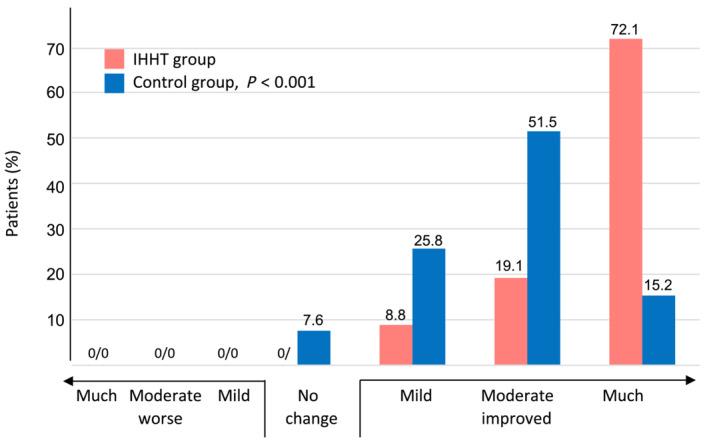
A prospective, controlled, open-treatment interventional study was conducted in patients with long COVID who were admitted to an inpatient rehabilitation programme. Patients were assigned nonrandomized to receive IHHT in addition to the standardized rehabilitation programme (IHHT group) or standard rehabilitation alone (control group). The IHHT group received supervised sessions of intermittent hypoxic (10-12% O) and hyperoxic (30-35% O) breathing three times per week throughout the rehabilitation period. Primary endpoint was improved walking distance in a 6-min walk test (6MWT) between study groups. Secondary endpoints were change in stair climbing power, dyspnoea (Borg dyspnoea Scale), fatigue assessment scale (FAS) and change in health-related quality of life (HRQoL) assessed by patient global assessment (PGA), EQ-5D analogue scale and the MEDIAN Corona Recovery Score (MCRS). Further assessments included maximum handgrip strength, nine hole peg test, timed up-and-go, respiratory function and functional ambulation category (FAC), serum analyses and safety of the intervention.
RESULTS
A total of 145 patients were included in the study (74% female, mean age 53 ± 12 years) and assigned to IHHT (n = 70) or standard care (n = 75). The 6MWT distance improved 2.8-fold in the IHHT group compared to the control group (91.7 ± 50.1 m vs. 32.6 ± 54.2 m, ANCOVA p < 0.001). Stair climbing power improved 3.7-fold in the IHHT group compared to controls (-1.91 ± 2.23 s vs. -0.51 ± 1.93 s, p < 0.001). Secondary endpoints on dyspnoea, fatigue and HRQoL (PGA, EQ-5D and MCRS) improved significantly in the IHHT group compared to controls. The IHHT group exhibited a significant decrease in blood pressure, heart rate and increase in haemoglobin levels that was not observed in the control group. No adverse events were observed.
CONCLUSION
Respiratory treatment with IHHT in addition to a multidisciplinary rehabilitation programme improves functional capacity, symptomatic status and quality of life in patients with disabling long COVID. IHHT has been demonstrated to be safe, well tolerated and feasible to be integrated in an inpatient rehabilitation programme to improve outcome in long COVID.
引言
新冠后长期症状是一种严重致残的疾病,主要症状为呼吸急促、虚弱和疲劳,导致生活质量下降和复工大幅延迟。目前尚无针对新冠后长期症状患者的特定呼吸治疗方法得到验证。间歇性缺氧-高氧训练(IHHT)是一种通过控制性呼吸调节来改善运动表现的呼吸治疗方式。本研究的目的是探讨IHHT对新冠后长期症状综合征患者功能和症状恢复的治疗效果。
方法
对入住住院康复项目的新冠后长期症状患者进行了一项前瞻性、对照、开放治疗的干预性研究。患者被非随机分配,除接受标准化康复项目外,还接受IHHT(IHHT组)或仅接受标准康复(对照组)。IHHT组在整个康复期间每周接受3次监督下的间歇性低氧(10 - 12%氧气)和高氧(30 - 35%氧气)呼吸训练。主要终点是研究组之间6分钟步行试验(6MWT)中步行距离的改善。次要终点包括爬楼梯能力的变化、呼吸困难(Borg呼吸困难量表)、疲劳评估量表(FAS)以及通过患者整体评估(PGA)、EQ - 5D模拟量表和MEDIAN新冠恢复评分(MCRS)评估的健康相关生活质量(HRQoL)的变化。进一步的评估包括最大握力、九孔插板试验、定时起立行走试验、呼吸功能和功能性步行分类(FAC)、血清分析以及干预的安全性。
结果
共有145名患者纳入研究(74%为女性,平均年龄53±12岁),并被分配到IHHT组(n = 70)或标准护理组(n = 75)。与对照组相比,IHHT组的6MWT距离改善了2.8倍(91.7±50.1米对32.6±54.2米,协方差分析p < 0.001)。与对照组相比,IHHT组的爬楼梯能力改善了3.7倍(-1.91±2.23秒对-0.51±1.93秒,p < 0.001)。与对照组相比,IHHT组在呼吸困难、疲劳和HRQoL(PGA、EQ - 5D和MCRS)方面的次要终点有显著改善。IHHT组的血压、心率显著降低,血红蛋白水平升高,而对照组未观察到这些变化。未观察到不良事件。
结论
除多学科康复项目外,采用IHHT进行呼吸治疗可改善致残性新冠后长期症状患者的功能能力、症状状态和生活质量。已证明IHHT安全、耐受性良好且可整合到住院康复项目中以改善新冠后长期症状的治疗效果。

 Zotero 插件