
增强泰国社区药剂师对抗菌药物耐药性的应对能力:定性洞察与情感分析。
Empowering Thai community pharmacists in combating antimicrobial resistance: Qualitative insight and sentiment analysis.
作者信息
Netthong Rojjares, Donsamak Sisira, John Dai N, Kane Ros, Armani Keivan
机构信息
Faculty of Pharmaceutical Sciences, Ubon Ratchathani University, Ubon Ratchathani 34190, Thailand.
School of Pharmacy and Pharmaceutical Sciences, Cardiff University, Cardiff, UK.
出版信息
Explor Res Clin Soc Pharm. 2024 Nov 3;16:100535. doi: 10.1016/j.rcsop.2024.100535. eCollection 2024 Dec.
BACKGROUND
Antimicrobial resistance (AMR) is increasing globally and poses a significant public health challenge. Community pharmacists, especially in primary care settings, play a pivotal role in mitigating the irrational use of antibiotics, a key driver of AMR.
OBJECTIVES
This study aims to explore qualitative insights from community pharmacists regarding antibiotic supply and usage, analyze sentiments related to AMR, and highlight the crucial role of community pharmacists in AMR stewardship at the primary care/community level.
METHODS
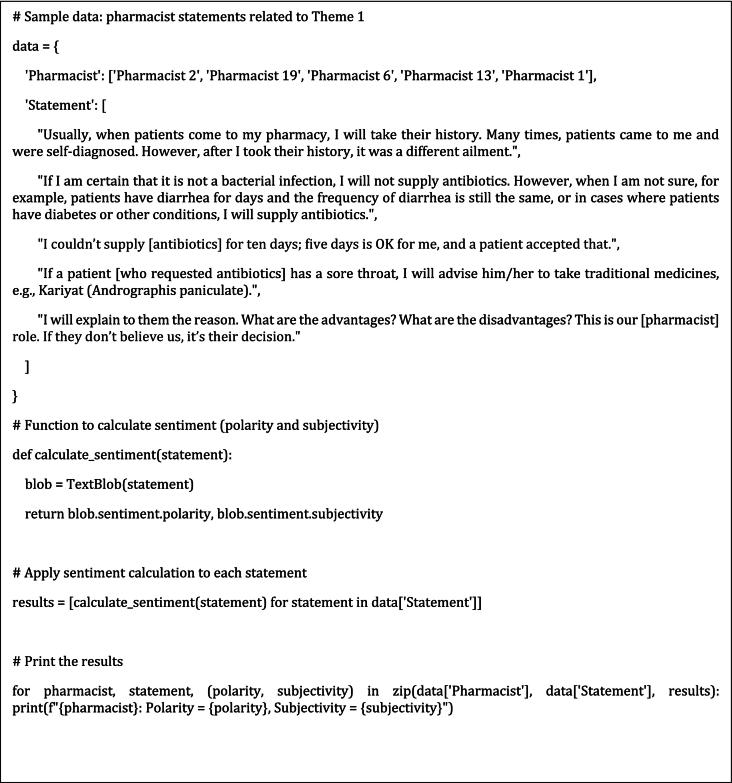
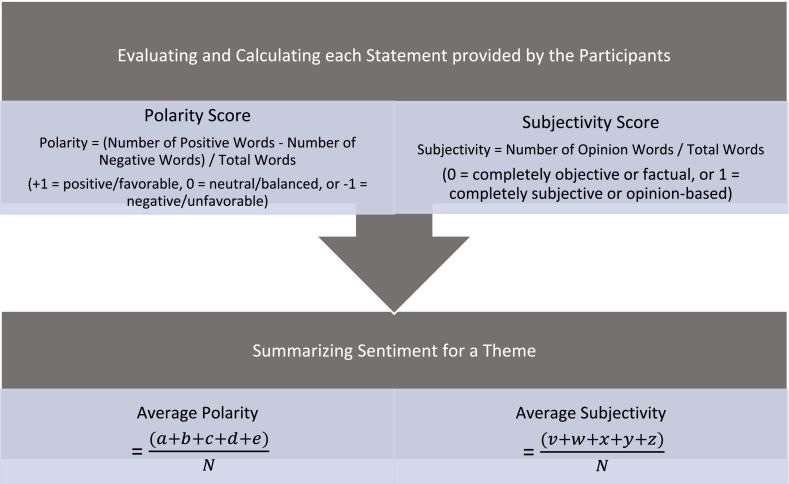
This study engaged community pharmacists in Thailand through semi-structured interviews to obtain in-depth insights into the antibiotic supply and perceptions of AMR. Additionally, sentiment analysis, which evaluates the emotional tone of the pharmacists' responses, was conducted to enrich the findings.
RESULTS
Interviews with 23 community pharmacists highlighted the practices, challenges, and strategies related to antibiotic supply and use. Key findings include the identification of barriers such as patient demand and lack of awareness about antimicrobial resistance (AMR), alongside strategies for improvement such as public education and professional development. Sentiment analysis reveals a cautiously optimistic perspective toward enhancing rational antibiotic use, underscoring the importance of comprehensive approaches that combine education, ethics, and regulatory measures to address the complexities of antibiotic management at community pharmacies.
CONCLUSION
This study underscores the necessity of public awareness, pharmacist-patient relationships, and regulatory reforms for the rational use of antibiotics in community pharmacies. These findings emphasize that pharmacist education and adherence to professional ethics are essential for mitigating antimicrobial resistance and promoting rational antibiotic use.
背景
抗菌药物耐药性(AMR)在全球范围内不断增加,对公共卫生构成重大挑战。社区药剂师,尤其是在初级保健机构中,在减少抗生素的不合理使用方面发挥着关键作用,而抗生素的不合理使用是AMR的一个关键驱动因素。
目的
本研究旨在探索社区药剂师对抗生素供应和使用的定性见解,分析与AMR相关的观点,并强调社区药剂师在初级保健/社区层面AMR管理中的关键作用。
方法
本研究通过半结构化访谈让泰国的社区药剂师参与,以深入了解抗生素供应情况和对AMR的看法。此外,还进行了情感分析,以评估药剂师回答的情感基调,从而丰富研究结果。
结果
对23名社区药剂师的访谈突出了与抗生素供应和使用相关的做法、挑战和策略。主要发现包括识别出诸如患者需求和对抗菌药物耐药性(AMR)缺乏认识等障碍,以及诸如公众教育和专业发展等改进策略。情感分析显示,对于加强合理使用抗生素持谨慎乐观的态度,强调了综合方法的重要性,这些方法将教育、伦理和监管措施结合起来,以应对社区药房抗生素管理的复杂性。
结论
本研究强调了提高公众意识、药剂师与患者关系以及社区药房合理使用抗生素监管改革的必要性。这些发现强调,药剂师教育和遵守职业道德对于减轻抗菌药物耐药性和促进合理使用抗生素至关重要。
 Zotero 插件