
肝吸虫来源的分子可加速 2 型糖尿病小鼠模型的皮肤修复过程。
Liver Fluke-Derived Molecules Accelerate Skin Repair Processes in a Mouse Model of Type 2 Diabetes Mellitus.
机构信息
Institute of Cytology and Genetics, Siberian Branch of Russian Academy of Sciences (ICG SB RAS), 10 Akad. Lavrentiev Ave., Novosibirsk 630090, Russia.
Department of Natural Sciences, Novosibirsk State University, 2 Pirogova Str., Novosibirsk 630090, Russia.
出版信息
Int J Mol Sci. 2024 Nov 8;25(22):12002. doi: 10.3390/ijms252212002.
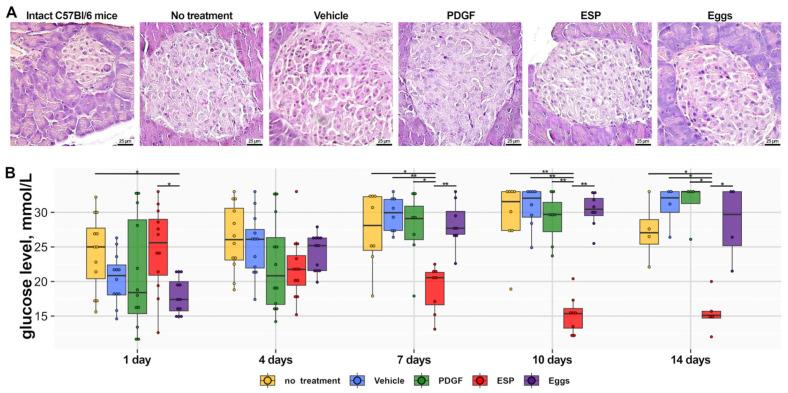
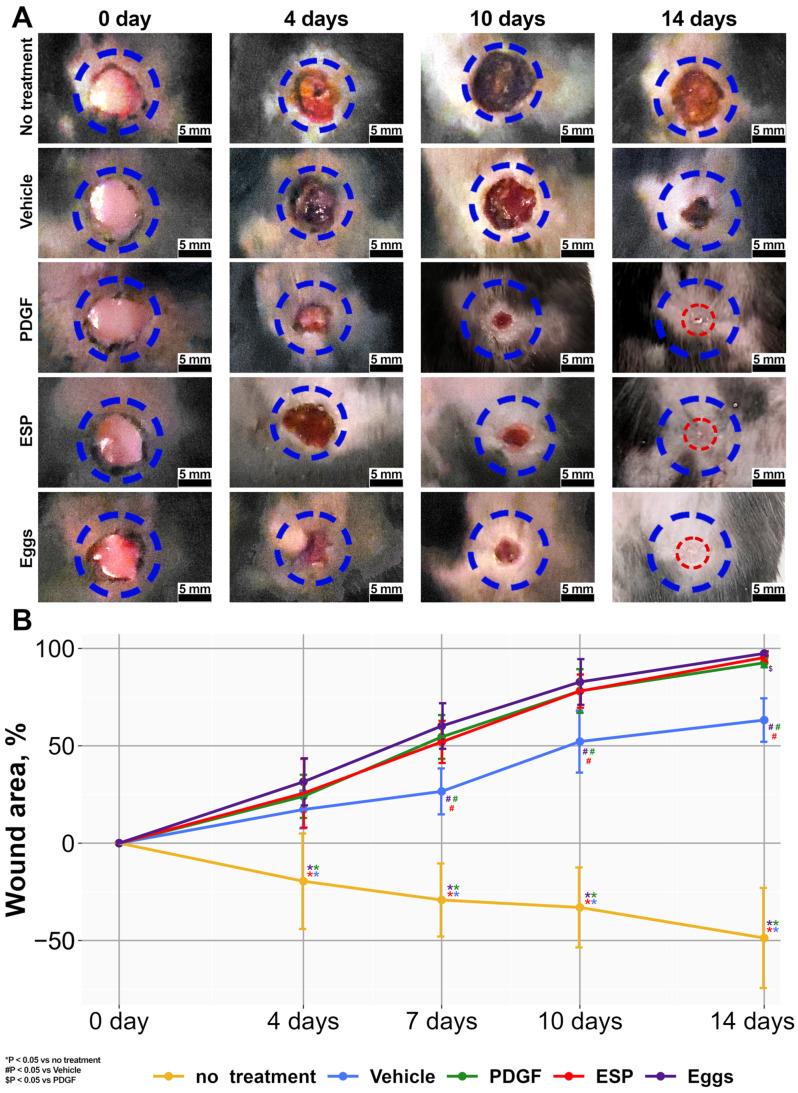
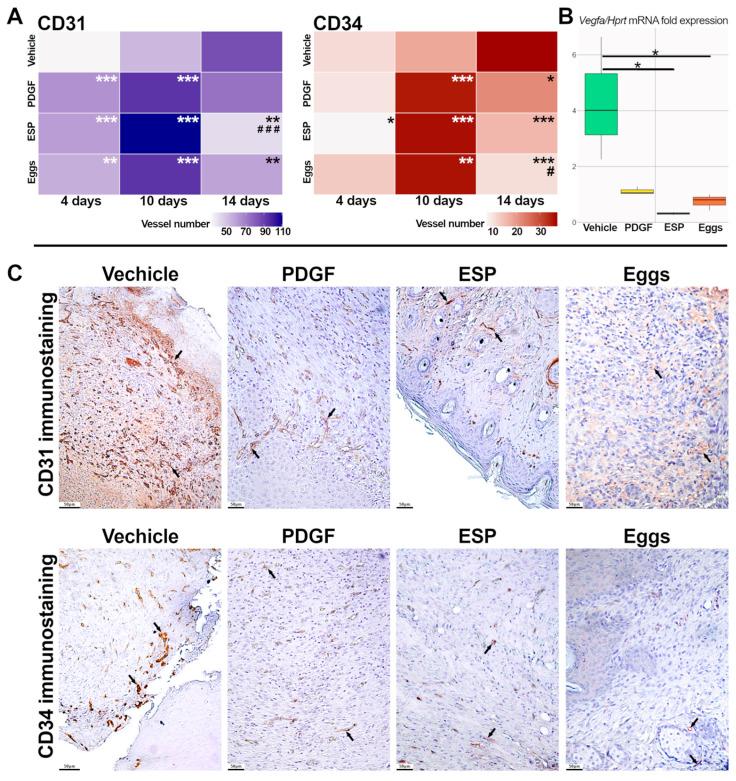
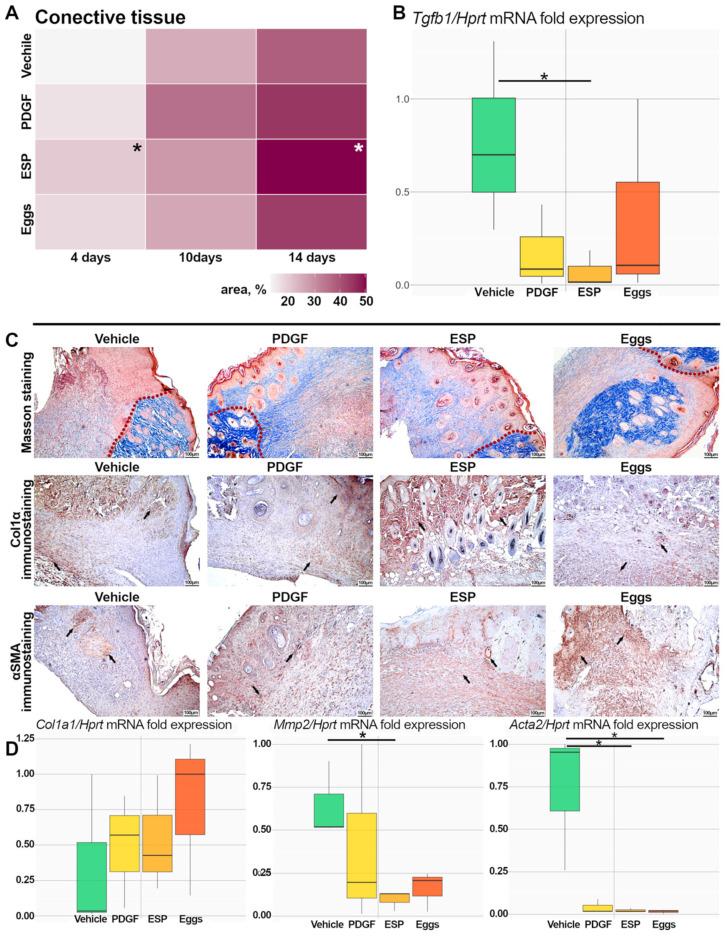
Chronic nonhealing wounds, such as diabetic ulcers, are among the most serious complications of diabetes mellitus. Consequently, the search for new therapeutic strategies remains highly relevant. Based on our previous data on acute wounds, bioactive molecules derived from the liver fluke hold promise as a novel approach to wound healing. The aim of this study was to investigate the wound-healing properties of excretory-secretory products (ESP) and inactivated eggs of in a model of type 2 diabetes mellitus. Two-month-old mice of the BKS.Cg + Leprdb/+Leprdb/OlaHsd (db/db) strain were inflicted with superficial wounds of 5 mm in diameter. Mouse groups included several controls (methylcellulose as the vehicle and human recombinant PDGF as the positive control) and specific-treatment groups (ESP and inactivated eggs). Histopathological, immunohistochemical, and RT-PCR studies using markers for M1/M2 polarization, angiogenesis, and extracellular matrix remodeling were carried out. Additionally, an image analysis of Masson's trichrome-stained skin sections was performed. The proliferation of HaCaT cells under ESP and egg treatment was also assessed. The present study reveals a significant increase in the percentage of wound healing in ESP- and egg-treated groups, which significantly exceeded the control values after 14 days. Wound treatment with either ESP or worm eggs resulted in (i) a reduction in inflammation with a canonical M1-to-M2 polarization shift, (ii) the modulation of the vascular response, and (iii) dermal extracellular matrix remodeling. All results are comparable to those of the positive control group treated with PDGF. This study also reveals that ESP, but not eggs, stimulated keratinocyte proliferation in vitro. The results indicate the high wound-healing potential of liver fluke bioactive molecules and open prospects for further research on these new promising therapeutic approaches.
慢性难愈性创面,如糖尿病溃疡,是糖尿病最严重的并发症之一。因此,寻找新的治疗策略仍然非常重要。基于我们之前关于急性创面的研究数据,来源于肝吸虫的生物活性分子有望成为一种新的创面愈合方法。本研究旨在研究 2 型糖尿病模型中分泌排泄产物(ESP)和灭活卵对创面愈合的作用。将 2 月龄 BKS.Cg + Leprdb/+Leprdb/OlaHsd(db/db) 糖尿病小鼠造成直径为 5mm 的皮肤全层创面。实验动物分为对照组(甲基纤维素为赋形剂和人重组 PDGF 为阳性对照)和实验组(ESP 和灭活 卵)。采用 M1/M2 极化、血管生成和细胞外基质重塑的标记物进行组织病理学、免疫组织化学和 RT-PCR 研究,并对 Masson 三色染色皮肤切片进行图像分析。还评估了 ESP 和卵处理对 HaCaT 细胞增殖的影响。本研究显示,ESP 和卵处理组的创面愈合百分比显著增加,在第 14 天明显超过对照组。ESP 或虫卵处理后的创面(i)炎症减少,呈经典的 M1 向 M2 极化转变,(ii)调节血管反应,(iii)真皮细胞外基质重塑。所有结果与 PDGF 阳性对照组相当。本研究还表明,ESP 而非 卵可刺激角质形成细胞体外增殖。这些结果表明肝吸虫生物活性分子具有很高的创面愈合潜力,为进一步研究这些新的有前途的治疗方法提供了前景。




 Zotero 插件