
FUS 与聚(ADP-核糖)化 PARP1 的相分离受多胺、二价金属阳离子和聚(ADP-核糖)结构的控制。
Phase Separation of FUS with Poly(ADP-ribosyl)ated PARP1 Is Controlled by Polyamines, Divalent Metal Cations, and Poly(ADP-ribose) Structure.
机构信息
Institute of Chemical Biology and Fundamental Medicine (ICBFM), Siberian Branch of the Russian Academy of Sciences (SB RAS), Novosibirsk 630090, Russia.
INSERM U1204, Univ-Evry, University Paris Saclay, 91025 Evry, France.
出版信息
Int J Mol Sci. 2024 Nov 20;25(22):12445. doi: 10.3390/ijms252212445.
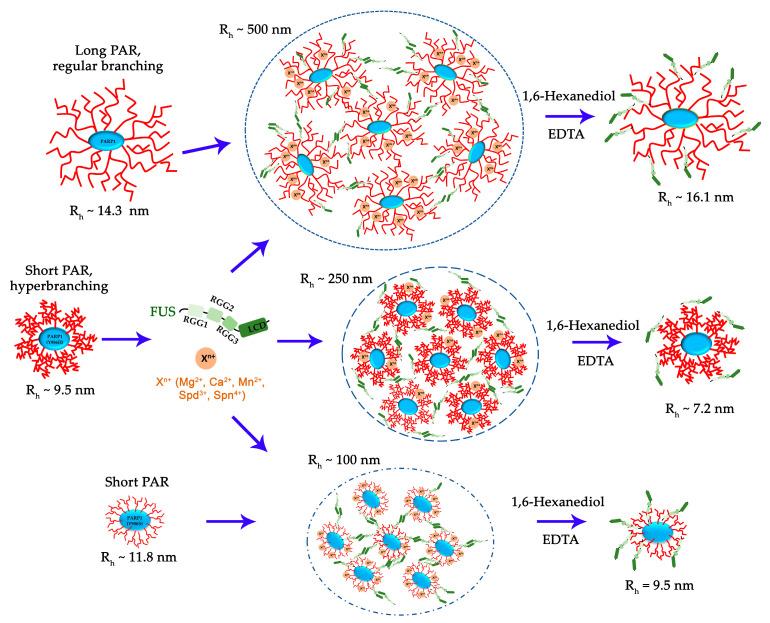
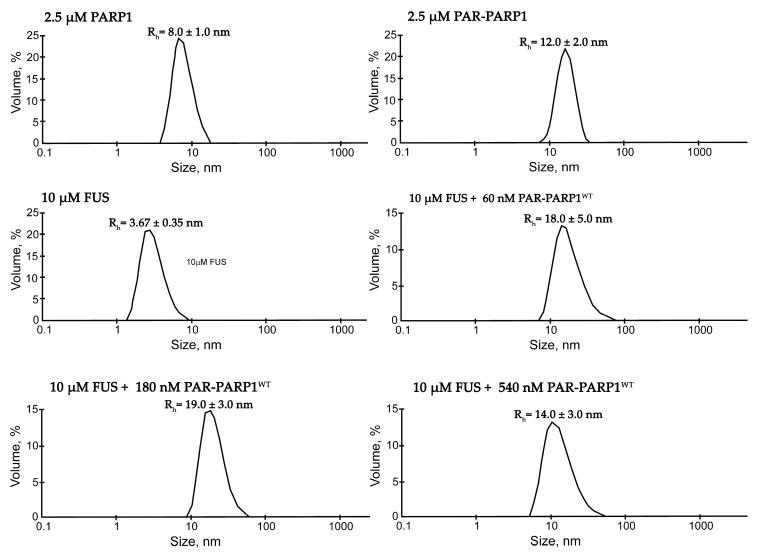
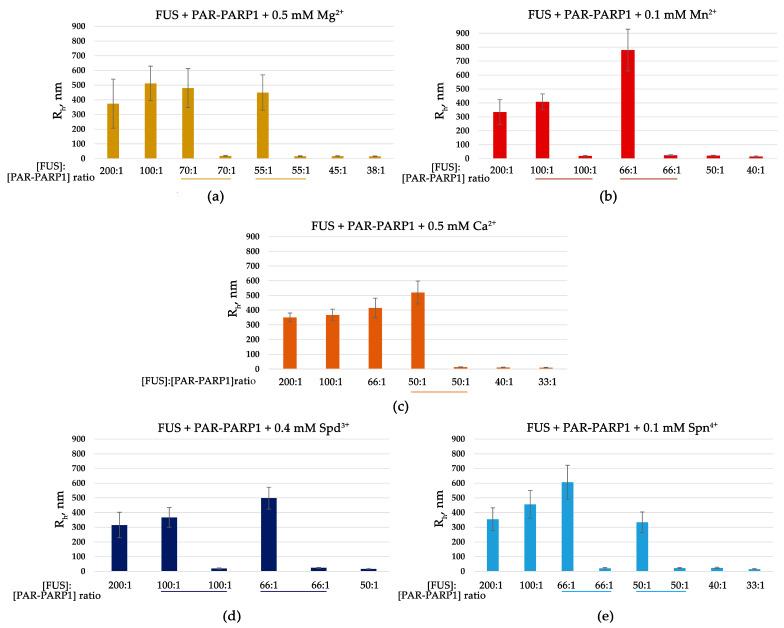
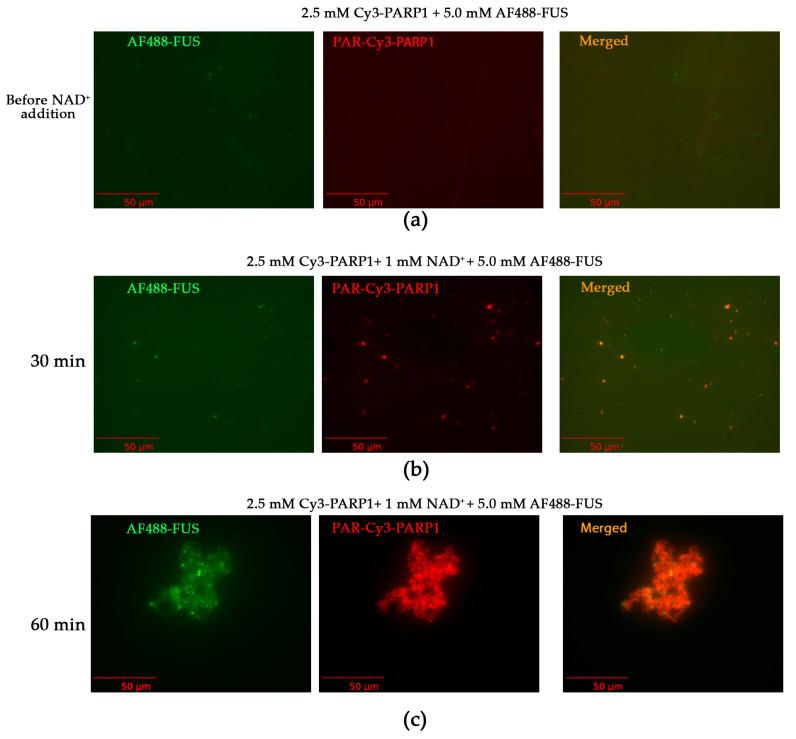
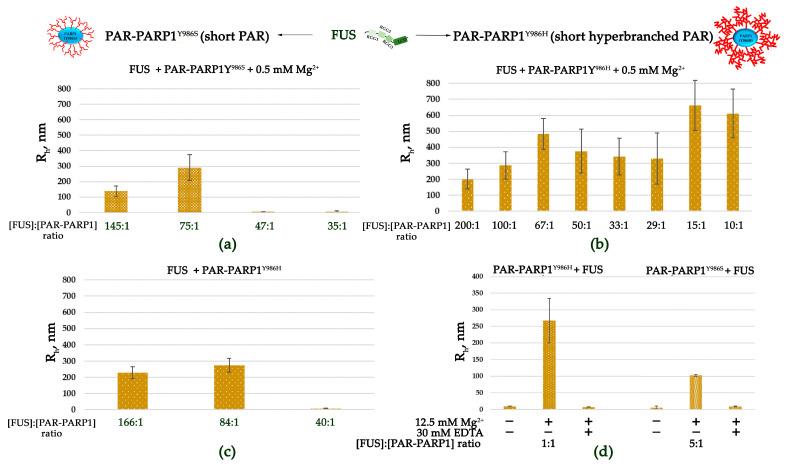
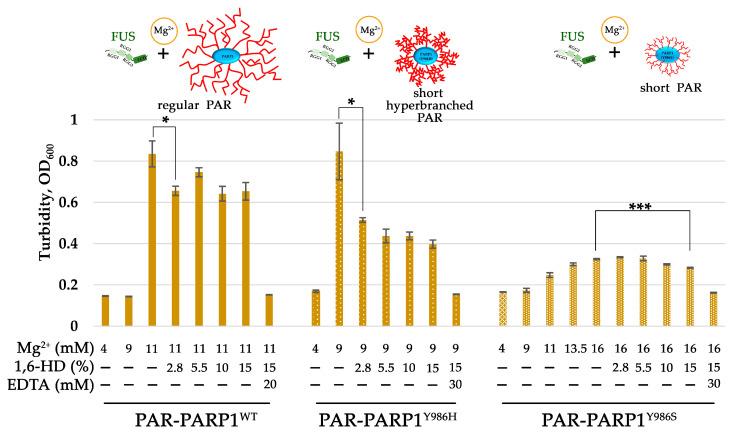
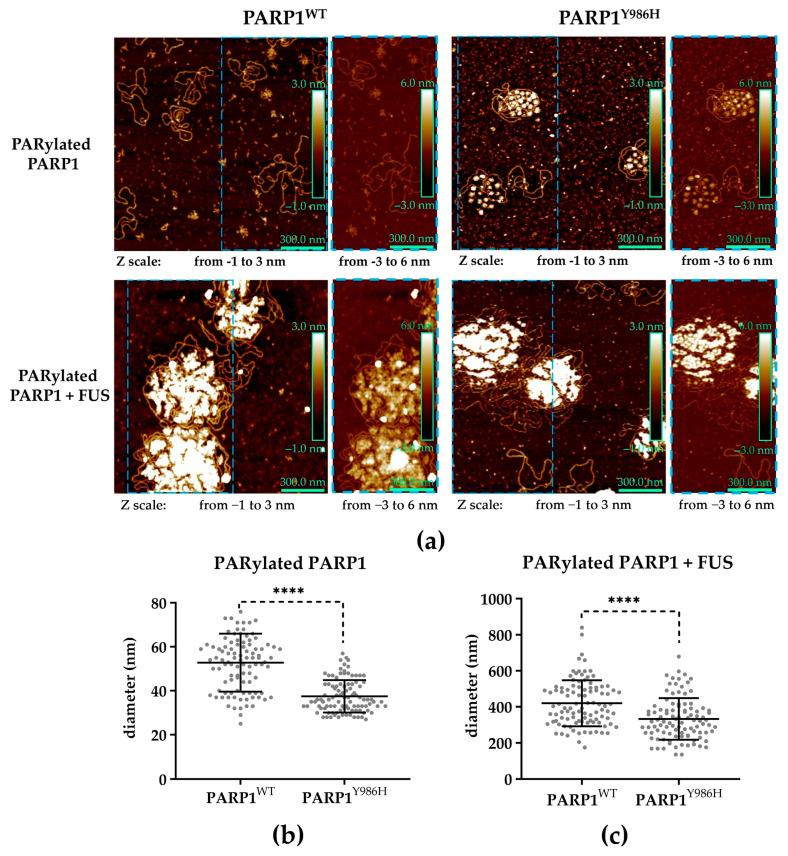
Fused in sarcoma (FUS) is involved in the formation of nuclear biomolecular condensates associated with poly(ADP-ribose) [PAR] synthesis catalyzed by a DNA damage sensor such as PARP1. Here, we studied FUS microphase separation induced by poly(ADP-ribosyl)ated PARP1 [PAR-PARP1] or its catalytic variants PARP1 and PARP1, respectively, synthesizing (short PAR)-PARP1 or (short hyperbranched PAR)-PARP1 using dynamic light scattering, fluorescence microscopy, turbidity assays, and atomic force microscopy. We observed that biologically relevant cations such as Mg, Ca, or Mn or polyamines (spermine or spermidine) were essential for the assembly of FUS with PAR-PARP1 and FUS with PAR-PARP1 in vitro. We estimated the range of the FUS-to-PAR-PARP1 molar ratio and the cation concentration that are favorable for the stability of the protein's microphase-separated state. We also found that FUS microphase separation induced by PAR-PARP1 (i.e., a PARP1 variant attaching short hyperbranched PAR to itself) can occur in the absence of cations. The dependence of PAR-PARP1-induced FUS microphase separation on cations and on the branching of the PAR structure points to a potential role of the latter in the regulation of the formation of FUS-related biological condensates and requires further investigation.
融合肉瘤(FUS)参与了核生物分子凝聚物的形成,这些凝聚物与 DNA 损伤传感器(如 PARP1)催化的聚(ADP-核糖)[PAR]合成有关。在这里,我们使用动态光散射、荧光显微镜、浊度测定和原子力显微镜研究了聚(ADP-核糖基)化 PARP1 [PAR-PARP1]或其催化变体 PARP1 和 PARP1 分别合成的(短 PAR)-PARP1 或(短支化 PAR)-PARP1 诱导的 FUS 微相分离。我们观察到,生物相关的阳离子(如 Mg、Ca 或 Mn)或多胺(精胺或亚精胺)对于 FUS 与 PAR-PARP1 和 FUS 与 PAR-PARP1 的体外组装是必不可少的。我们估计了 FUS 与 PAR-PARP1 的摩尔比范围和阳离子浓度,这些条件有利于蛋白质微相分离状态的稳定性。我们还发现,PAR-PARP1 诱导的 FUS 微相分离(即 PARP1 变体将短支化 PAR 连接到自身上)可以在没有阳离子的情况下发生。PAR-PARP1 诱导的 FUS 微相分离对阳离子和 PAR 结构分支的依赖性表明,后者可能在调节 FUS 相关生物凝聚物的形成中发挥作用,需要进一步研究。

 Zotero 插件