
进入变异汤的坩埚:塞浦路斯 SARS-CoV-2 的分子流行病学和向地方性过渡的见解(2022 年 11 月至 2024 年 2 月)。
Into the Cauldron of the Variant Soup: Insights into the Molecular Epidemiology and Transition to Endemicity of SARS-CoV-2 in Cyprus (November 2022-February 2024).
机构信息
Department of Biological Sciences, University of Cyprus, Aglantzia, 2109 Nicosia, Cyprus.
Cyprus Academy of Sciences, Letters, and Arts, 60-68 Phaneromenis Street, 1011 Nicosia, Cyprus.
出版信息
Viruses. 2024 Oct 29;16(11):1686. doi: 10.3390/v16111686.
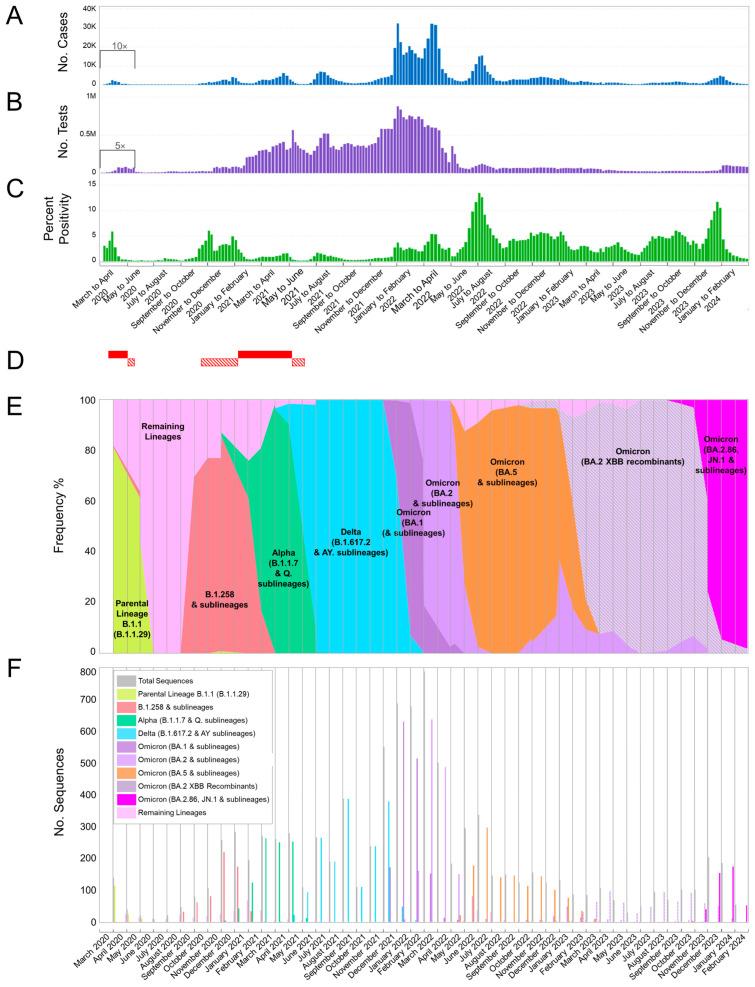
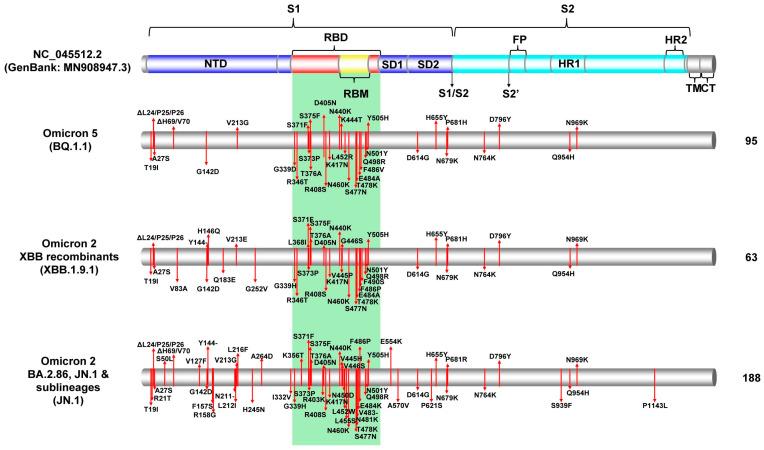
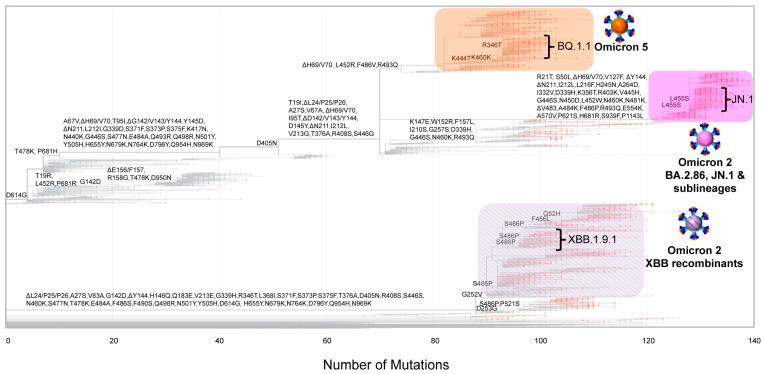
The coronavirus disease 2019 (COVID-19) pandemic, driven by the emergence of severe acute respiratory syndrome coronavirus 2 (SARS-CoV-2), has been characterized by the virus's ongoing evolution, leading to the appearance of more transmissible variants that have often triggered infection surges. In this study, we analyzed the SARS-CoV-2 epidemic in Cyprus, utilizing 1627 viral sequences from infected individuals between November 2022 and February 2024. Over this period, 251 distinct lineages and sublineages were identified, predominantly categorized into three groups: Omicron 5, XBB, and JN.1 (parental lineage BA.2.86), all of which harbor S protein mutations linked to enhanced transmissibility and immune escape. Despite the relatively low numbers of new infections during this period, and the lack of any major waves, unlike earlier phases of the pandemic, these lineages demonstrated varying periods of dominance, with Omicron 5 prevailing from November 2022 to February 2023, XBB variants leading from March to November 2023, and JN.1 generating a wavelet from December 2023 to February 2024. These findings suggest that the SARS-CoV-2 epidemic in Cyprus has reached endemicity, with new variants gradually replacing previously circulating variants irrespective of seasonal patterns. This study highlights the critical importance of ongoing surveillance of SARS-CoV-2 evolution in Cyprus and emphasizes the role of preventive measures in limiting virus transmission, providing valuable insights for safeguarding public health.
2019 年冠状病毒病(COVID-19)大流行是由严重急性呼吸综合征冠状病毒 2(SARS-CoV-2)的出现引发的,其特点是病毒的持续进化,导致更具传染性的变异株出现,这些变异株经常引发感染浪潮。在这项研究中,我们分析了塞浦路斯的 SARS-CoV-2 流行情况,利用了 2022 年 11 月至 2024 年 2 月期间感染个体的 1627 个病毒序列。在此期间,确定了 251 个不同的谱系和亚谱系,主要分为三组:Omicron 5、XBB 和 JN.1(母系 BA.2.86),所有这些都携带有与增强传染性和免疫逃逸相关的 S 蛋白突变。尽管在此期间新感染的数量相对较少,而且与大流行的早期阶段不同,没有出现任何重大浪潮,但这些谱系表现出不同的主导时期,Omicron 5 从 2022 年 11 月持续到 2023 年 2 月,XBB 变体从 2023 年 3 月到 11 月主导,而 JN.1 则在 2023 年 12 月至 2024 年 2 月引发了一个小波。这些发现表明,塞浦路斯的 SARS-CoV-2 流行已经达到地方性,新的变异株逐渐取代以前流行的变异株,而不受季节性模式的影响。本研究强调了塞浦路斯对 SARS-CoV-2 进化进行持续监测的重要性,并强调了预防措施在限制病毒传播中的作用,为保护公众健康提供了有价值的见解。


 Zotero 插件