
猪气道类器官衍生的高分化上皮培养物作为猪流感病毒株特征分析的工具。
Porcine Airway Organoid-Derived Well-Differentiated Epithelial Cultures as a Tool for the Characterization of Swine Influenza a Virus Strains.
机构信息
Wageningen Bioveterinary Research, 8221 RA Lelystad, The Netherlands.
Host-Microbe Interactomics Group, Wageningen University, 6708 WD Wageningen, The Netherlands.
出版信息
Viruses. 2024 Nov 15;16(11):1777. doi: 10.3390/v16111777.
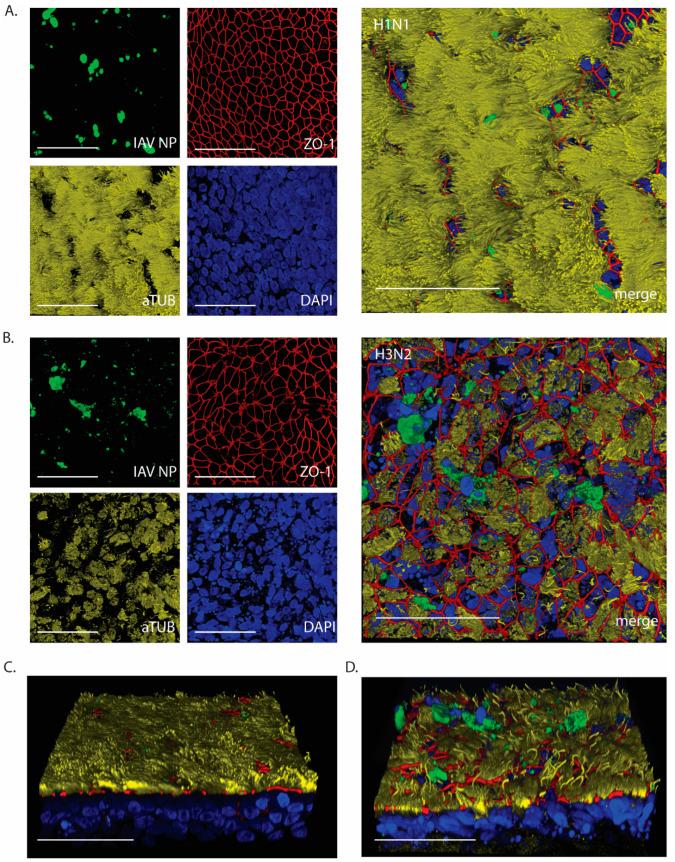
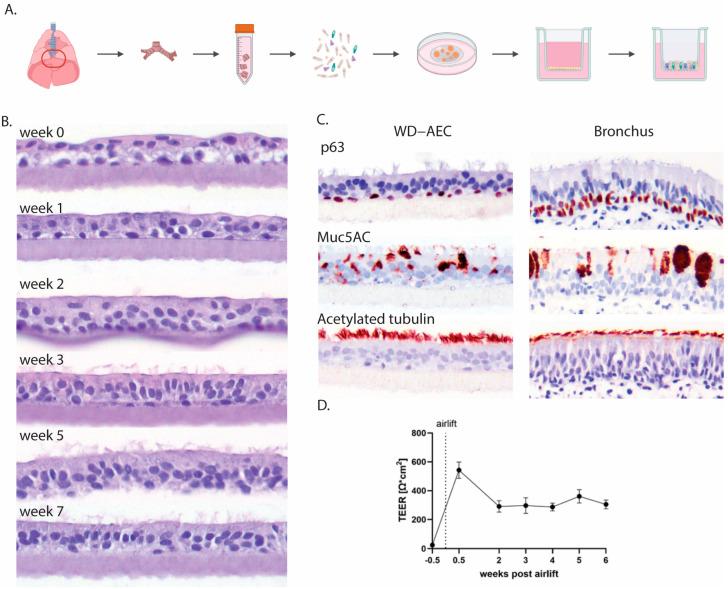
Swine influenza A viruses (IAVsw) are important causes of disease in pigs but also constitute a public health risk. IAVsw strains show remarkable differences in pathogenicity. We aimed to generate airway organoids from the porcine lower respiratory tract and use these to establish well-differentiated airway epithelial cell (WD-AEC) cultures grown at an air-liquid interface (ALI) for in vitro screening of IAVsw strain virulence. Epithelial cells were isolated from bronchus tissue of juvenile pigs, and airway organoids were cultured in an extracellular matrix in a culture medium containing human growth factors. Single-cell suspensions of these 3D organoids were seeded on Transwell filters and differentiated at ALI to form a pseudostratified epithelium containing ciliated cells, mucus-producing cells and tight junctions. Inoculation with a low dose of IAVsw in a low volume inoculum resulted in virus replication without requiring the addition of trypsin, and was quantified by the detection of viral genome loads in apical washes. Interestingly, inoculation of an H3N2 strain known to cause severe disease in pigs induced a greater reduction in trans-epithelial resistance and more damage to tight junctions than H1N2 or H1N1 strains associated with mild disease in pigs. We conclude that the porcine WD-AEC model is useful in assessing the virulence of IAVsw strains.
猪流感 A 病毒(IAVsw)是猪病的重要病因,但也构成了公共卫生风险。IAVsw 株在致病性方面表现出显著差异。我们旨在从猪下呼吸道生成气道类器官,并使用这些类器官建立在气液界面(ALI)下生长的分化良好的气道上皮细胞(WD-AEC)培养物,用于体外筛选 IAVsw 株的毒力。上皮细胞从幼年猪的支气管组织中分离出来,气道类器官在含有人类生长因子的细胞外基质中培养。这些 3D 类器官的单细胞悬液接种在 Transwell 过滤器上,并在 ALI 下分化形成包含纤毛细胞、分泌黏液细胞和紧密连接的假复层上皮。用低剂量的 IAVsw 以小体积接种物接种,无需添加胰酶即可复制病毒,并通过检测顶洗液中的病毒基因组载量进行定量。有趣的是,接种一种已知会导致猪严重疾病的 H3N2 株,与与猪轻度疾病相关的 H1N2 或 H1N1 株相比,导致跨上皮电阻降低更多,紧密连接受损更严重。我们得出结论,猪 WD-AEC 模型可用于评估 IAVsw 株的毒力。


 Zotero 插件