
整合基因组证据以更新螺旋杆菌属的分类学
Integrating genomic evidence for an updated taxonomy of the bacterial genus Spiribacter.
作者信息
León María José, Vera-Gargallo Blanca, de la Haba Rafael R, Sánchez-Porro Cristina, Ventosa Antonio
机构信息
Department of Microbiology and Parasitology, Faculty of Pharmacy, University of Sevilla, Sevilla, Spain.
出版信息
Sci Rep. 2024 Dec 3;14(1):30057. doi: 10.1038/s41598-024-80127-5.
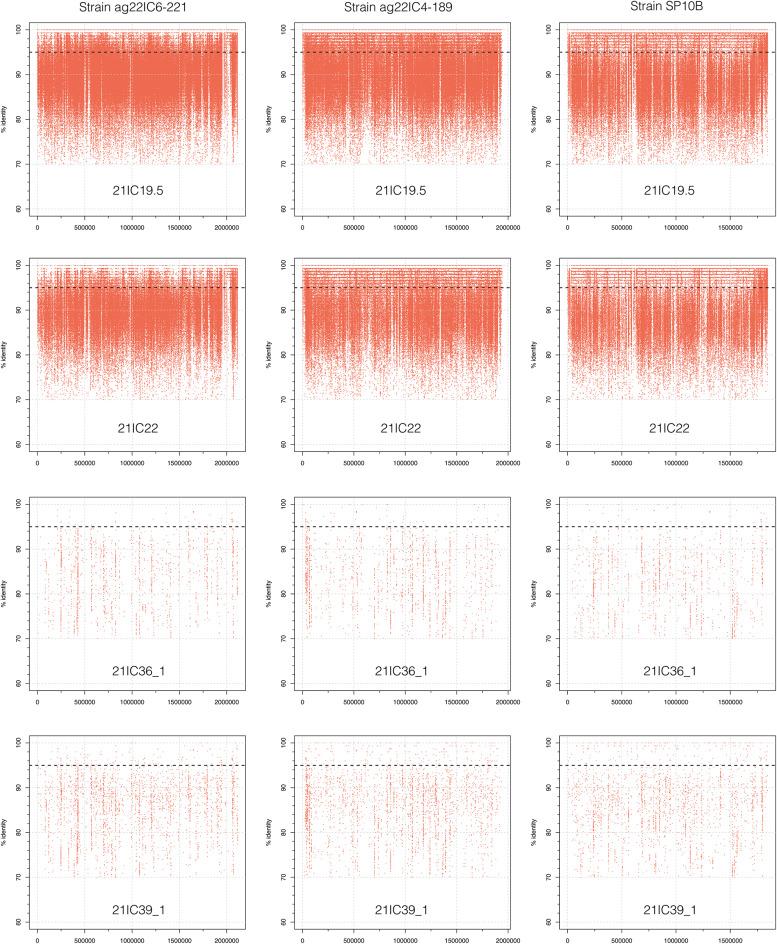
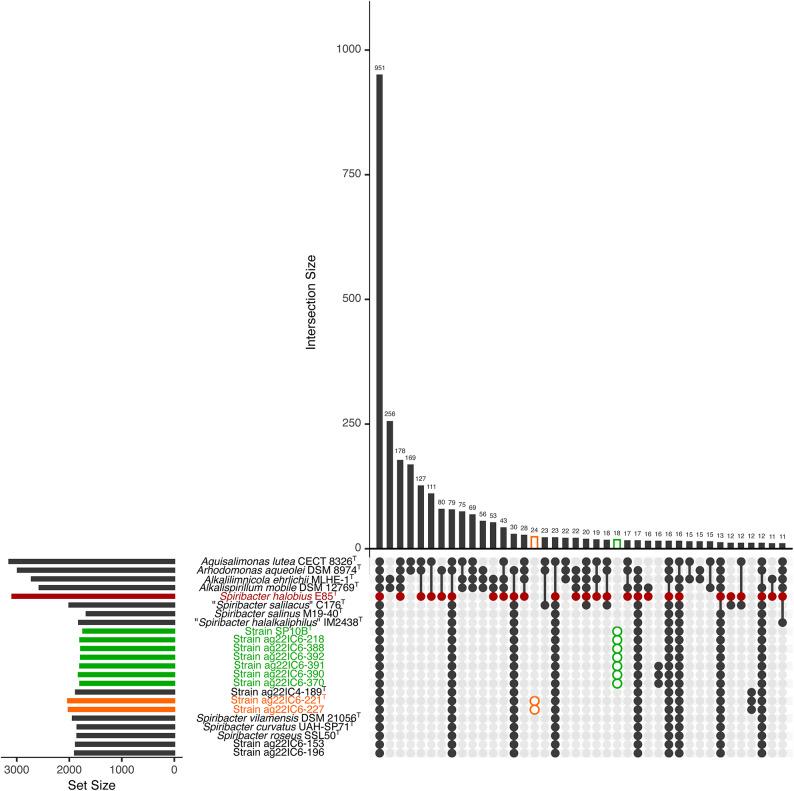
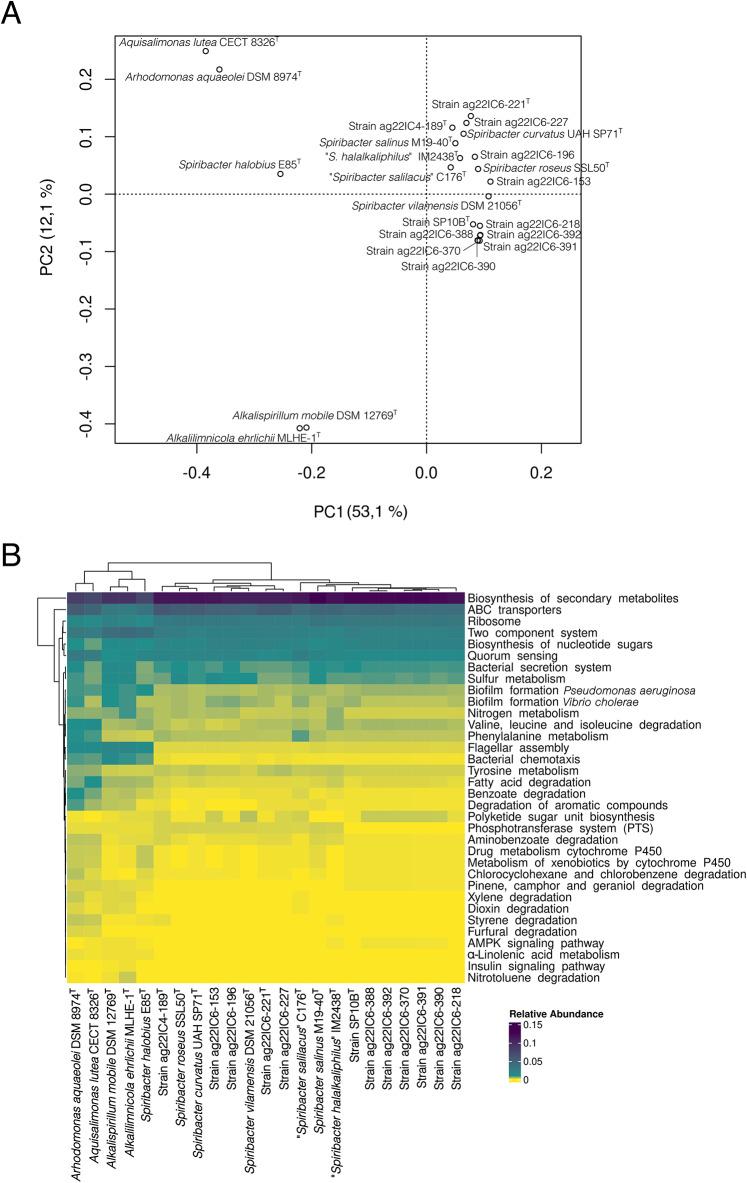
The genus Spiribacter encompasses halophilic bacteria widely distributed in hypersaline environments worldwide. Despite their ecological significance, initially isolating Spiribacter species under laboratory settings was challenging due to the lack of knowledge of their growth and cultivation requirements. However, with improved understanding of their ecological niche and metabolic pathways, additional species of Spiribacter have been successfully isolated and identified from diverse locations around the globe. Enriched media with sodium pyruvate as carbon source facilitated the isolation of twelve new strains closely related to the genus Spiribacter from hypersaline environments in Spain. Genome sequencing and analysis of these new strains and previously described Spiribacter species provided insights into their genomic features and phylogenomic relationships, supporting the delineation of three distinct new species within this genus, designated as Spiribacter insolitus sp. nov., Spiribacter onubensis sp. nov., and Spiribacter pallidus sp. nov. In Spiribacter species, streamlined genomes enhance survival in hypersaline environments by reducing non-essential genes and optimizing resource utilization. Key genes involved in osmoprotectant mechanisms, including those for the metabolism of myo-inositol, hydroxyproline, and L-proline, were identified and numerous transporters were noted, ensuring efficient nutrient acquisition and osmotic balance. Notably, these new species, along with other Spiribacter strains, exhibit metabolic diversity in utilizing inorganic sulfur compounds, including thiosulfate and tetrathionate, for energy production and adaptation to hypersaline environments. The presence of thiosulfate dehydrogenase (TsdA) genes suggests their capability to oxidize thiosulfate to tetrathionate, potentially influencing both aerobic and anaerobic respiration. Furthermore, the prevalence of the sqr gene indicates a role for sulfide oxidation in Spiribacter metabolism, underlining their metabolic versatility in saline habitats. These adaptations allow Spiribacter to thrive in nutrient-limited, high-salinity habitats. Moreover, genome mining analysis and physiological disparities observed in the already described species Spiribacter halobius raise significant challenges to its classification within the genus Spiribacter.
螺旋杆菌属包含广泛分布于全球高盐环境中的嗜盐细菌。尽管它们具有生态意义,但由于对其生长和培养要求缺乏了解,最初在实验室环境中分离螺旋杆菌属物种具有挑战性。然而,随着对其生态位和代谢途径的认识不断提高,已成功从全球不同地点分离并鉴定出更多的螺旋杆菌属物种。以丙酮酸钠为碳源的富集培养基有助于从西班牙的高盐环境中分离出与螺旋杆菌属密切相关的12株新菌株。对这些新菌株以及先前描述的螺旋杆菌属物种进行基因组测序和分析,为了解它们的基因组特征和系统发育关系提供了见解,支持在该属内划分出三个不同的新物种,分别命名为奇异螺旋杆菌(Spiribacter insolitus sp. nov.)、奥恩螺旋杆菌(Spiribacter onubensis sp. nov.)和苍白螺旋杆菌(Spiribacter pallidus sp. nov.)。在螺旋杆菌属物种中,精简的基因组通过减少非必需基因和优化资源利用来提高在高盐环境中的生存能力。已鉴定出参与渗透保护机制的关键基因,包括肌醇、羟脯氨酸和L-脯氨酸代谢相关的基因,还发现了许多转运蛋白,确保有效的营养获取和渗透平衡。值得注意的是,这些新物种以及其他螺旋杆菌属菌株在利用无机硫化合物(包括硫代硫酸盐和连四硫酸盐)进行能量生产和适应高盐环境方面表现出代谢多样性。硫代硫酸盐脱氢酶(TsdA)基因的存在表明它们有能力将硫代硫酸盐氧化为连四硫酸盐,这可能影响有氧呼吸和无氧呼吸。此外,sqr基因的普遍存在表明硫化物氧化在螺旋杆菌属代谢中发挥作用,突出了它们在盐生栖息地的代谢多功能性。这些适应性使螺旋杆菌能够在营养有限的高盐栖息地中茁壮成长。此外,在已描述的嗜盐螺旋杆菌(Spiribacter halobius)物种中观察到的基因组挖掘分析和生理差异,对其在螺旋杆菌属中的分类提出了重大挑战。


 Zotero 插件