
用于预测糖尿病性黄斑水肿抗VEGF治疗结果的CNN-MLP模型的开发与验证
Development and validation of CNN-MLP models for predicting anti-VEGF therapy outcomes in diabetic macular edema.
作者信息
Leng Xiangjie, Shi Ruijie, Xu Zhaorui, Zhang Hai, Xu Wenxuan, Zhu Keyin, Lu Xuejing
机构信息
Eye School, Chengdu University of Traditional Chinese Medicine, Chengdu, 610000, Sichuan Province, China.
Department of Ophthalmology, Ineye Hospital of Chengdu University of Traditional Chinese Medicine, Chengdu, 610000, Sichuan Province, China.
出版信息
Sci Rep. 2024 Dec 4;14(1):30270. doi: 10.1038/s41598-024-82007-4.
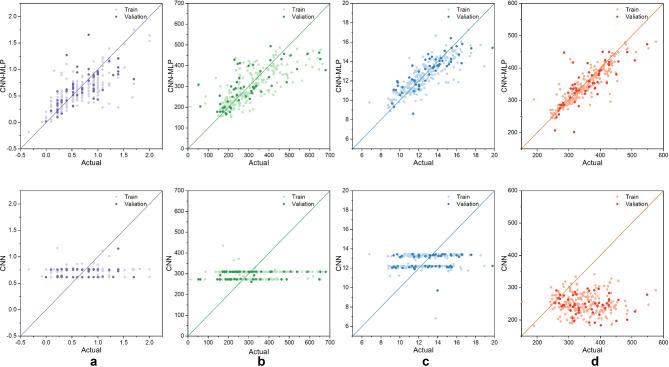
Diabetic macular edema (DME) is a common complication of diabetes that can lead to vision loss, and anti-vascular endothelial growth factor (anti-VEGF) therapy is the standard of care for DME, but the treatment outcomes vary widely among patients. This study collected optical coherence tomography (OCT) images and clinical data from DME patients who received anti-VEGF treatment to develop and validate deep learning (DL) models for predicting the anti-VEGF outcomes in DME patients based on convolutional neural network (CNN) and multilayer perceptron (MLP) combined architecture by using multimodal data. An Xception-MLP architecture was utilized to predict best-corrected visual acuity (BCVA), central subfield thickness (CST), cube volume (CV), and cube average thickness (CAT). Mean absolute error (MAE), mean squared error (MSE) and mean squared logarithmic error (MSLE) were employed to evaluate the model performance. In this study, both the training set and the validation set exhibited a consistent decreasing trend in MAE, MSE, and MSLE. No statistical difference was found between the actual and predicted values in all clinical indicators. This study demonstrated that the improved CNN-MLP regression models using multimodal data can accurately predict outcomes in BCVA, CST, CV, and CAT after anti-VEGF therapy in DME patients, which is valuable for ophthalmic clinical decisions and reduces the economic burden on patients.
糖尿病性黄斑水肿(DME)是糖尿病常见的并发症,可导致视力丧失,抗血管内皮生长因子(anti-VEGF)治疗是DME的标准治疗方法,但患者的治疗效果差异很大。本研究收集了接受抗VEGF治疗的DME患者的光学相干断层扫描(OCT)图像和临床数据,以开发和验证基于卷积神经网络(CNN)和多层感知器(MLP)组合架构的深度学习(DL)模型,用于通过多模态数据预测DME患者的抗VEGF治疗效果。采用Xception-MLP架构预测最佳矫正视力(BCVA)、中心子野厚度(CST)、立方体体积(CV)和立方体平均厚度(CAT)。采用平均绝对误差(MAE)、均方误差(MSE)和均方对数误差(MSLE)评估模型性能。在本研究中,训练集和验证集的MAE、MSE和MSLE均呈现一致的下降趋势。所有临床指标的实际值和预测值之间均未发现统计学差异。本研究表明,使用多模态数据改进的CNN-MLP回归模型可以准确预测DME患者抗VEGF治疗后BCVA、CST、CV和CAT的结果,这对眼科临床决策具有重要价值,并减轻了患者的经济负担。


 Zotero 插件