
利用多数据源和可解释机器学习揭示环境特征对绿色视野指数的非线性影响。
Unraveling nonlinear effects of environment features on green view index using multiple data sources and explainable machine learning.
作者信息
Chen Cai, Wang Jian, Li Dong, Sun Xiaohu, Zhang Jiyong, Yang Changjiang, Zhang Bo
机构信息
School of Geomatics and Urban Spatial Informatics, Beijing University of Civil Engineering and Architecture, Beijing, 102616, China.
Research Center for Urban Big Data Applications, Beijing University of Civil Engineering and Architecture, Beijing, 100044, China.
出版信息
Sci Rep. 2024 Dec 4;14(1):30189. doi: 10.1038/s41598-024-81451-6.
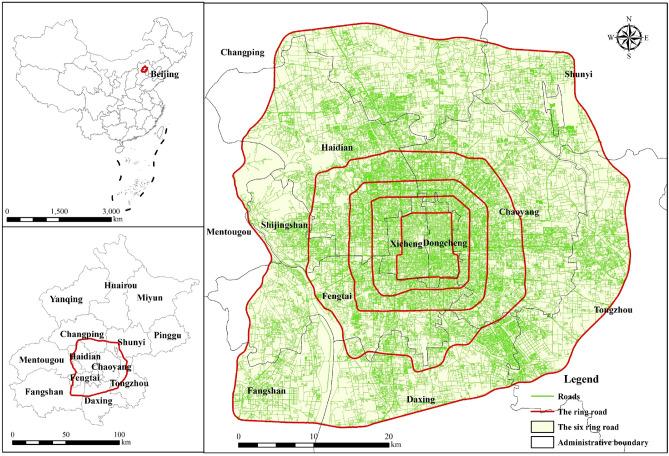
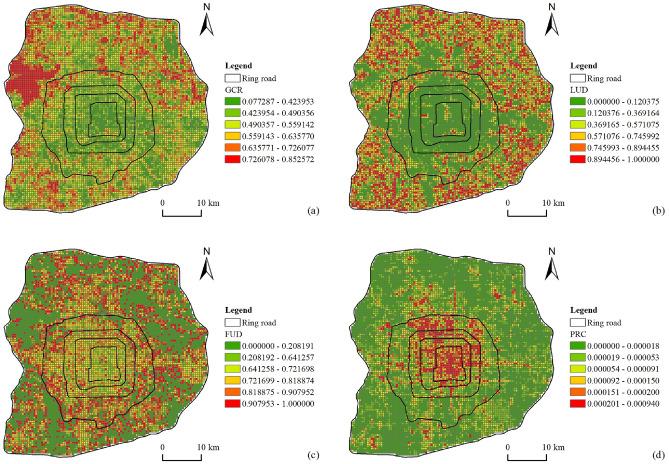
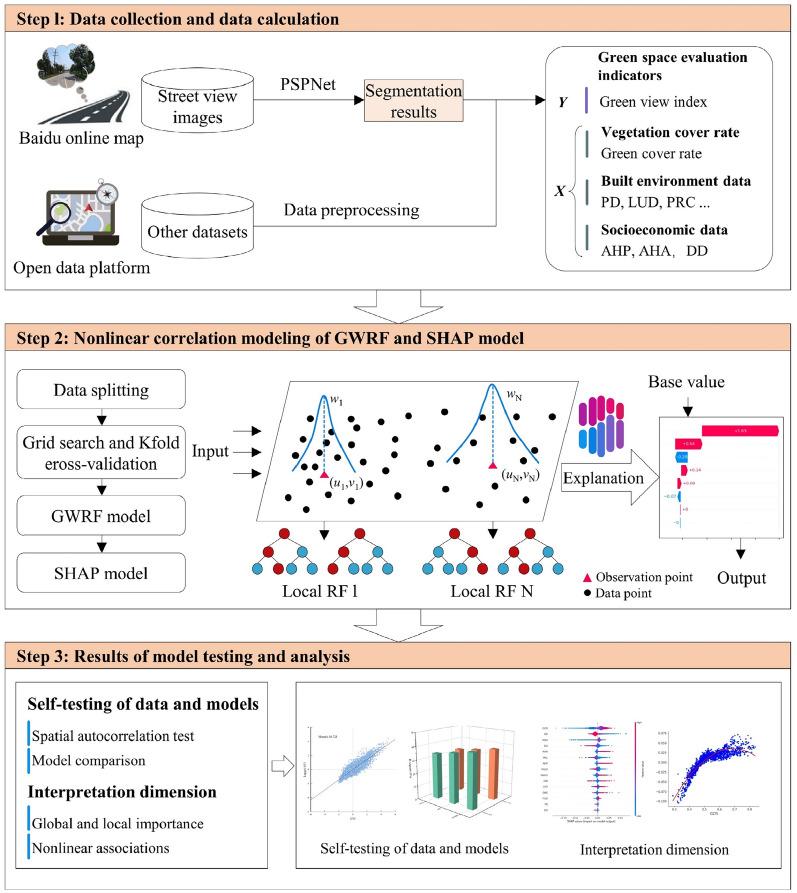
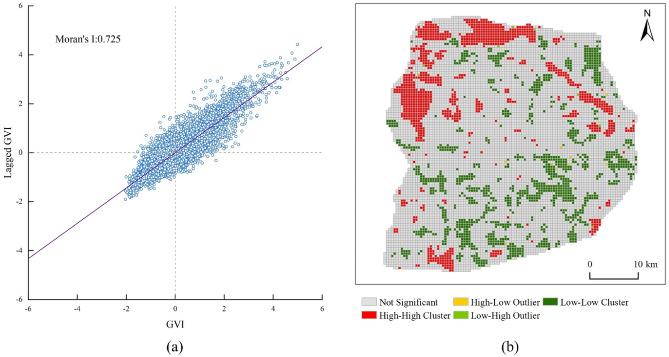
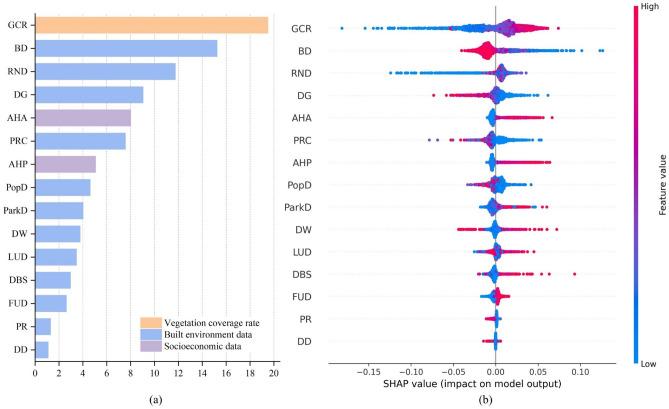
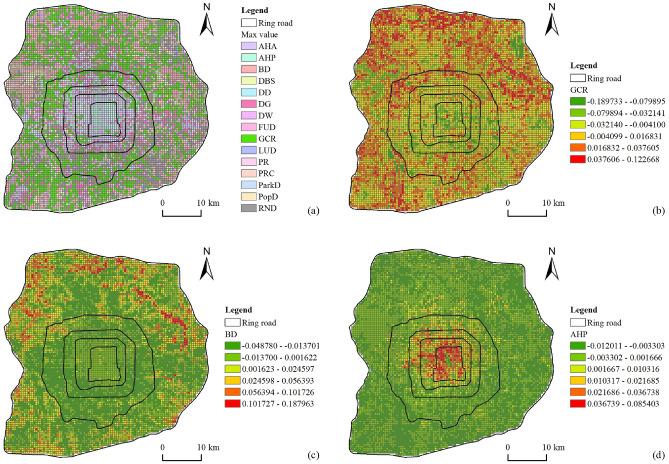
Urban greening plays a crucial role in maintaining environmental sustainability and enhancing people's well-being. However, limited by the shortcomings of traditional methods, studying the heterogeneity and nonlinearity between environmental factors and green view index (GVI) still faces many challenges. To address the concerns of nonlinearity, spatial heterogeneity, and interpretability, an interpretable spatial machine learning framework incorporating the Geographically Weighted Random Forest (GWRF) model and the SHapley Additive exPlanation (Shap) model is proposed in this paper. In this paper, we combine multi-source big data, such as Baidu Street View data and remote sensing images, and utilize semantic segmentation models and geographic data processing techniques to study the global and local interpretation of the Beijing region with GVI as the key indicator. Our research results show that: (1) Within the Sixth Ring Road of Beijing, GVI shows significant spatial clustering phenomenon and positive correlation linkage, and at the same time exhibits significant spatial differences; (2) Among many environmental variables, the increase of green coverage rate has the most significant positive effect on GVI, while the increase of building density shows a strong negative correlation with GVI; (3) The performance of the GWRF model in predicting GVI is excellent and far exceeds that of comparison models.; (4) Whether it is the green coverage rate, urban built environment or socioeconomic factors, their influence on GVI shows non-linear characteristics and a certain threshold effect. With the help of these non-linear influences and explicit threshold effects, quantitative analyses of greening are provided, which can help to assist urban planners in making more scientific and rational decisions when allocating greening resources.
城市绿化在维持环境可持续性和提升人们的福祉方面发挥着关键作用。然而,受传统方法缺点的限制,研究环境因素与绿色景观指数(GVI)之间的异质性和非线性仍面临诸多挑战。为解决非线性、空间异质性和可解释性问题,本文提出了一个将地理加权随机森林(GWRF)模型与SHapley加性解释(Shap)模型相结合的可解释空间机器学习框架。本文结合百度街景数据和遥感影像等多源大数据,并利用语义分割模型和地理数据处理技术,以GVI为关键指标研究北京地区的全局和局部解释。我们的研究结果表明:(1)在北京六环范围内,GVI呈现出显著的空间聚类现象和正相关联系,同时存在显著的空间差异;(2)在众多环境变量中,绿地覆盖率的增加对GVI的正向影响最为显著,而建筑密度的增加与GVI呈现出较强的负相关;(3)GWRF模型在预测GVI方面表现优异,远超比较模型;(4)无论是绿地覆盖率、城市建成环境还是社会经济因素,它们对GVI的影响均呈现非线性特征和一定的阈值效应。借助这些非线性影响和明确的阈值效应,对绿化进行了定量分析,有助于协助城市规划者在分配绿化资源时做出更科学合理的决策。



 Zotero 插件